
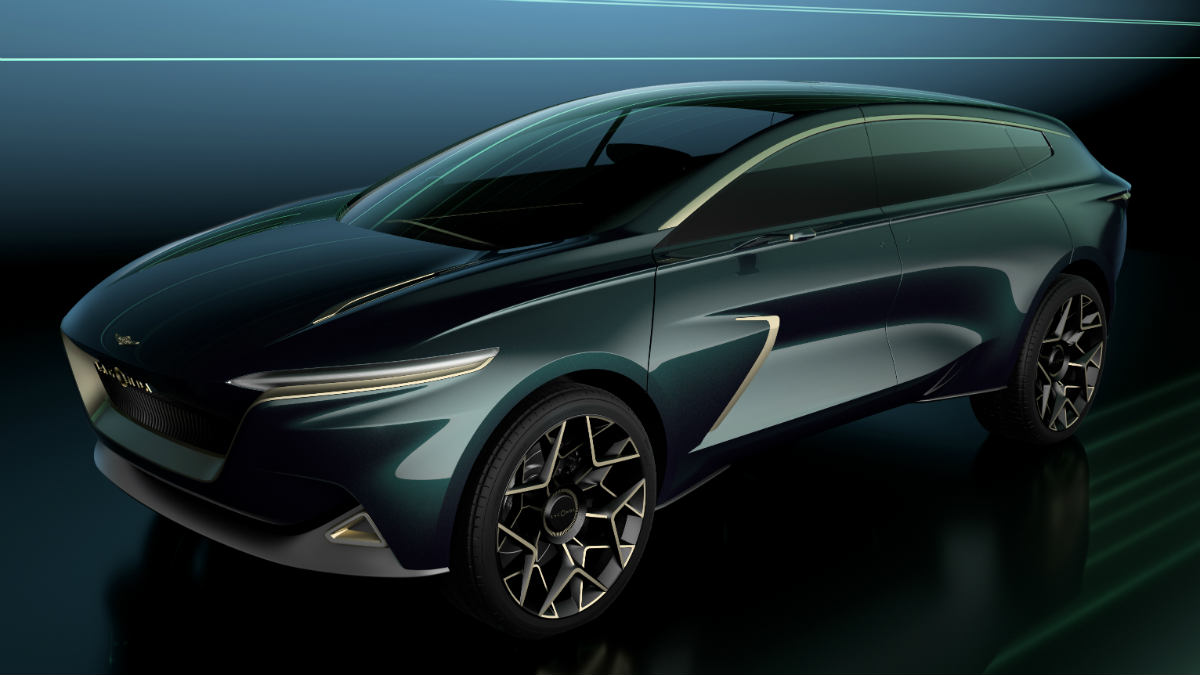
Aston Martin Revives Lagonda With the Electric All-Terrain Concept
When Andy Palmer and the design team at Aston Martin pulled the silk away at the 89th Geneva International Motor Show in March 2019, they presented far more than a high-riding design exercise. The Lagonda All-Terrain Concept represents Gaydon’s clearest blueprint yet for turning Lagonda into the world’s first genuine zero-emission luxury brand. Following the dramatic Lagonda Vision Concept limousine revealed in Geneva twelve months earlier, this all-terrain study takes the brand’s architectural language into wilder, high-ground-clearance territory, anticipating a production launch earmarked for 2022 at Aston Martin’s newly completed St Athan production facility in South Wales.
Lagonda’s re-emergence under the Aston Martin umbrella has never followed conventional luxury orthodoxies. Where established high-end marques have traditionally anchored their sport utility vehicles to massive twelve-cylinder combustion engines, bookmatched walnut veneers, and hefty cowhides, the All-Terrain Concept deliberately abandons old-world mechanical constraints. Built around a dedicated battery-electric platform where the structural mass rests entirely beneath the passenger cell floor, the vehicle exploits packaging freedoms that combustion architectures cannot accommodate.

A Design Language Driven by Superyachts and Planetary Exploration
Aston Martin Executive Vice President and Chief Creative Officer Marek Reichman took inspiration from high-end marine craft and futuristic exploration vehicles rather than traditional two-box SUVs. The profile is long, swept, and rake-backed, defined by continuous flowing lines rather than aggressive, upright radiator grilles. Because the electric drive units and battery modules require minimal frontal cooling, the nose does away with the gaping apertures seen on petrol-fueled luxury trucks. Instead, illuminated elements sweep into the front bodywork, lending the nose a calm, unforced presence.
The rear styling is equally singular. An elongated, boat-tail rear deck sweeps downward with an integrated horizontal light blade that spans the full width of the tailgate. Seen in silhouette, the proportions appear closer to an aerodynamic interplanetary rover than an ordinary high-riding station wagon. Reichman observed that while the Vision Concept was conceived for smooth tarmac journeys, the All-Terrain Concept has the kind of stance and presence that could look as natural crossing the crags of the Scottish Highlands as it would traversing an alien planetary surface.
Yet the sculpted surfaces are not merely theatrical. Underneath the dramatic exterior skin, the All-Terrain Concept was engineered around an electric architecture where structural rigidity is concentrated down low in the floorpan. This stiff battery cradle eliminates the traditional B-pillar compromise, granting engineers the mechanical freedom to implement wide, rear-hinged carriage doors. When opened alongside the upward-articulating roof glass sections, the car provides an open entrance that allows passengers to step straight in without ducking or twisting awkwardly.

Sanctuary Within: Redefining Ultra-Luxury Interiors
Step inside, and the break from customary luxury conventions becomes absolute. The interior deliberately sidesteps the polished veneers and chrome bezels found across established grand tourers. Instead, Lagonda created an ambiance closer to an architectural living room or a luxury residential suite. Soft-touch technical textiles, tactile cashmere wools, bespoke woven cashmere upholstery, and solid brass detailing replace the heavy leathers of the past.
Interior packaging takes direct advantage of the completely flat cabin floor made possible by the electric battery skateboard. Without an engine bulkhead pushing backward or a transmission tunnel running down the spine, interior room is vast. The four individual seats are sculpted to cradle passengers in relaxed, lounge-style positions. Deep glazing wraps over the sides and roof, drawing natural light into the cabin while providing an expansive sightline. Occupants can look straight across winding mountain valleys and gaze upward through overhead glass sections at surrounding architecture or alpine peaks.
Perspective and spatial harmony guided the interior geometry. The dashboard layout draws upon Renaissance compositional rules, using gentle converging sightlines to direct the eye outward toward the landscape rather than cluttering the space with rows of plastic switches or oversized, glaring touchscreens. Physical clutter is suppressed, keeping the cockpit calm, uncluttered, and restorative.

Autonomous Ambition and Floating Innovation
The Lagonda All-Terrain Concept carries forward the autonomous driving philosophy introduced on the Vision Concept, though with a distinct operational balance. The vehicle is engineered to accommodate Level 4 autonomous capability, meaning that under geofenced conditions and standard highway networks, the system can pilot the car without human intervention. During these hands-off cruising stints, the steering wheel can retract flush into the instrument binnacle, and the front armchairs can rotate 180 degrees to face the rear passengers, turning the cabin into a four-person salon for face-to-face conversation.
Unlike the low-slung limousine, however, the All-Terrain Concept recognizes that an adventure vehicle must place the human driver at the center of the experience. Off-road exploration, climbing rough gravel trails, and picking paths across undulating terrain demand direct driver involvement. When manual control is required, the steering wheel extends smoothly back to the helm, and the instrument cluster—integrated directly into the center of the steering wheel hub—provides vital telemetry right in the driver’s primary line of sight.

Perhaps the most theatrical flourish inside the cabin centers on the vehicle key. Where modern keyless remotes have become disposable plastic fobs hidden away in pockets, Lagonda turned the key into a tactile centerpiece of the driving ritual. Located between the front seats is an electromagnetic docking cradle. When the driver rests the sculpted key upon the console, electromagnets engage, suspending the key in mid-air where it levitates freely without physical contact. It is a striking visual reminder that advanced engineering can deliver sensory wonder alongside raw capability.

Outdoor Versatility and Tailgate Architecture
A luxury all-terrain vehicle must serve the lifestyle of its owners outside the car as effectively as it coddles them on the move. One of the standout physical innovations on the All-Terrain Concept is its motorized rear viewing platform. Stowed flush within the tailgate floor when on the road, a broad, structural rear shelf smoothly glides backward on runners when the tailgate lifts. The platform extends outside the rear perimeter of the car, providing a secure, comfortable perch for two occupants to sit and survey scenic vistas, watch sporting events, or relax in remote natural settings.
This attention to exterior living highlights the concept’s core mission: taking travelers beyond the reach of standard luxury saloons without sacrificing an ounce of refinement. Integrated exterior lighting illuminates the surrounding ground, and the flat, obstruction-free rear deck provides versatile space for bespoke luggage, picnic gear, or outdoor sporting equipment tailored specifically to the owner’s leisure pursuits.

Wilbur Gunn’s Heritage and the St Athan Electric Future
The philosophical foundation of modern Lagonda reaches back 120 years to its eccentric American-born founder, Wilbur Gunn. Gunn established Lagonda in Staines, Middlesex, in 1899, naming the firm after the Shawnee Native American word for Buck Creek in his home state of Ohio. An opera singer turned engineer, Gunn was an inveterate technical pioneer whose motorcars repeatedly upended automotive convention. In 1910, a lightweight 16/18 hp Lagonda conquered the grueling Moscow to St Petersburg trial, utilizing an early form of monocoque body construction decades before unibody structures became standard practice among global automakers.
Throughout the 1930s under W.O. Bentley’s engineering guidance—and into the 1970s with William Towns’ angular, wedge-shaped Lagonda saloon featuring early digital LED cockpit instrumentation—the marque built its legend by breaking rules rather than refining old ones. That nonconformist bloodline directly informs the modern revival. Gaydon is not positioning Lagonda as a mere badge-engineering arm for Aston Martin, but as an autonomous, high-luxury sister company untethered by sports car conventions.
Aston Martin’s industrial plans for Lagonda center on the brand’s state-of-the-art manufacturing hub at St Athan in South Wales. A former Ministry of Defence super-hangar facility, St Athan was selected as Aston Martin Lagonda’s “Home of Electrification.” While the plant’s first task is ramping up production of the Aston Martin DBX SUV, the facility has been configured from the outset to serve as the exclusive global production home for the Lagonda brand starting in 2022. By establishing dedicated assembly lines for pure-electric luxury platforms in Wales, the company aims to establish a distinct operational identity for Lagonda as the vanguard of high-end, zero-emission motoring.

Looking Ahead: The 2022 Production Horizon
The Lagonda All-Terrain Concept serves notice that the ultra-luxury sport utility segment is about to undergo a profound structural shift. For decades, prestige off-road transport has equated power with cylinder count and luxury with heavy, varnished materials. By combining electric packaging, yacht-inspired aerodynamics, residential interior textures, and autonomous versatility, Aston Martin is shaping a new high-end archetype.
As the automotive sector accelerates toward electrification, Lagonda’s planned 2022 production debut positions it ahead of traditional rivals. With production tooling preparations underway at St Athan and ongoing powertrain development proving the capabilities of its solid-state and lithium-ion electric architectures, the All-Terrain Concept offers a tangible look at what high-luxury transport will look and feel like when zero emissions and all-wheel-drive capability meet.
Vehicle data
| Field | Value |
|---|---|
| Make | Aston Martin Lagonda |
| Model | Lagonda All-Terrain Concept |
| Generation / chassis code | Concept Study |
| Model year(s) covered | 2019 (Planned production: 2022) |
| Body style | High-riding 4-door luxury SUV / all-terrain wagon |
| Powertrain / engine | Pure-electric battery powertrain (BEV) |
| Power / torque | Not stated in sources |
| Transmission | Single-speed direct drive |
| Drivetrain | All-wheel drive (AWD) |
| Key performance figures | Level 4 autonomous driving capability |
| Price (as stated) | Not stated in sources |
| On-sale / announcement period | March 2019 (Geneva Motor Show debut) |
| Market | Global |