
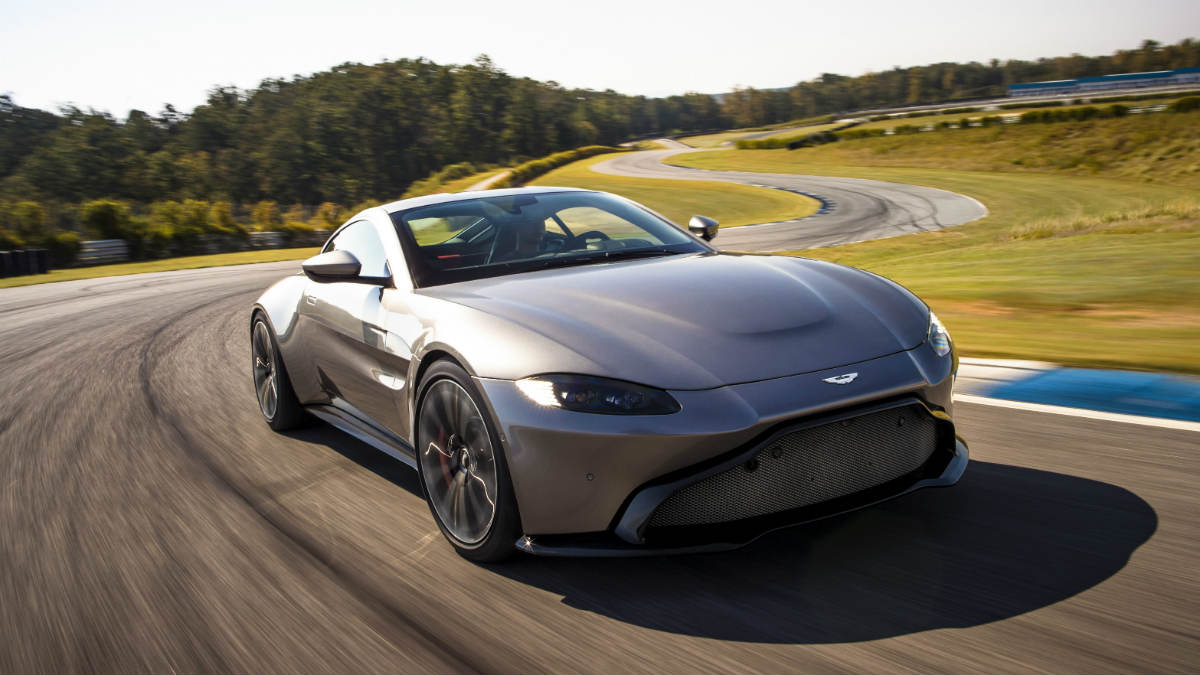
Engineering the Pure Driving Machine
Vantage is an evocative name for a magnificent bloodline of thoroughbred sports cars. For seven decades the heartbeat of Aston Martin’s purest models, the Vantage nameplate has been worn by genuine icons. First used in 1951 on a high-output engine option for the DB2, Vantage quickly established itself as a standalone model in its own right. Highlights across that lineage include the muscular William Towns-designed V8 Vantage, the fearsome twin-supercharged V600 Le Mans, and the previous generation Henrik Fisker-penned V8 Vantage that became the best-selling model in company history with over 21,000 units sold. Today this formidable sporting dynasty enters its next era with the all-new Vantage.
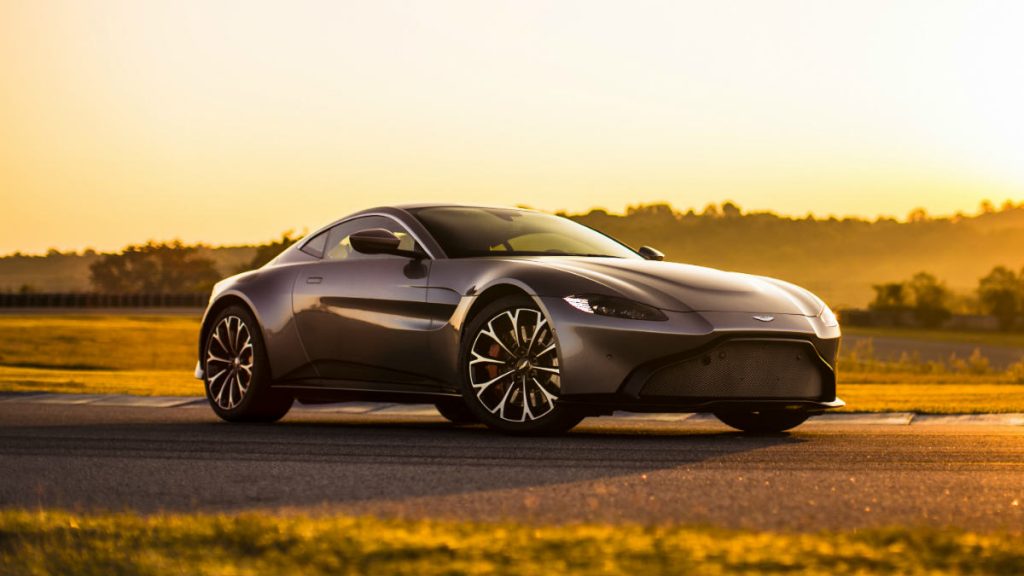
A flagship two-seater sports car demands an uncompromising design language. Designer Marek Reichman and his styling team chose pure, sculptural forms that give the car an athletic, predatory stance. Minimal front and rear overhangs, muscular flanks, and broad rear haunches express agility and latent power before the ignition button is touched. Slender LED headlamps and a full-width rear light bar create unmistakable lighting signatures, establishing an assertive identity that distinguishes the car sharply from the grand-touring DB11.

Aerodynamics Dictated by Pure Downforce
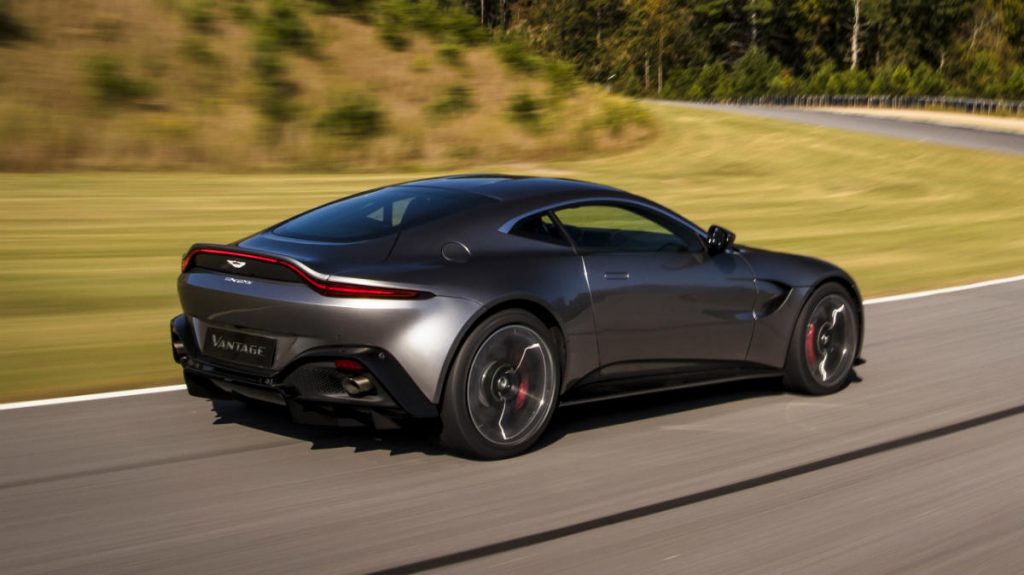
Aerodynamic performance was central to the Vantage design concept from the earliest sketch. Rather than relying on motorized pop-up spoilers or large aerodynamic wings that would disrupt the exterior silhouette, the bodywork channels airflow with calculated precision. The low-slung front splitter directs airflow underneath the chassis, where a dedicated system of underfloor fences channels cooling air toward mechanical components before feeding cleanly into the rear diffuser.
The pronounced upswept rear diffuser accelerates departing underbody air, generating an area of low pressure that pulls the rear axle onto the tarmac. Simultaneously, the diffuser prevents turbulent air churning off the rotating rear tires from disrupting the clean exhaust flow emerging centrally beneath the bumper. Along the front fenders, new integrated side gills bleed high-pressure air out of the front wheel wells to reduce lift. Working alongside the integrated upswept rear deck lid spoiler, these aerodynamic solutions allow the Vantage to generate genuine downforce at speed—a rare technical accomplishment for a series-production sports car and an engineering first for a core production Aston Martin model.

Cockpit Architecture and Interior Ergonomics
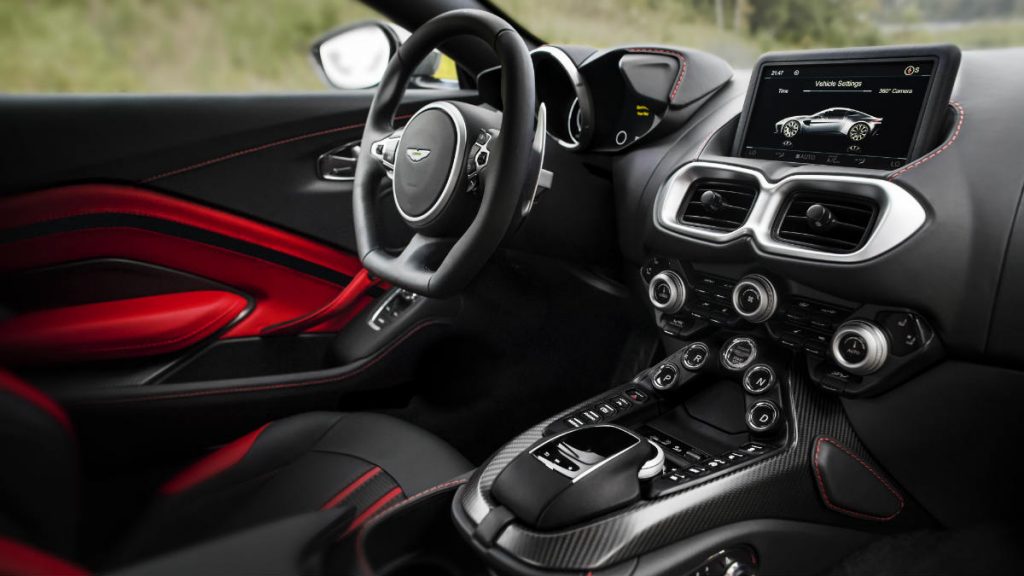
Inside the cabin, the Vantage departs deliberately from the fluid curves of the DB11, adopting a taut, driver-focused cockpit. High waistlines, a prominent central console tunnel, and a lower seating position produce an intimate driving environment. This revised cabin architecture yields tangible everyday benefits: head clearance increases noticeably compared to the previous model, accompanied by broader elbow room and improved legroom for both occupants.
Aston Martin resisted the urge to bury every vital function inside digital touchscreen sub-menus. Instead, a dedicated array of physical rotary dials and toggle switches lines the center stack, offering positive mechanical feedback when operating ventilation, drive modes, and volume. The transmission controls ditch conventional shift levers: push buttons for Park, Reverse, Neutral, and Drive form a distinct triangular grouping at the head of the console. Behind the seats, an upholstered parcel shelf provides usable storage for weekend luggage, supplementing a double-tier glove compartment and dedicated door bins.
Powertrain: 4.0-Litre Twin-Turbo V8
Under the reverse-hinged clamshell bonnet sits Aston Martin’s 4.0-litre twin-turbocharged 32-valve alloy V8 engine. Built by Mercedes-AMG and tailored specifically for Aston Martin, the engine is installed front-midship, shoved low and rearward against the firewall. This layout yields a low center of gravity and a 50:50 front-to-rear weight balance across the axles. Output stands at 510 PS (503 bhp / 375 kW) at 6,000 rpm, backed by a wall of 685 Nm (505 lb-ft) of torque sustained between 2,000 and 5,000 rpm.
With an unladen dry weight of 1,530 kg, the car delivers immediate response off the line. Aston Martin engineers developed custom engine mapping along with bespoke intake and exhaust routing, giving this V8 a distinctive, throatier baritone roar under wide-open throttle. Power routes to the rear wheels through a carbon-fibre propeller shaft housed inside an alloy torque tube, driving a rear-mounted ZF eight-speed automatic transaxle. Acceleration from 0 to 60 mph takes 3.5 seconds (0 to 100 km/h in 3.6 seconds), pushing onto a claimed top speed of 195 mph (314 km/h).
Electronic Rear Differential and Chassis Hardware
The new Vantage introduces an Electronic Rear Differential (E-Diff) to the Aston Martin lineup for the first time. Unlike a traditional mechanical limited-slip differential with static pre-load ramps, this electronically controlled differential connects directly to the vehicle stability management computers. By monitoring steering angle, yaw rate, throttle position, and individual wheel speeds, the E-Diff can vary lockup from fully open to 100 percent locked in milliseconds.
At low to moderate road speeds, keeping the differential open allows clean turn-in without understeer or wheel scrub. As cornering loads build and the throttle opens, the E-Diff clamps progressively to distribute drive across both rear tires, eliminating wasteful wheelspin and providing immense traction on corner exit. At motorway cruising speeds, precise micro-adjustments stabilize the car against sudden crosswinds and road camber changes, ensuring steady tracking and driver confidence across uneven pavement.

Bonded Aluminium Structure and Adaptive Dynamics
Underpinning the car is an evolution of Aston Martin’s latest bonded aluminium chassis architecture, first introduced on the DB11. While sharing core architectural principles, approximately 70 percent of the chassis structural components are engineered uniquely for the Vantage. Structural rigidity, torsional stiffness, and overall weight efficiency were primary targets throughout development. Up front, double wishbones control wheel travel, while a multi-link rear suspension keeps the driven wheels firmly planted.
Crucially, the rear subframe is bolted directly to the chassis tub without rubber isolating bushings. This rigid mounting transfers suspension loads straight into the monocoque, giving the driver immediate, unfiltered feedback through the chassis. Pirelli developed bespoke P Zero tires specifically for this platform, measuring 255/40 ZR20 at the front and 295/35 ZR20 at the rear. Stopping power comes from two-piece cast iron ventilated brake discs measuring 400 mm up front with six-piston calipers, paired with 360 mm discs and four-piston calipers out back.
Damping duties fall to the latest-generation Adaptive Damping System featuring Skyhook control software. Drivers can toggle between Sport, Sport Plus, and Track modes. Rather than offering a soft Comfort mode, the Vantage starts in Sport, establishing its intent as a focused sports machine. Selecting Sport Plus or Track progressively tightens body control, sharpens throttle response, firms up the electric power steering (which requires just 2.4 turns lock-to-lock), speeds up transmission shifts, and opens bypass valves in the sports exhaust for an aggressive acoustic profile.

Standard Equipment and Infotainment Technology
Standard specification reflects modern everyday requirements alongside traditional GT convenience. Keyless start and stop, automatic climate control, a tire pressure monitoring system, and front and rear parking sensors with an optical parking distance display are included from the factory. Electric seat adjustment and memory positions come standard, along with power-folding heated mirrors.
Infotainment technology centers around a 8.0-inch LCD screen mounted high on the dashboard, operated via a rotary controller and touchpad on the center tunnel. The setup incorporates satellite navigation, Bluetooth hands-free phone connectivity with audio streaming, USB charging ports, and full iPod and iPhone integration. Audiophiles can retain the factory Aston Martin Audio System or step up to an optional Premium Audio System with enhanced amplification and higher-wattage acoustic drivers.
Craftsmanship, Personalisation, and Market Availability
True to Gaydon tradition, the new Vantage maintains hand-finished cabin detailing, combining supple leather upholstery with tactile Alcantara inserts and machined aluminium trim elements. Hand-stitched leather covers the upper dashboard, door cards, and center console, with close attention paid to stitch margins and tactile switchgear action.
Aston Martin provides extensive scope for individual customization through its standard options catalog and the Q by Aston Martin bespoke commissioning service. Buyers can choose forged alloy wheels in a variety of painted, diamond-turned, or satin graphite finishes. The Sports Plus Collection adds heavily bolstered Sports Plus seats and a flat-bottomed sports steering wheel wrapped in Alcantara or leather. Lightweight exterior carbon-fibre packages swap the front splitter, side sills, rear diffuser, and roof panel for exposed weave components.
Summarising the model’s importance during its reveal, Aston Martin President and Chief Executive Officer Dr Andy Palmer remarked on the scale of the challenge in replacing the firm’s most iconic modern model:
“It speaks volumes for the outgoing Vantage that it is the single most successful model in Aston Martin’s history. Creating a worthy successor has been a challenge to relish and a huge source of motivation. I’m enormously excited by what we’ve created: a new Vantage that’s more explicit in looks and intent, wrapping heart-pounding performance and dazzling dynamics into an everyday usable package. A true sports car with a sharper look and a keener dynamic edge, the new Vantage is the Aston Martin pure driving machine enthusiasts have been waiting for.”
Order books for the new sports car opened immediately following its unveiling in late 2017, with initial customer deliveries scheduled to commence in the second quarter of 2018. Base pricing starts at £120,900 in the United Kingdom, €154,000 in Germany, and $149,995 in the United States, positioning the new two-seater directly against the Porsche 911 Carrera GTS and Mercedes-AMG GT S.
Vehicle data
| Make | Aston Martin |
| Model | Vantage |
| Generation / chassis code | Second generation (AM6) |
| Model year(s) covered | 2019 |
| Body style | Two-door, two-seater coupe |
| Powertrain / engine | 4.0-litre (3,982 cc) twin-turbocharged 32-valve 90-degree alloy V8 (Mercedes-AMG M177) |
| Power / torque | 510 PS (503 bhp / 375 kW) @ 6,000 rpm / 685 Nm (505 lb-ft) @ 2,000–5,000 rpm |
| Transmission | Rear-mounted ZF 8-speed automatic transaxle |
| Drivetrain | Rear-wheel drive with Electronic Rear Differential (E-Diff) |
| Key performance figures | 0–60 mph in 3.5 sec (0–100 km/h in 3.6 sec); Top speed: 195 mph (314 km/h); Dry weight: 1,530 kg |
| Price (as stated) | £120,900 (UK) / €154,000 (Germany) / $149,995 (USA) |
| On-sale / announcement period | Revealed November 2017; deliveries scheduled Q2 2018 |
| Market | Global (UK, Europe, North America) |