
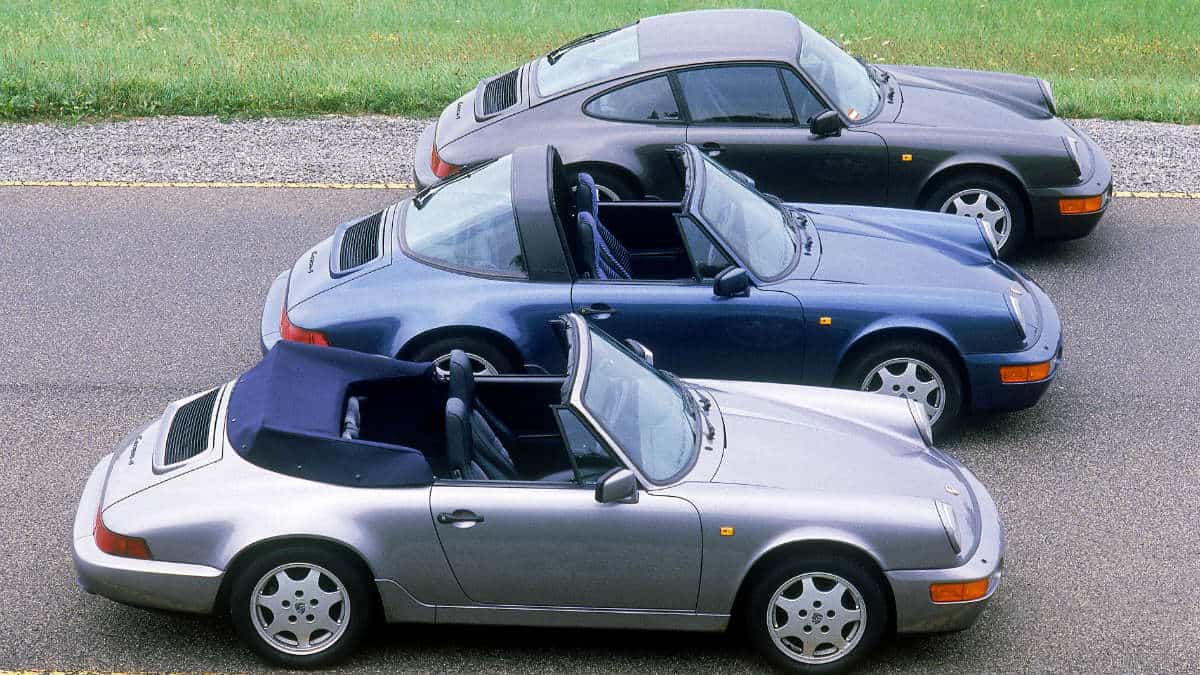
The 911 remains the beating heart of Porsche. Few sports cars in automotive history command such continuity or match such an enduring engineering lineage as the Porsche 911. Ever since its public debut as the Type 901 prototype at the Frankfurt IAA International Motor Show in September 1963, Zuffenhausen’s rear-engine icon has defined the sports car landscape. Today it serves as the universal yardstick against which rivals are judged, acting simultaneously as the technical and philosophical lodestar for every vehicle bearing the Porsche crest. From the Cayenne sports utility to the four-door Panamera, every model line in the stable draws directly from the mechanical principles, rear-biased packaging lessons, and chassis balance developed across five decades of 911 evolution.

More than 820,000 examples of the Porsche 911 have left the factory floor, securing its standing as the world’s most successful high-performance sports car. Across seven distinct generations, engineers at Zuffenhausen and the motorsport skunkworks in Weissach have methodically redesigned and re-engineered the platform without ever abandoning its signature rear-engine architecture. In doing so, the car repeatedly reconciles engineering paradoxes that trip up lesser machinery: uncompromising track-focused athleticism paired with genuine day-to-day usability; fierce motorsport tradition balanced by constant drivetrain innovation; and exotic performance tempered by understated usability. Ferry Porsche captured that rare duality better than anyone: “The 911 is the only car you could drive on an African safari or at Le Mans, to the theatre or through New York City traffic.”
Beyond its unmistakable silhouette, the Porsche 911 has built its reputation on motorsport-derived technology. Solutions developed in the crucible of endurance racing routinely find their way into customer cockpits. Circuit competition is the primary test laboratory for Porsche, and the 911 has proved remarkably versatile across six decades of tarmac, mud, and sand. More than two-thirds of Porsche’s 30,000 motorsport victories to date belong to the 911 family tree, spanning gruelling 24-hour endurance marathons at Daytona, the Nürburgring, and Le Mans, through to punishing international rally stages across East Africa and Monte Carlo.
Fifty Years of the 911: The Golden Anniversary Milestones
To celebrate the golden milestone of its most celebrated sports car, Porsche has made the 50th anniversary the centrepiece of its activities throughout 2013. The program opened at the Retro Classics exhibition in Stuttgart, where the Porsche Museum unveiled four historic machines that capture the technological turning points of the car’s lineage: an early production 911 Turbo Coupé, Coupée 1981 911 Cabriolet design study, a street-homologated 1997 911 GT1, and the historic pre-series Type 754 T7 chassis penned by Ferdinand Alexander Porsche, which directly established the visual proportions of the original 901.
Zuffenhausen has also dispatched an authentic 1967 model 911 Coupé on a five-continent world tour. Travelling as an ambassador for the brand’s heritage, this vintage survivor is visiting major international venues, historical rallies, and classic gatherings across Pebble Beach in California, Shanghai, Goodwood in the United Kingdom, Paris, and Australia. Back at headquarters, the Porsche Museum is staging an extensive special exhibition entitled “50 Years of the Porsche 911” running from 4 June through 29 September 2013, supported by a dedicated historical volume, “911×911,” published by the museum’s in-house imprint.
The Original 911: 1963–1973
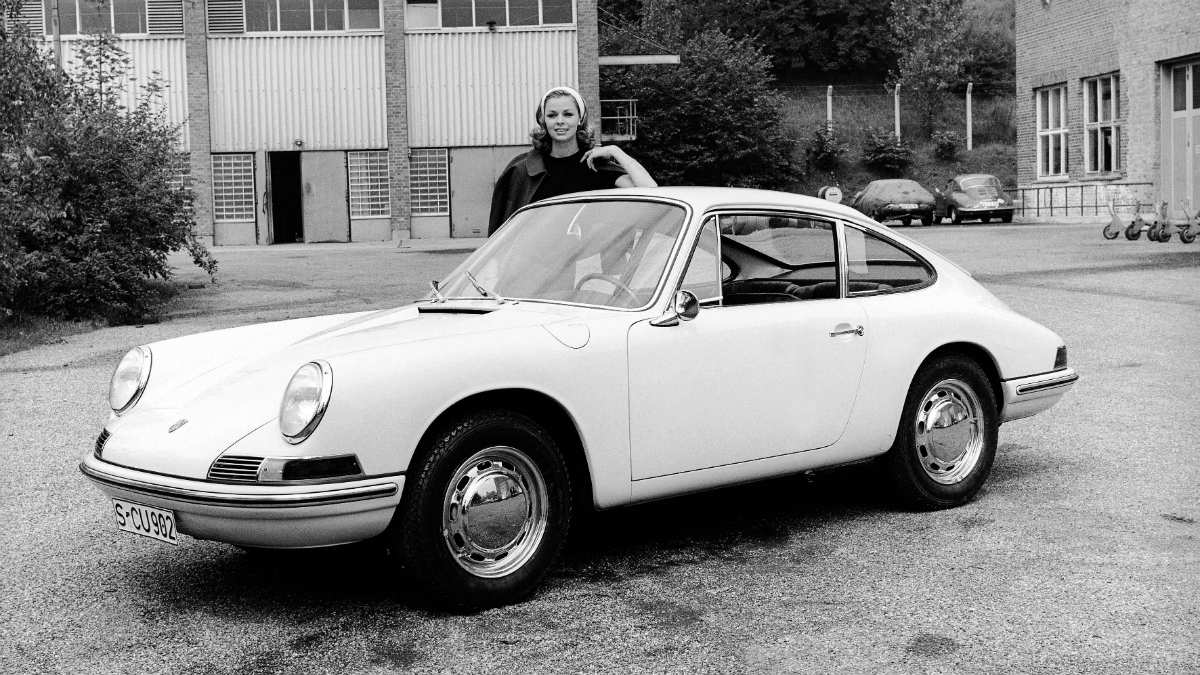
Conceived to replace the beloved four-cylinder 356, the 911 made its public bow at the 1963 Frankfurt motor show under its internal project designation, the Type 901. Following a polite objection from Peugeot regarding three-digit numbers with a central zero, Porsche renamed the car the 911 for its commercial rollout in 1964. Tucked behind the rear axle sat a sophisticated, air-cooled 2.0-litre flat-six engine fed by twin triple-choke carburettors, delivering 130 horsepower. That was sufficient to push the sleek 1,080-kilogram fastback to a top speed of 210 km/h, numbers that put conventional GT sports cars of the era on notice.
To offer a more accessible entry point, Porsche introduced the four-cylinder 912 in 1965, retaining the 356 SC engine within the modern 911 bodyshell. Development moved rapidly: 1966 brought the 160-horsepower 911 S, distinguished by its five-spoke forged alloy wheels developed with Fuchs, which quickly became an iconic visual signature. That same year saw the arrival of the 911 Targa. Designed to satisfy stringent American rollover safety standards without sacrificing the wind-in-the-hair sensation, it introduced a rigid, brushed stainless steel roll hoop, a removable front roof panel, and a fold-down plastic rear window, creating the world’s first true safety cabriolet.
In 1967, the semi-automatic four-speed Sportomatic transmission joined the option sheet, blending a torque converter with a microswitch-actuated dry clutch. Porsche also earned technical bragging rights by becoming the first German carmaker to meet strict United States exhaust emissions rules, thanks to advanced mechanical fuel injection introduced on the 911 E and 911 S variants. To combat the torque deficit at low engine speeds, displacement grew steadily: first to 2.2 litres in 1969, and then to 2.4 litres in 1971. The ultimate expression of the first-generation platform arrived in late 1972 with the legendary 911 Carrera RS 2.7. Weighing under 1,000 kg in lightweight Sport trim and developing 210 horsepower, the Carrera RS introduced the distinctive fiberglass “ducktail” rear spoiler, the first purpose-designed aerodynamic drag and lift-reduction device fitted to a series production road car.

The G-Series: 1973–1989

A decade after the car’s arrival, Porsche introduced its first comprehensive redesign: the G-Series. Spanning sixteen production years from 1973 until 1989, the G-Series remains the longest-running generation in the history of the 911. The visual transformation was immediate and practical. To satisfy strict United States federal impact regulations, Porsche integrated substantial aluminium bumpers fitted with flexible bellows, engineered to absorb 5-mph impacts without damaging the underlying bodywork. Cabin safety advanced in lockstep, introducing three-point inertia-reel seatbelts as standard equipment alongside integrated high-back head restraints.
The defining moment of the G-Series era came in October 1974 at the Paris Motor Show, when Porsche unveiled the 911 Turbo (internal Type 930). Equipped with a single KKK turbocharger feeding a 3.0-litre flat-six, it developed 260 horsepower and came equipped with flared rear wheel arches and an enormous tea-tray rear spoiler. Combining raw straight-line thrust with everyday luxury, the Turbo instantly became a cultural touchstone. In 1977, Porsche raised the bar further by enlarging the engine to 3.3 litres and adding a charge-air intercooler, pushing output to a towering 300 horsepower.
For naturally aspirated enthusiasts, the SC (Super Carrera) stabilized the core range before giving way to the 911 Carrera 3.2 in 1983. Pumping out 231 horsepower, the 3.2 Carrera paired electronic Bosch Motronic engine management with improved reliability, becoming a firm favourite among drivers and collectors. Open-air motoring flourished during this period: Porsche introduced the first full 911 Cabriolet in 1982, featuring a folding canvas roof supported by sheet-steel cowl hoops. The generation reached its curtain call in 1989 with the limited-production 911 Carrera Speedster, featuring a shortened, raked windscreen and a double-bubble fiberglass tonneau cover that paid homage to the 356 Speedster of the 1950s.
The 964 Generation: 1988–1994

By the late 1980s, industry commentators were predicting the end of the traditional rear-engine layout. Porsche answered those critics emphatically in autumn 1988 with the launch of the Type 964 Carrera 4. Although the classic silhouette remained familiar, 85 percent of the car’s underlying componentry was completely brand new. Out went the vintage torsion bars that had underpinned the car since 1963, replaced by a modern suspension setup utilizing light-alloy control arms, coil springs, and McPherson struts. Anti-lock brakes and power steering were fitted as standard, and an electrically deployable rear spoiler was integrated flush into the engine lid, rising automatically at speed to stabilize the rear end without disrupting the car’s parked profile.
Under the engine lid sat an enlarged, air-cooled 3.6-litre boxer engine utilizing twin-spark ignition, producing 250 horsepower. Crucially, the 964 launched in all-wheel-drive form as the Carrera 4, adapting electro-hydraulic differential locks developed from the Group B 959 supercar to distribute torque dynamically between the axles. A rear-wheel-drive Carrera 2 arrived the following year, along with the optional Tiptronic four-speed automatic transmission, which allowed drivers to switch between fully automatic shifts and clutchless manual gear selection via a sequential gate.
The 964 family expanded into Coupé, Targa, and Cabriolet body styles, but its performance credentials were reinforced at the top of the range. The 964 Turbo arrived in 1990, initially using a carryover 3.3-litre turbo engine with 320 horsepower before upgrading in 1993 to a full 3.6-litre unit generating 360 horsepower. Specialist track-focused editions cemented the generation’s enduring standing: the stripped-out Carrera RS, the limited-production Turbo S, and the wide-body Carrera 2 Speedster remain among the most sought-after collector pieces of the air-cooled era.
The 993 Generation: 1993–1998
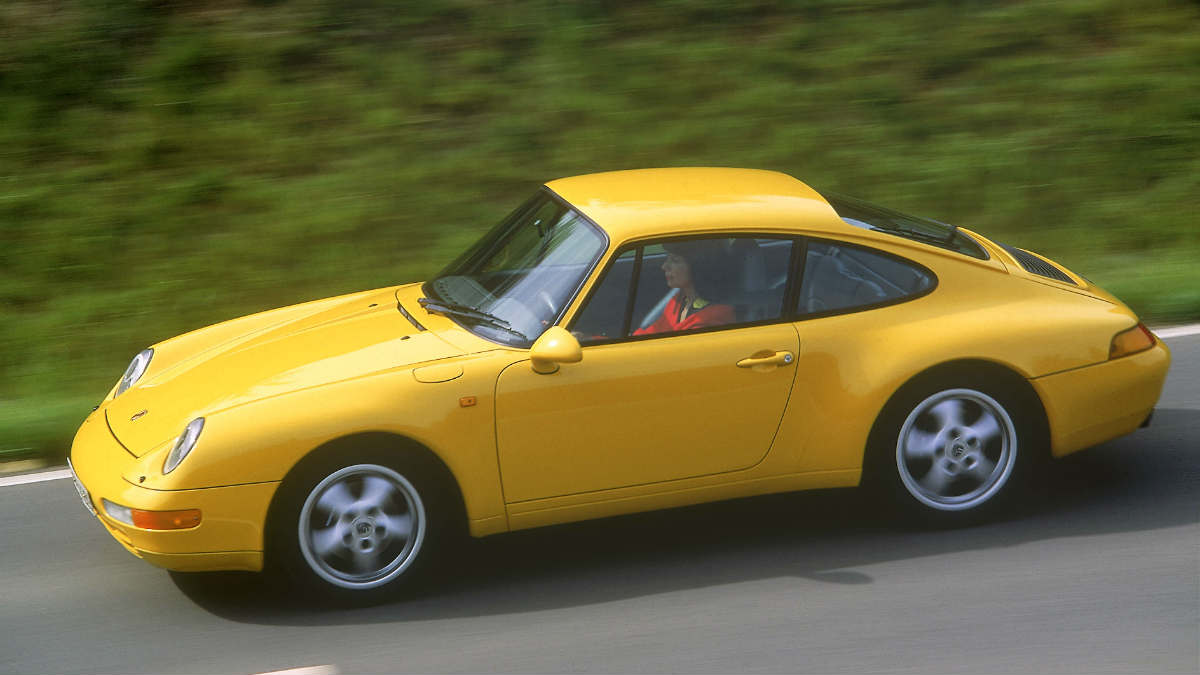
To many Porsche purists, the Type 993 represents the absolute zenith of the traditional 911 breed. Introduced late in 1993, the Tony Hatter-designed exterior brought a dramatic visual evolution: integrated, body-coloured polyurethane bumpers, muscular rear fenders, and a swept-back nose made possible by polyellipsoid headlights replacing the classic upright lenses. The styling was accompanied by a major chassis overhaul. Porsche engineered an all-new multi-link rear suspension mounted to an aluminium subframe—the famous LSA (Lightweight, Stable, Agile) rear axle—which virtually eliminated the trailing-throttle oversteer that had challenged generations of 911 drivers.
Propulsion came from the air-cooled 3.6-litre boxer, initially delivering 272 horsepower and later upgraded with the Varioram variable-length intake system in 1995 to reach 285 horsepower. The 993 Turbo, arriving for the 1995 model year, rewrote the supercar performance rulebook. It adopted twin turbochargers operating in parallel and sent 408 horsepower to all four wheels via a permanent viscous-coupling all-wheel-drive system. It was the first production car in the world fitted with OBD-II emissions diagnostics, qualifying it as the cleanest production performance car of its time. It also debuted hollow-spoke pressure-cast aluminium alloy wheels to trim unsprung mass.
Purists seeking raw, unassisted driving thrills turned to the rear-wheel-drive 911 GT2, a lightweight homologation special with riveted wheel-arch extensions and 430 horsepower. Even the Targa variant received a technological reinvention: abandoning the removable roof panel of old, the 993 Targa introduced a large, tinted glass roof section that slid down electrically beneath the rear window at the touch of a button. However, the lasting legacy of the 993 is rooted in its mechanical identity: when the final examples rolled off the Zuffenhausen assembly line in early 1998, they closed the book on thirty-five years of air-cooled 911 production.

The 996 Generation: 1997–2005

The arrival of the Type 996 in 1997 marked the single most radical engineering shift in the history of the 911. Faced with stricter worldwide noise, fuel efficiency, and emissions mandates, Porsche took the monumental decision to retire air cooling entirely. Built upon an all-new chassis with a drag coefficient reduced to 0.30, the 996 was longer, wider, and significantly more spacious inside. Power was supplied by an entirely new, water-cooled 3.4-litre flat-six engine equipped with four valves per cylinder and VarioCam variable valve timing, producing 300 horsepower while delivering significant reductions in fuel consumption and acoustic harshness.
To ensure financial sustainability, Porsche shared front-end architecture, doors, and suspension components between the 996 and the mid-engine 986 Boxster. The resulting “fried egg” composite headlights, which combined low beams, high beams, and indicators beneath a single teardrop lens, sparked debate among brand traditionalists, yet the design allowed Porsche to cut manufacturing costs dramatically and modernize its production line. Inside, drivers were greeted by a contemporary, ergonomic cabin that traded spartan 1960s architecture for modern switchgear, climate control, and luxury grand touring comfort.
Under the 996 umbrella, Porsche launched an unprecedented model expansion. In 1999, the motorsport division unveiled the naturally aspirated 911 GT3, powered by a 360-horsepower derivative of the dry-sump Mezger racing engine, reviving the pure motorsport spirit of the original Carrera RS. The 996 Turbo arrived in 2000 with twin turbochargers, all-wheel drive, and 420 horsepower. For the ultimate in track-focused aggression, the 2001 911 GT2 pushed rear-wheel-drive output to 462 horsepower and made history by introducing Porsche Ceramic Composite Brakes (PCCB) as standard equipment, demonstrating brake performance previously unseen on production road cars.

The 997 Generation: 2004–2012

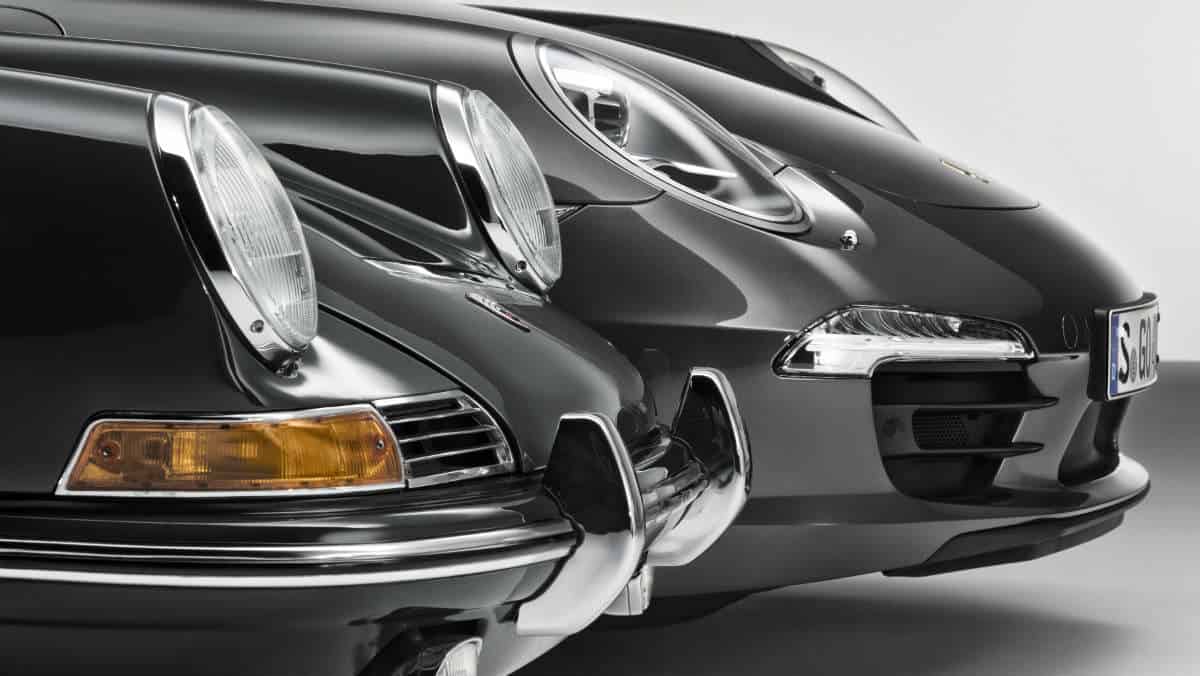
In July 2004, Porsche introduced the Type 997, striking an immediate chord with enthusiasts by reinstating classic styling cues. The teardrop headlights of the 996 were retired in favour of clean, circular front lamps, with auxiliary turn signals relocated to the front bumper. Beneath the nostalgic exterior styling lay major advances in powertrain engineering and chassis control. The base Carrera featured a 3.6-litre boxer delivering 325 horsepower, while the Carrera S debuted an enlarged 3.8-litre engine with 355 horsepower and standard Porsche Active Suspension Management (PASM), offering electronically adjustable dampers that adapted instantaneously to surface changes and driver inputs.
Technological milestones arrived in rapid succession. The 2006 911 Turbo introduced Variable Turbine Geometry (VTG) on a petrol engine, using movable guide vanes inside the turbocharger housing to provide immediate low-end boost response without choking high-rpm breathing. In the autumn of 2008, Porsche delivered a mid-cycle update (997 Generation II) that transformed the core lineup: direct fuel injection (DFI) raised engine efficiency, while the lightning-fast, seven-speed Porsche Doppelkupplung (PDK) dual-clutch transmission replaced the conventional Tiptronic torque-converter automatic.
By the conclusion of its production run, the 997 portfolio had grown into the most versatile sports car family in the world, encompassing 24 distinct model variants. Enthusiasts could configure rear-wheel or all-wheel drive, Coupé, Cabriolet, or Targa rooflines, wide-body GTS models, or purist track machines including the 911 GT3, the high-revving GT3 RS, and the formidable 620-horsepower, rear-wheel-drive 911 GT2 RS.
The 991 Generation: 2011–2018

Unveiled at the Frankfurt Motor Show in September 2011, the Type 991 represents the greatest technological leap in the fifty-year history of the 911. Built around an intelligent hybrid aluminium-steel bodyshell, the 991 shaved up to 45 kilograms off the curb weight of its predecessor while boosting structural torsional rigidity by twenty percent. The wheelbase expanded by 100 millimetres, the front track widened, and the roofline sat lower, creating a planted, athletic stance that significantly reduced pitch and yaw under heavy cornering.
Efficiency and driving dynamics advanced under the Porsche Intelligent Performance banner. The base Carrera downsized its displacement to a high-revving 3.4-litre flat-six, yet pushed output to 350 horsepower—surpassing the larger outgoing engine while trimming fuel consumption. The Carrera S delivered 400 horsepower from its 3.8-litre flat-six. Dynamic capabilities reached new heights through Porsche Dynamic Chassis Control (PDCC) active roll stabilization and an electro-mechanical power steering system honed for pinpoint accuracy. Transmission choices included the lightning-fast seven-speed PDK and the world’s first seven-speed manual gearbox for a production passenger car.
Across five decades, the fundamental character of the Porsche 911 has remained remarkably consistent. It has grown faster, safer, and cleaner, yet every generation preserves the engineering integrity and driving involvement established by Ferdinand Alexander Porsche’s original design in 1963. Through careful, relentless evolution rather than radical reinvention, the 911 continues to stand as the quintessential sports car—the benchmark against which every high-performance rival is measured.
Vehicle data
| Field | Value |
|---|---|
| Make | Porsche |
| Model | 911 (Seven Generations: Original 901/911, G-Series, 964, 993, 996, 997, 991) |
| Generation / chassis code | Classic 901/911, G-Series, Type 964, Type 993, Type 996, Type 997, Type 991 |
| Model year(s) covered | 1963–2013 (50-Year Lineage) |
| Body style | 2+2 Coupé, Targa, Cabriolet, Speedster |
| Powertrain / engine | Rear-mounted flat-six boxer engines: Air-cooled 2.0L, 2.2L, 2.4L, 2.7L, 3.0L, 3.2L, 3.3L Turbo, 3.6L, 3.6L Turbo; Water-cooled 3.4L, 3.6L, 3.8L naturally aspirated and twin-turbocharged |
| Power / torque | 130 hp (1963 901 2.0L) to 400 hp (991 Carrera S 3.8L); Turbo models up to 620 hp (997 GT2 RS) |
| Transmission | 4-speed manual, 5-speed manual, 6-speed manual, 7-speed manual; 4-speed Sportomatic semi-automatic; 4-speed/5-speed Tiptronic automatic; 7-speed Porsche Doppelkupplung (PDK) dual-clutch |
| Drivetrain | Rear-wheel drive (standard); All-wheel drive (Carrera 4, Turbo, Carrera 4S from 964 onward) |
| Key performance figures | Top speed: 210 km/h (1963 901) to over 300 km/h (modern Turbo and GT models) |
| Price (as stated) | Not stated in sources |
| On-sale / announcement period | September 1963 (IAA Frankfurt premiere) through 2013 50th Anniversary |
| Market | Global |