
When nine uncompleted sports car chassis burned to ash at Browns Lane on the evening of February 12, 1957, Jaguar left a celebrated automotive narrative unfinished. The factory inferno destroyed roughly 270 cars in total, but among the wreckage lay nine chassis that Sir William Lyons had earmarked to complete a run of 25 road-going conversions based on the Le Mans-conquering D-Type. Known as the Jaguar XKSS, those cars became immediate legends—rare, uncompromising, and widely heralded by historians as the world’s first true road-going supercar. For nearly six decades, that tally remained fixed at 16 completed original examples. Now, Jaguar Classic has set out to build the nine lost cars from scratch, constructing each one by hand to exact period specification at its dedicated experimental facility in Warwick.
The Genesis of a Road-Going Le Mans Racer
The origins of the XKSS were born out of absolute track dominance and a sudden shift in racing strategy. Between 1955 and 1957, Jaguar claimed three successive overall victories at the 24 Hours of Le Mans with the aerodynamic D-Type. Designed by aeronautical engineer Malcolm Sayer, the D-Type was a revelation of monocoque aircraft engineering, slippery aerodynamics, and robust straight-six mechanicals. Yet following Jaguar’s withdrawal from factory racing at the end of the 1956 season, unsold D-Type chassis remained sitting at the Browns Lane works in Coventry.
Sir William Lyons was never one to let valuable hardware languish in storage. On January 14, 1957, Lyons took the bold decision to convert the remaining 25 D-Type chassis into high-performance road-going sports cars. The goal was to market these machines primarily to affluent sports car enthusiasts and gentleman racers across North America, where demand for rapid European open two-seaters was soaring. The badge chosen for this conversion was XKSS, signaling both its kinship to the road car lineage and its competition roots.
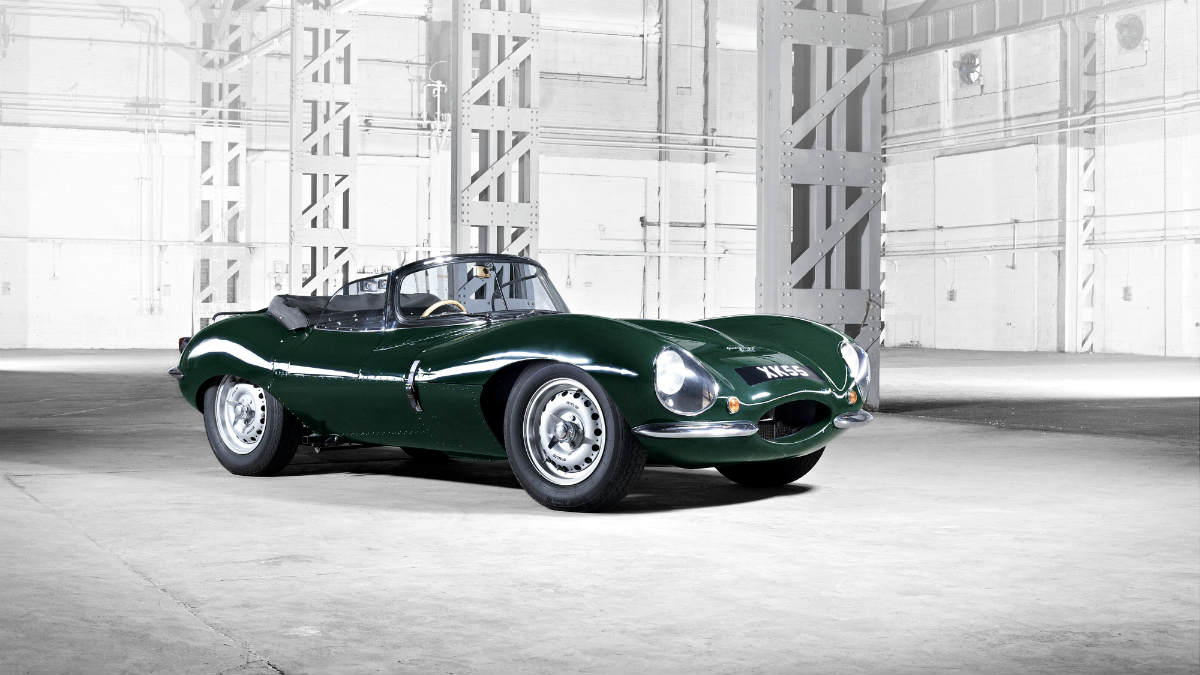
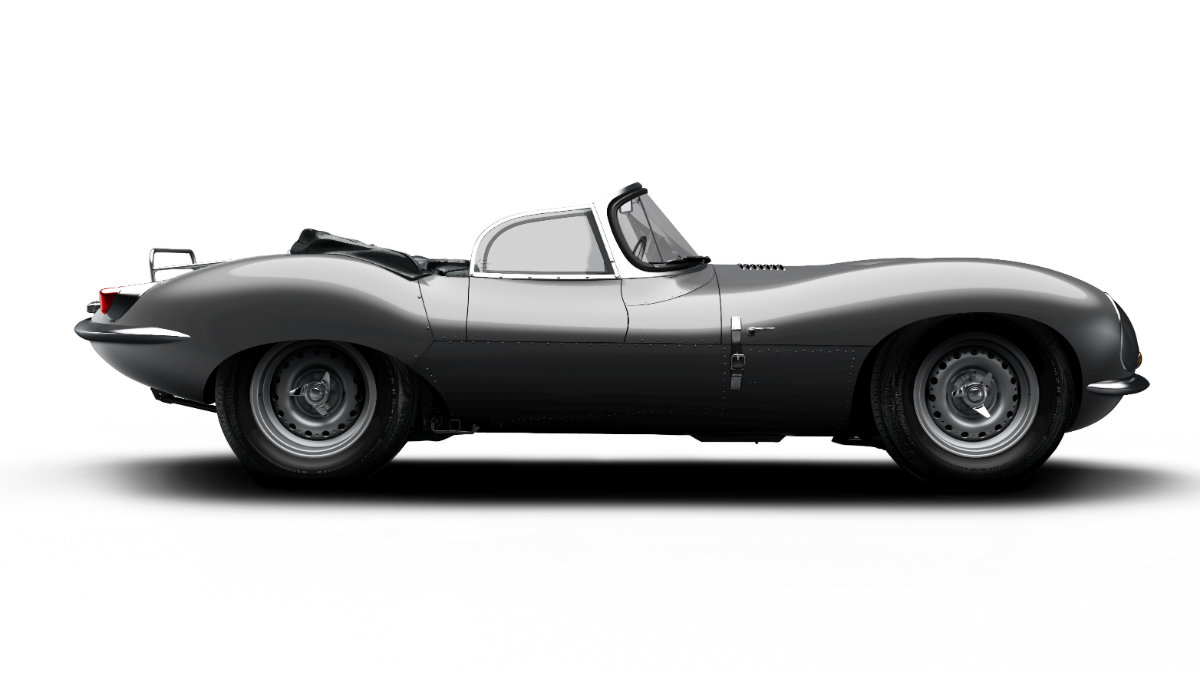
Turning a pure endurance racer into a road car required practical accommodations, though Jaguar engineers made as few compromises as possible. To satisfy road regulations and offer basic civility, they fitted a full-width curved laminated glass windscreen surrounded by a chrome surround, replacing the D-Type’s small aeroscreen. A passenger-side door was cut into the monocoque bodywork, and the rigid structural divider that separated driver and passenger in the racing cockpit was removed. Behind the driver’s head, the famous aerodynamic fin and integral headrest were taken off to leave an open, swooping rear deck. Chrome bumperettes were mounted front and rear, light clusters gained subtle road-legal trim, and a rudimentary folding canvas hood and side screens were added for foul-weather protection.
The Tragedy of Browns Lane and the Nine Lost Cars
Production of the converted road cars began briskly in early 1957. Sixteen completed examples were finished and shipped out, finding their way into the hands of select buyers—including Hollywood actor Steve McQueen, whose British Racing Green example became one of the most famous cars in Southern California car culture. But on the evening of February 12, 1957, disaster struck the Coventry factory. A massive fire tore through the assembly sheds at Browns Lane, gutting production facilities and incinerating hundreds of cars. Trapped in the blaze were nine XKSS chassis that were in various stages of build. With factory resources redirected entirely to rebuilding passenger car production, Jaguar abandoned the remaining run. For 59 years, those nine unbuilt chassis remained automotive ghosts.
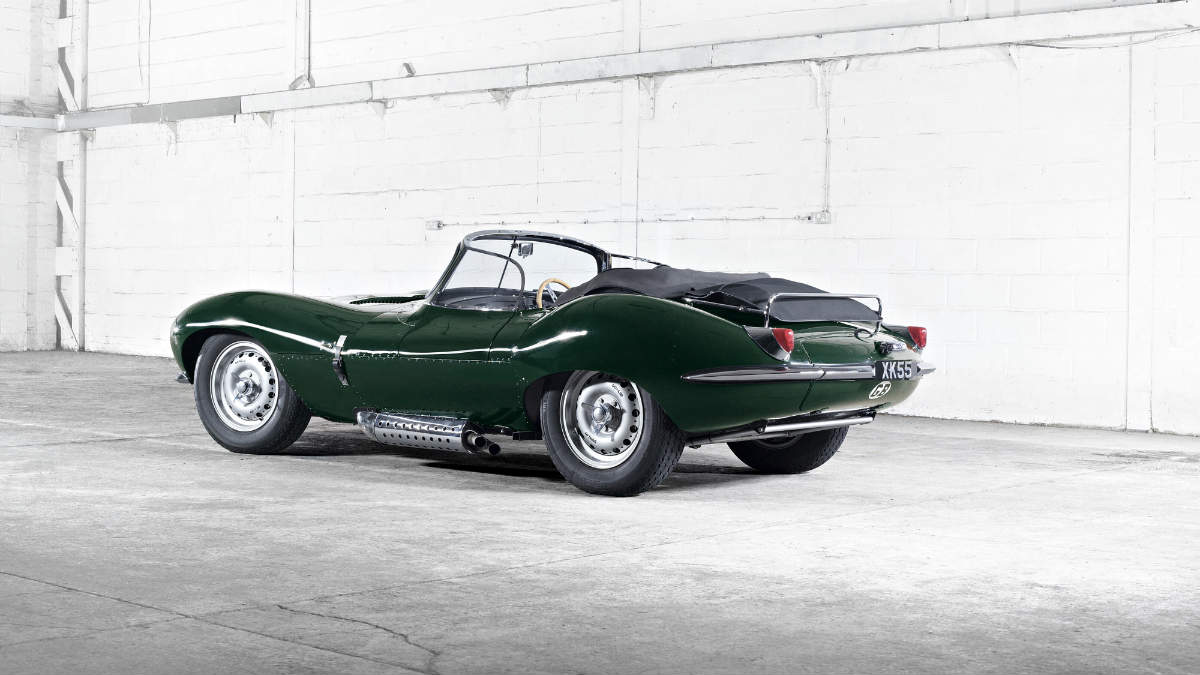
That unfinished chapter led Jaguar Classic to greenlight an unprecedented project: the XKSS Continuation series. Rather than creating modern restomods or nostalgic replicas, the Jaguar Classic team committed to building the nine missing cars exactly as they would have rolled out of Browns Lane in 1957. The project directly leveraged the immense institutional and artisanal expertise gained during Jaguar Classic’s celebrated Lightweight E-Type continuation programme, which proved that modern craftsmen could resurrect lost historic series with surgical authenticity.
Authentic Period Craftsmanship in Warwick
Constructing a 1957 sports car from scratch in the modern era presented a formidable technical challenge. Every car in the nine-chassis continuation run is hand-built at Jaguar’s dedicated Experimental Shop in Warwick. Before a single sheet of metal was formed, Jaguar Classic engineers spent 18 months scanning original 1957 XKSS examples using high-resolution digital scanning equipment. These 3D digital scans were cross-referenced against original period blueprints, factory build sheets, and technical archive drawings preserved at the Jaguar Heritage Trust.
Because period bodies were hand-wheeled and finished with hand tools, no two original 1957 cars were millimeter-identical. Jaguar Classic created a definitive styling buck by averaging data from multiple surviving originals. From this wooden buck, traditional craftsmen hand-wheel every body panel from magnesium alloy (Reynolds 531 tubing and bespoke alloy sheeting), replicating the exact gauge and compound curves Malcolm Sayer designed for Le Mans. The monocoque tub and tubular front subframe are fabricated using period-correct bronze welding techniques, precisely matching the chassis methods of 1957.
Mechanical Heart: The 3.4-Litre Straight-Six
Under the sweeping, louvred bonnet sits an exacting recreation of the legendary 3.4-litre (3,442 cc) twin-cam XK inline-six engine. Rather than sourcing used donor engines, Jaguar Classic commissioned completely brand-new cast iron engine blocks and new cast aluminium cylinder heads featuring the correct wide-angle valve layout developed for the D-Type. Breathing through triple Weber 45 DCOE carburetors, this straight-six powerplant generates an authentic 262 horsepower at 5,900 rpm and roughly 260 lb-ft of torque, delivered with the throaty, metallic roar that made Browns Lane machines famous on international circuits.
The mechanical specification follows the 1957 factory rulebook down to the smallest fasteners. The straight-six engine is paired with an authentic four-speed all-synchromesh manual gearbox, sending drive to the rear wheels via a mechanical limited-slip differential. Stopping duties are handled by Dunlop four-wheel disc brakes with original-type cast iron calipers and separate front and rear hydraulic circuits—pioneering braking technology that gave Jaguar its competitive edge over drum-braked Ferraris and Aston Martins at Le Mans in the mid-1950s. The suspension utilizes front independent double wishbones with longitudinal torsion bars, while the rear retains the live axle supported by trailing links and a transverse torsion bar.
Cockpit Fidelity and Collector Heritage
Inside the cabin, the sensory experience mirrors 1957 completely. The cockpit features exact recreations of Smiths dashboard gauges with authentic brass bezels, period toggle switches, and a four-spoke wood-rimmed steering wheel. The lightweight bucket seats are trimmed in original-grain leather, while the inner door panels and transmission tunnel expose the painted aluminium monocoque tub. Even the wiring harnesses use cloth-braided sheathing, and the chassis plates carry the unassigned original 1957 serial numbers that were reserved in the Browns Lane ledger before the fire stopped work.
Priced in excess of £1 million each, all nine cars in the continuation series were allocated immediately to a vetted list of collectors and long-standing brand patrons. Each car requires several thousand hours of painstaking hand labor by Jaguar Classic specialists, culminating in an uncompromising piece of running history. By building the nine lost chassis to the exact drawings of 1957, Jaguar has closed a six-decade gap in its sports car heritage, granting the legendary XKSS the complete production run Sir William Lyons envisioned before the smoke cleared over Browns Lane.
Vehicle data
| Field | Value |
|---|---|
| Make | Jaguar |
| Model | XKSS Continuation |
| Generation / chassis code | Continuation series (1957 specification, completing original 25-car run) |
| Model year(s) covered | 1957 specification (built from 2016) |
| Body style | Two-door open roadster |
| Powertrain / engine | 3.4-litre (3,442 cc) DOHC inline-six, triple Weber 45 DCOE carburetors |
| Power / torque | 262 hp @ 5,900 rpm / 260 lb-ft |
| Transmission | 4-speed manual gearbox |
| Drivetrain | Rear-wheel drive |
| Key performance figures | 0-60 mph ~5.2 sec, top speed ~149 mph |
| Price (as stated) | Over £1,000,000 |
| On-sale / announcement period | Announced 2016, deliveries commencing 2017 |
| Market | United Kingdom / Global collectors |