
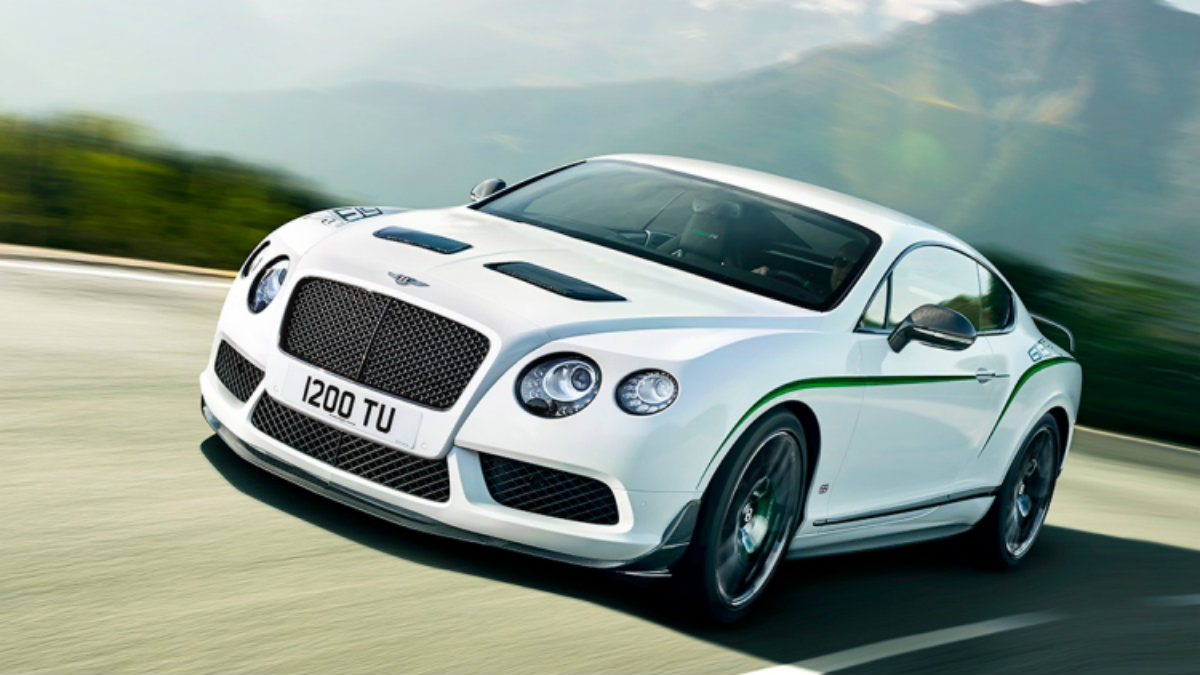
Engineering excellence and supercar performance at its core
The arrival of the Bentley Continental GT at the Geneva Motor Show in 2003 marked a decisive turning point for the historic Crewe marque. Conceived in the wake of the Volkswagen Group’s acquisition of Bentley, the Continental GT was designed to marry peerless British handcraftsmanship with uncompromising high-speed stability and modern volume manufacturing. Where previous grand tourers from Crewe were low-volume, coachbuilt dreadnoughts reserved for an elite few, the Continental GT introduced advanced industrial production methods without abandoning the rich leathers, authentic wood veneers, and mechanical heft that defined the winged “B” badge.
Under the stewardship of design director Dirk van Braeckel, the exterior paid direct visual homage to the celebrated 1952 Continental R-Type. Its muscular rear haunches, sweeping fastback roofline, pillarless glasshouse, and distinctive quad headlamps established a contemporary design language that immediately redefined the modern luxury coupe. Beneath that sculpted steel and aluminium skin sat an exceptionally rigid steel monocoque developed alongside Volkswagen Group platform architecture, delivering the torsional rigidity required to harness monumental engine torque while preserving the serene cabin calm that luxury grand touring demands.
Twin-Turbocharged 6.0-Litre W12 Powertrain
The beating heart of the Continental GT is its 6.0-litre (5,998 cc) twin-turbocharged W12 engine. Configured as two narrow-angle 15-degree VR6 cylinder banks joined on a shared crankshaft at an angle of 72 degrees, the compact layout allowed an engine with twelve cylinders to nestle low and neatly within the front chassis. Forced induction comes courtesy of twin BorgWarner K04 turbochargers running in parallel, generating instantaneous low-down boost and ensuring an effortless reserve of forward momentum across the entire rev range.
The power output is rated at 560 PS (412 kW / 552 bhp) at 6,100 rpm, paired with 650 Nm (479 lb-ft) of torque accessible from just 1,600 rpm all the way up through 6,100 rpm. Rather than requiring aggressive throttle inputs to extract pace, the W12 delivers a seamless, turbine-like wave of thrust. This formidable propulsion launches the 2,420-kilogram coupe from 0 to 100 km/h (0 to 62 mph) in 4.8 seconds, crossing the 160 km/h (100 mph) threshold in 11.1 seconds and running onward to a maximum top speed of 318 km/h (197.6 mph). Such figures elevated a two-and-a-half-tonne luxury express into direct competition with dedicated supercars while offering passenger comfort unmatched by mid-engine rivals.
Chassis Architecture and All-Wheel-Drive Traction
Managing the massive torque of the twin-turbo W12 required a drivetrain engineered for all-weather traction. Bentley paired the powerplant with a six-speed ZF 6HP26 automatic transmission featuring steering-column-mounted paddle shifters and Tiptronic manual override. Power is routed continuously to all four wheels through a permanent four-wheel-drive system governed by a central Torsen (torque-sensing) differential. Under normal driving conditions, the system splits torque evenly between the front and rear axles, actively redistributing drive the instant wheel slip is detected to maintain relentless corner exit grip on slick tarmac, wet motorway asphalt, or snow-dusted Alpine passes.
Suspension hardware consists of an independent four-link setup at the front and a trapezoidal multi-link arrangement at the rear, supported by air springs with continuous damping control. Drivers can choose from four distinct electronic damper firmness settings, ranging from cloud-like highway compliance to taut, body-roll-resisting agility for fast sweeping bends. Self-levelling pneumatic struts automatically drop the ride height by 15 millimetres at sustained highway speeds above 160 km/h to optimize aerodynamic drag and increase stability.
Bringing such immense kinetic energy safely to a halt demanded the largest series-production passenger car braking package available in the early 2000s. Ventilated steel front brake discs measure 405 millimetres (15.9 inches) in diameter clamped by eight-piston calipers, complemented by 335-millimetre rear discs. Supported by anti-lock braking (ABS), Electronic Brakeforce Distribution (EBD), and an Electronic Stability Program (ESP), the Continental GT exhibits reassuring pedal feel and sustained stopping power under repeated high-speed deceleration.
Cabin Craftsmanship and Crewe Heritage
Step through the heavy doors and the Continental GT reveals the hand-finished luxury that has distinguished Crewe coachbuilding for generations. While electronic architecture and switchgear borrowed from the wider corporate inventory provide modern infotainment, satellite navigation, and digital climate control, all surfaces in contact with driver and passenger showcase authentic artisan finishing. Grade-A Scandinavian cowhides, chosen specifically for their uniform grain free of imperfections, wrap the dashboard, console, headliner, and door cards. Skilled machinists mirror-match wood veneers in burr walnut, dark stained burr walnut, or piano black across the fascia, ensuring perfect symmetry along the cabin centerline.
Drilled alloy foot pedals, knurled aluminium organ-stop air vent controls, and a centrally mounted Breitling analogue timepiece remind occupants of Bentley’s storied motorsport lineage. The 2+2 seating configuration provides deep, supportive, heated leather bucket seats with memory adjustments for front occupants, while sculpted rear buckets offer genuine comfort for shorter journeys or luggage stowage. Long-distance touring capability is rounded out by a generous boot tailored to swallow matched luggage sets or multiple golf bags.
With the Bentley Continental GT, the company refined and redefined grand tourer design, engineering excellence and supercar performance were at its core. In 2005, the Continental GTC convertible model was introduced, using the same powerful W12 engine and adding the opportunity to experience the grand tour in the open air with an insulated fabric soft top. The lighter, sharper Speed model joined the family few years later with an uprated 600-hp engine to further explore the performance capabilities of the platform, whilst still offering unmatched levels of refinement and craftsmanship.
First-Generation Lineage and Model Evolution
The first generation of the Continental GT (spanning model years 2003 through 2011) stood as an unequivocal commercial triumph, transforming Bentley from a low-volume bespoke manufacturer building roughly 1,000 cars per year into a self-sustaining luxury powerhouse delivering several thousand units annually. Enthusiasts could further tailor their cars through Bentley’s Mulliner personal commissioning department, opting for diamond-quilted upholstery, contrasting hide stitching, indented leather headlining, and distinct two-piece sports alloy wheels.
The introduction of the GT Speed in 2007 brought lowered sports suspension, firmer damping, retuned steering response, and carbon-silicon carbide ceramic brakes to the option sheet. In 2009, Bentley introduced the Continental Supersports, a hardcore two-seat evolution stripped of rear seats, equipped with lightweight carbon buckets, running flex-fuel E85 compatibility, and producing 621 bhp. Even with these later performance offshoots, the original 2003 Continental GT coupe remains the foundational blueprint of 21st-century British high-speed luxury.
Vehicle data
| Field | Value |
|---|---|
| Make | Bentley |
| Model | Continental GT |
| Generation / chassis code | First generation (Type 3W) |
| Model year(s) covered | 2003–2011 |
| Body style | Two-door 2+2 grand touring coupe |
| Powertrain / engine | 6.0-litre (5,998 cc) twin-turbocharged W12 (48 valves) |
| Power / torque | 560 PS (412 kW / 552 bhp) @ 6,100 rpm / 650 Nm (479 lb-ft) @ 1,600–6,100 rpm |
| Transmission | 6-speed ZF 6HP26 automatic with Tiptronic manual mode and paddle shifters |
| Drivetrain | Permanent all-wheel drive with Torsen centre differential |
| Key performance figures | 0–100 km/h: 4.8 s; 0–60 mph: 4.7 s; Top speed: 318 km/h (197.6 mph) |
| Price (as stated) | Not stated in sources |
| On-sale / announcement period | Unveiled March 2003 (Geneva Motor Show); on sale late 2003 |
| Market | Global |