
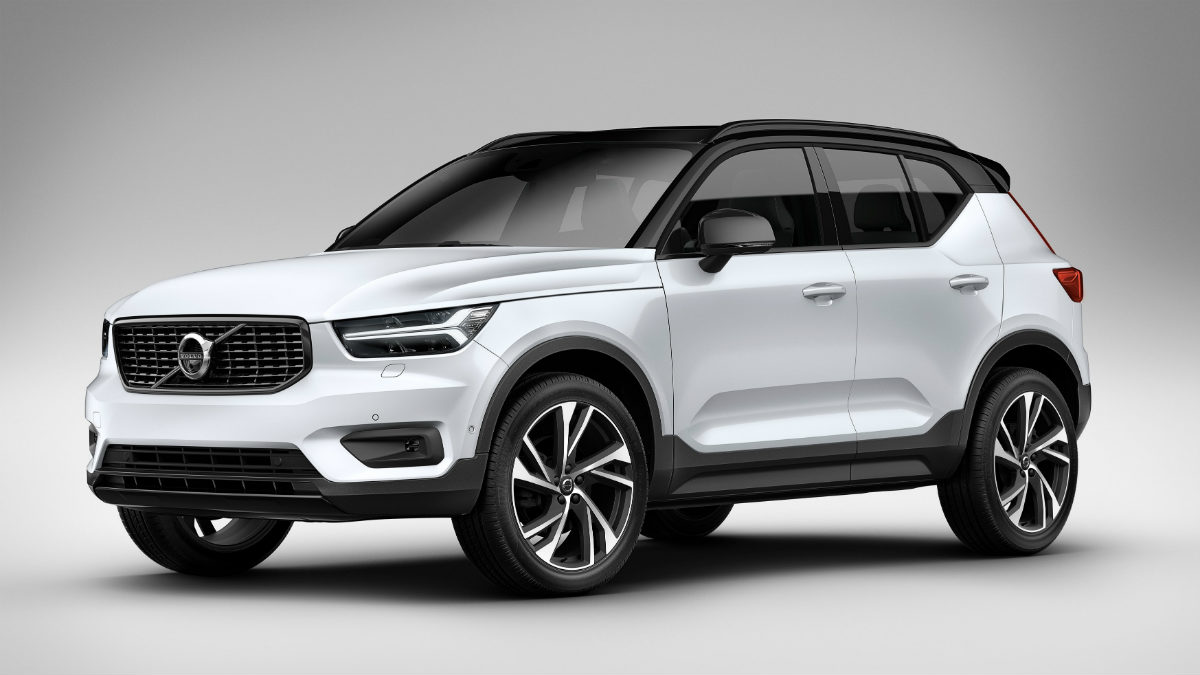
Volvo Cars expands its global sport utility lineup with the introduction of the Volvo XC40, a compact crossover marking the brand’s first dedicated entry into the rapidly expanding premium small SUV sector. With the debut of the XC40, the Swedish manufacturer completes a three-tier global SUV family alongside the larger mid-size XC60 and the flagship XC90. Beyond establishing a fresh footprint in an intensely contested category against competitors such as the BMW X1, Audi Q3, and Mercedes-Benz GLA, Volvo is simultaneously attempting to reshape how buyers acquire and live with automobiles by introducing its novel Care by Volvo subscription service.

Rethinking Ownership: Care by Volvo and Digital Connectivity
The introduction of the Volvo XC40 serves as the launchpad for Care by Volvo, an all-inclusive subscription program created to make getting behind the wheel as straightforward as acquiring a mobile phone. Instead of traditional leasing hurdles, hefty down payments, and protracted showroom haggling over dealer margins, Care by Volvo operates on a fixed monthly subscription fee. This flat-rate model removes local pricing discrepancies and covers regular maintenance, insurance coverage, and tire management under one umbrella.
Depending on geographical availability, the program also incorporates a suite of digital concierge services aimed at taking the friction out of daily life. Owners can schedule remote vehicle fueling, book detailing and exterior washing, arrange routine service pick-up, and receive e-commerce parcels delivered directly into the luggage compartment of their locked car via digital courier access. The service launches online in selected European nations and the United States, giving motorists a distinct alternative to traditional financing.

Digital connectivity on the XC40 goes a step further with integrated car sharing capability. Working through the Volvo On Call smartphone application, drivers can share digital keys with friends, family members, or colleagues without having to hand over a physical key fob. Authorized drivers receive access directly on their phones, allowing them to unlock the doors and start the vehicle within pre-set windows of time. Included as standard equipment for Care by Volvo subscribers, this integrated platform transforms the car into an adaptable shared mobility tool.
For Volvo as an enterprise, the timing of the XC40 could not be more vital. By fielding three distinct sport utility vehicles across compact, mid-size, and full-size segments simultaneously, the Swedish carmaker positions itself directly within the highest-margin, fastest-growing pocket of the global market. Company strategists view the baby crossover as an indispensable engine to drive worldwide volume and secure long-term operational profitability.
Compact Modular Architecture: Engineering the Foundations
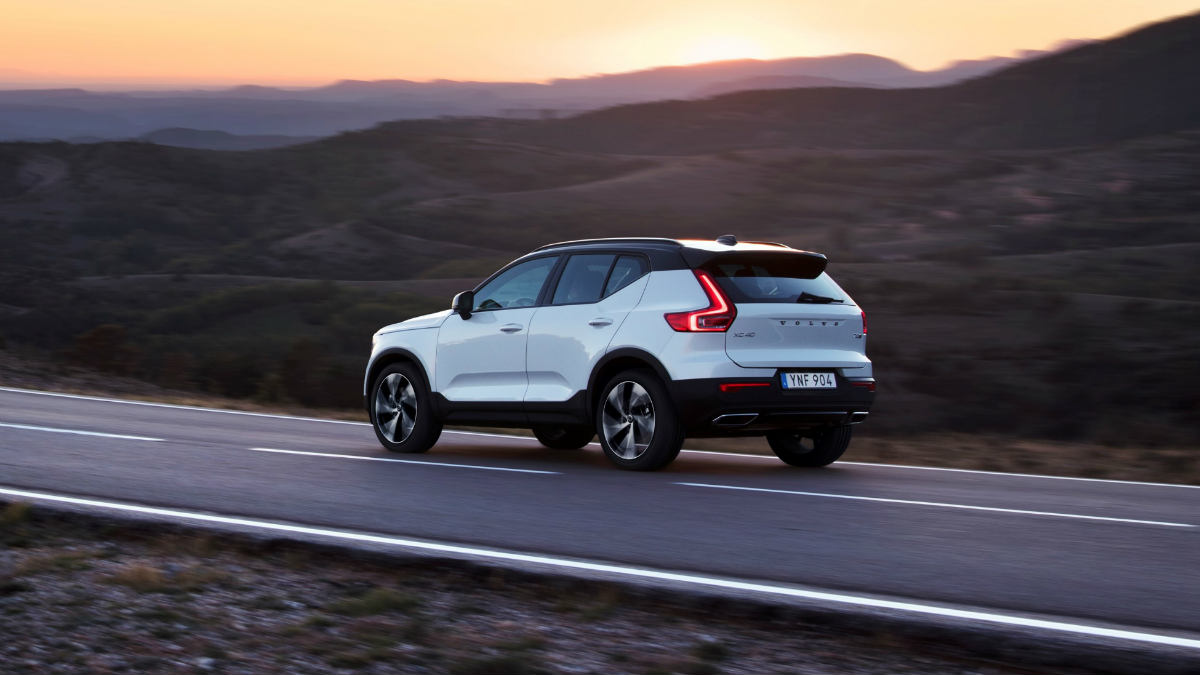
Beneath its sculpted sheet metal, the Volvo XC40 is the inaugural production vehicle constructed on Volvo Cars’ Compact Modular Architecture (CMA). While larger stablemates like the XC90, S90, and XC60 ride on the Scalable Product Architecture (SPA), CMA was engineered from a blank sheet to support smaller premium vehicles. Co-developed alongside parent company Geely, the platform provides the modular flexibility and production economies of scale necessary to compete profitably against established German luxury compacts.
CMA was planned from inception to accommodate diverse propulsion systems without sacrificing passenger cabin dimensions or load volume. The floorpan, bulkhead, and structural rails are designed to host traditional combustion engines, transverse plug-in hybrid electric layouts, and pure electric battery packs with equal facility. High-strength boron steels form a rigid safety cage around the cabin, providing the structural stiffness required to deliver refined driving dynamics while upholding Volvo’s safety heritage.
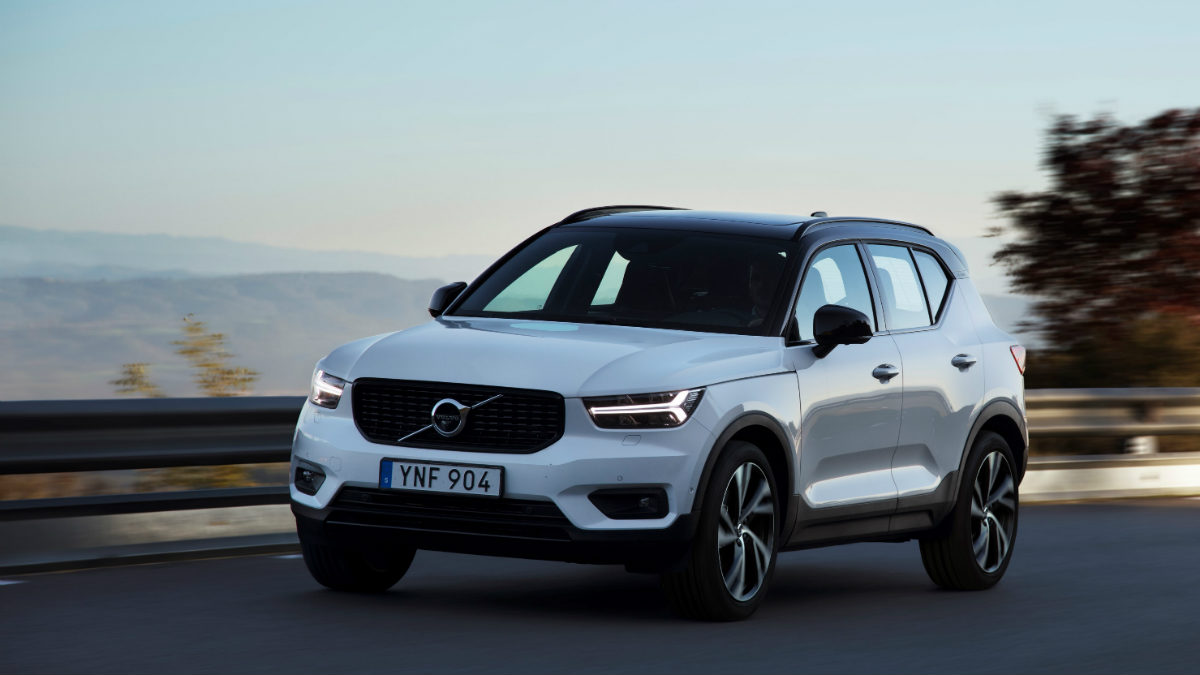
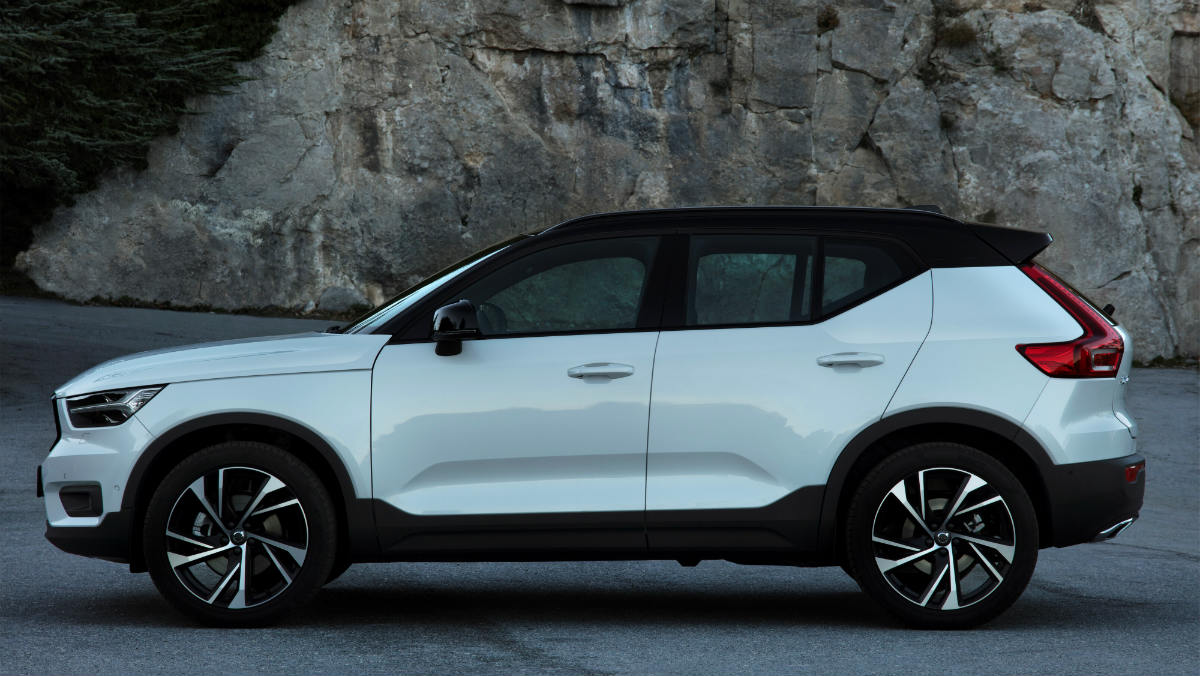
Visually, CMA allows the XC40 to avoid the “Russian doll” aesthetic common across many luxury ranges. Rather than presenting as a shrunken XC60, the XC40 adopts its own youthful personality. It sits upright with prominent ground clearance, a clamshell bonnet, an inverted front grille, and an angular kick in the rear C-pillar. The signature Thor’s Hammer LED daytime running lights retain clear brand recognition, but the overall stance communicates a playful, urban character distinct from the formal elegance of Volvo’s larger wagons and sedans.
Active Safety and Advanced Driver Assistance
A hallmark of the Volvo XC40 is the democratization of high-end active safety tech. Rather than withholding driver assistance features for upper-echelon models, Gothenburg equipped the compact SUV with the identical sensor suites, radar packages, and camera arrays introduced on the 90 Series. This comprehensive electronic umbrella makes the XC40 one of the most comprehensively outfitted small SUVs on the market from day one.
Central to this active safety suite is Volvo’s City Safety technology. Operating through radar and forward optical cameras, the system scans the road ahead for vehicles, pedestrians, cyclists, and large animals. If an imminent collision is detected and the driver fails to respond, City Safety automatically primes and initiates emergency braking. At city speeds, the system can entirely avoid low-speed collisions or significantly lessen impact forces when a crash is unavoidable.
Highway driving benefits from the optional Pilot Assist semi-autonomous system. Operating up to speeds of 130 km/h (81 mph) on clearly marked highways, Pilot Assist assists the driver with steering inputs, acceleration, and deceleration to keep the crossover centered within its travel lane at a constant following distance from leading traffic. Unlike aggressive hands-off systems, Pilot Assist acts as a gentle co-pilot that requires hands to remain on the steering wheel, easing driver fatigue during monotonous cross-country transit or grinding urban stop-and-go jams.
Additional safety innovations include Run-off-Road Protection and Mitigation, which automatically steers the car back toward the pavement if it drifts across lane edges, while tensioning the front seatbelts and deploying energy-absorbing cushions beneath the seats if the vehicle departs the road surface. In crowded parking lots, Cross Traffic Alert with auto brake scans perpendicular traffic when reversing out of blind spots, and an optional 360-degree surround-view camera provides a simulated bird’s-eye perspective on the center screen to negotiate curb edges and tight obstacles.

Clever Interior Architecture and Practical Packaging
Inside the cabin, the XC40 takes an unorthodox approach to interior architecture. Customer research conducted by Volvo design teams revealed widespread dissatisfaction with conventional automotive storage: gloveboxes stuffed to bursting, center consoles cluttered with cords, and door pockets too shallow to hold drinks or electronics. The interior engineering team set out to resolve these pain points by systematically reimagining cabin stowage.
To create expansive door pockets, engineers removed the traditional low-frequency bass speakers from the front doors. In their place, Volvo installed an air-ventilated sub-woofer mounted up behind the dashboard fascia, freeing up cavernous space in each door card. The resulting door bins can swallow large laptops, bulky tablets, or several one-litre drink bottles with ease. Beneath the front passenger seat sits a hidden pull-out storage drawer, ideal for securing valuables out of plain view.
The center tunnel console receives equal attention. Directly ahead of the transmission lever, a dedicated rubberized phone tray provides integrated inductive wireless charging. At the center of the console, a deep open storage compartment features a removable, spring-loaded waste bin with an integrated lid, keeping discarded receipts and snack wrappers off the carpeting. On the glovebox door, a discreet fold-out hook swings down to anchor takeout food bags or small purses, preventing them from tipping across the footwell under hard braking.

Luggage management in the cargo area continues the practical theme. The modular boot floor can be folded upward into an upright divider to separate grocery bags or organize luggage, revealing supplementary concealed storage underneath. When not needed, the rigid rear parcel shelf slips neatly beneath the load floor rather than having to be left behind in a home garage. Every millimeter of the interior reflects careful ergonomic forethought.
Drive-E Powertrains: Launch Engines and Future Electrification
At the start of commercial production at Volvo’s Ghent assembly plant in Belgium, the XC40 launches with two high-output four-cylinder Drive-E combustion engines. Both engines feature all-aluminum block construction, direct fuel injection, twin overhead camshafts, and forced induction, paired exclusively with an eight-speed Geartronic torque-converter automatic transmission and Haldex-based all-wheel drive.
For petrol enthusiasts, the T5 AWD powertrain features a 2.0-litre turbocharged four-cylinder developing 247 horsepower (182 kW / 250 PS) and 350 Nm (258 lb-ft) of torque across a broad rev band from 1,800 to 4,800 rpm. This gives the compact crossover genuine pace, sprinting from 0 to 100 km/h in just 6.5 seconds onto a top speed of 230 km/h (143 mph). Power delivery is crisp, offering immediate throttle response for highway overtaking maneuvers.
High-mileage European drivers are served by the D4 AWD turbo-diesel. Displacing 2.0 litres, this twin-turbocharged oil-burner produces 190 horsepower (140 kW / 187 hp) and a stout 400 Nm (295 lb-ft) of pulling power between 1,750 and 2,500 rpm. Paired with Volvo’s i-ART fuel injection technology—which monitors pressure at each individual fuel injector to optimize combustion pulses—the D4 provides exceptional low-end shove, achieving 0-100 km/h in 7.9 seconds while delivering impressive long-distance touring economy.

Volvo’s engineering roadmap extends well beyond these initial launch powerplants. As production ramps up, the Swedish firm will introduce a brand-new 1.5-litre three-cylinder Drive-E petrol unit, marking the very first three-cylinder engine in the marque’s ninety-year operating history. This three-cylinder architecture will also serve as the internal combustion basis for a front-wheel-drive plug-in hybrid Twin Engine model. Farther along the development schedule, Volvo has confirmed that CMA will underpin a pure battery-electric XC40 variant, reinforcing the automaker’s strategic commitment to vehicle electrification.
Trim levels at rollout are anchored by the Momentum and R-Design specifications. Momentum models focus on Scandinavian chic with textile or leather upholstery, white roof contrasting options, and bright detailing. R-Design trims deliver a sportier aesthetic, incorporating gloss black exterior accents, sports chassis tuning, sport seats finished in nubuck textile, and perforated leather interior touches. Through this tailored product matrix, Volvo enters the compact luxury fray with a compelling blend of design, packaging practicality, and safety pedigree.
Vehicle data
| Make | Volvo |
| Model | XC40 |
| Generation / chassis code | First generation (CMA platform) |
| Model year(s) covered | 2018 |
| Body style | 5-door compact SUV / crossover |
| Powertrain / engine | 2.0L Drive-E turbocharged inline-4 petrol (T5) / 2.0L Drive-E twin-turbo diesel (D4) |
| Power / torque | T5: 247 hp (250 PS / 182 kW) / 350 Nm; D4: 190 hp (187 hp / 140 kW) / 400 Nm |
| Transmission | 8-speed Geartronic automatic |
| Drivetrain | All-wheel drive (AWD) |
| Key performance figures | 0-100 km/h: T5 in 6.5s, D4 in 7.9s; Top speed: T5 230 km/h, D4 210 km/h |
| Price (as stated) | Subscription introductory offer £629/month (UK Care by Volvo); Australian launch from $47,990 (T5 Momentum) to $57,990 (D4 R-Design) |
| On-sale / announcement period | Autumn 2017 reveal / Spring 2018 global market rollout |
| Market | Global (Europe, North America, Australia) |