

Where Extreme Performance Meets Open-Air Drama
At the heart of every Pagani lies a bargain struck between art and engineering—and the Huayra Roadster BC takes that philosophy to its most extreme expression. When Pagani Automobili unveiled this limited-run roadster variant of the already-extraordinary Huayra, it wasn’t merely offering more power or sharper aero for the sake of a spec sheet. It was crafting a machine designed to extract maximum sensation from an open-top cockpit while pushing every system to the edge of what composite materials and aerodynamics can achieve.
The “BC” designation carries weight at San Cesario sul Panaro. Standing for Bolide da Corsa—Italian for racing-bred—it signals something distinct from the standard Huayra line. Horacio Pagani’s team approached this model with the same obsessive scrutiny that has defined every car since the Zonda days: every component questioned, every surface evaluated, every gram accounted for. The result was a program that accepted 450 per cent material cost increases without flinching, because the brief was clear—the 40 customers who would eventually own a Roadster BC deserved nothing less than absolute perfection.
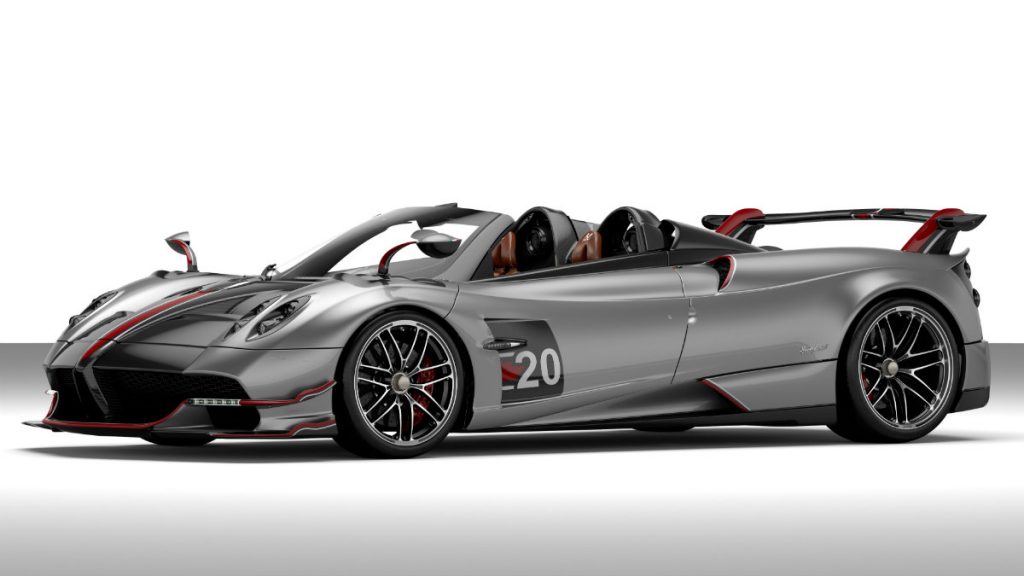
Lightness anchors everything here. At 1,250 kg dry, the Roadster BC sits on a chassis rebuilt from the ground up using carbon-fiber and carbon-titanium composites developed specifically for this model. Pagani calls them Carbo-Triax HP62 and Carbon-Titanium HP62 G2 formulas—names that tell you about internal research, not what you’ll find at any dealer. The torsional rigidity increased by 12 per cent over existing Pagani practice, flexional rigidity by 20 per cent. In practical terms, that means sharper steering response, crisper chassis reactions through corners, and a structure that makes the whole car feel more alive to driver input. Francesco Perini, Head of Concept and Composite Design, put it plainly: when the engineering team presented their findings alongside the cost escalation figures, Pagani’s answer was simply the customer deserves even more.
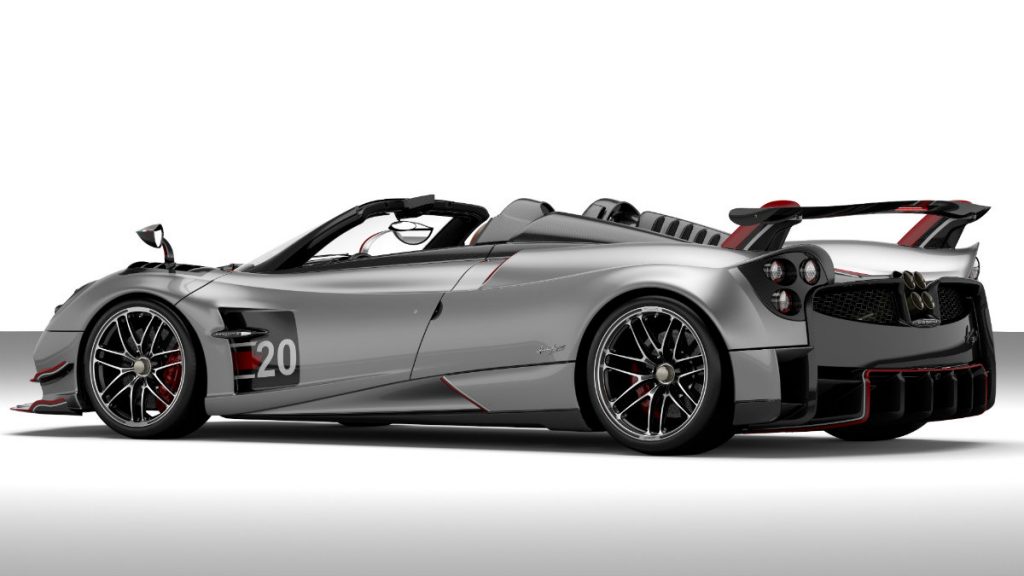
Power comes from a Mercedes-Benz sourced V12 twin-turbo—the partnership spanning over 125 years of Mercedes history, half a century of AMG involvement, and two decades of close cooperation with Pagani dating back through the Zonda era into the early Huayra development. This particular version produces 800 hp and 1,050 Nm of torque available from as low as 2,000 rpm. That figure matters: torque arriving that early means acceleration feels instantaneous, almost unfairly so, from any speed. The engine features entirely new turbos, a hydroformed manifold, twin throttle bodies, four water-to-air intercoolers, and an electronic management system co-developed with Bosch. Remarkably, it complies with the strictest emissions regulations including California standards without requiring hybrid assistance, which would have complicated the weight and packaging.
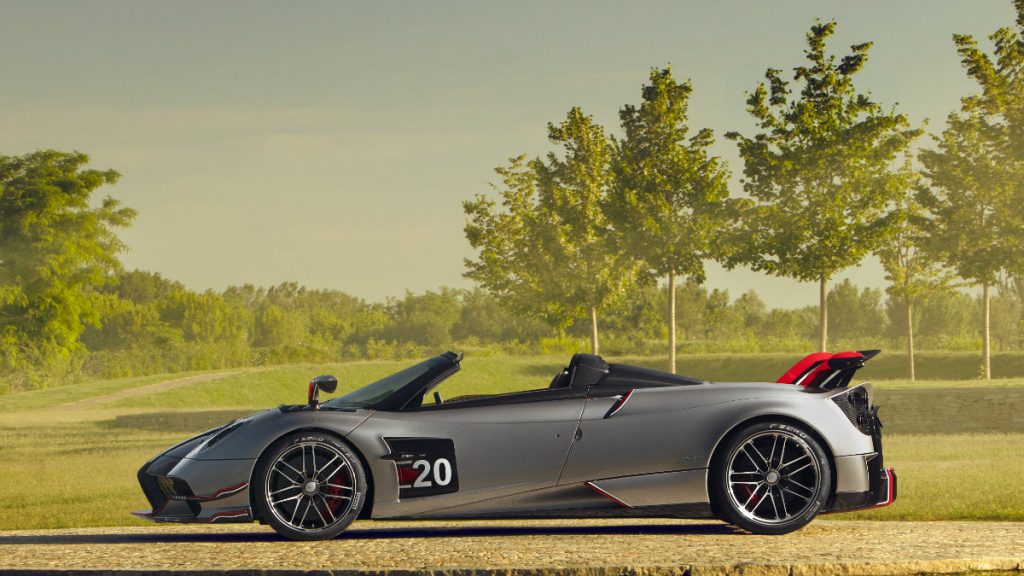
Aero design on the Roadster BC operates at a different wavelength from ordinary performance cars. The downforce target is 500 kg at 280 km/h, which requires surgical precision balancing internal airflows against external surfaces. Up front, cooling requirements for the V12 compete with downforce generation; behind, extraction ducts and an active rear wing maintain constant pressure distribution across the underbody. The active aerodynamic system reads driving conditions and adjusts settings accordingly, working alongside dynamic suspension to keep the car planted without sacrificing the open-air experience that defines a roadster.

Suspension architecture received parallel attention. Elasto-kinematics were recalculated, centre of gravity lowered, unsprung mass trimmed wherever possible. Electronics manage dive, squat and roll control with increasing sophistication, reducing body movement during hard cornering, braking and acceleration to keep weight transfer predictable. What remains mechanical underneath provides the feedback loop the driver needs; what happens electronically ensures that feedback translates into controlled, repeatable behaviour rather than chaos at limit.

Transfer of that 800 hp to asphalt happens through a transverse seven-speed sequential gearbox built by Xtrac, a company whose racing credentials stretch across Formula One, sportscar endurance and rally. Mounted transversely to save weight and reduce polar inertia, which directly limits oversteer tendencies in a mid-engine layout, the unit incorporates a triple-disc clutch, electronically controlled differential, and a racing-style three-way coupling system. The complete transmission assembly sits 35 per cent lighter than what a dual-clutch equivalent would weigh. Tobias Moers speaking for Mercedes-AMG emphasised the collaborative nature of the relationship: every Pagani project pushes both sides into unfamiliar territory, and that discomfort is precisely where innovation happens.
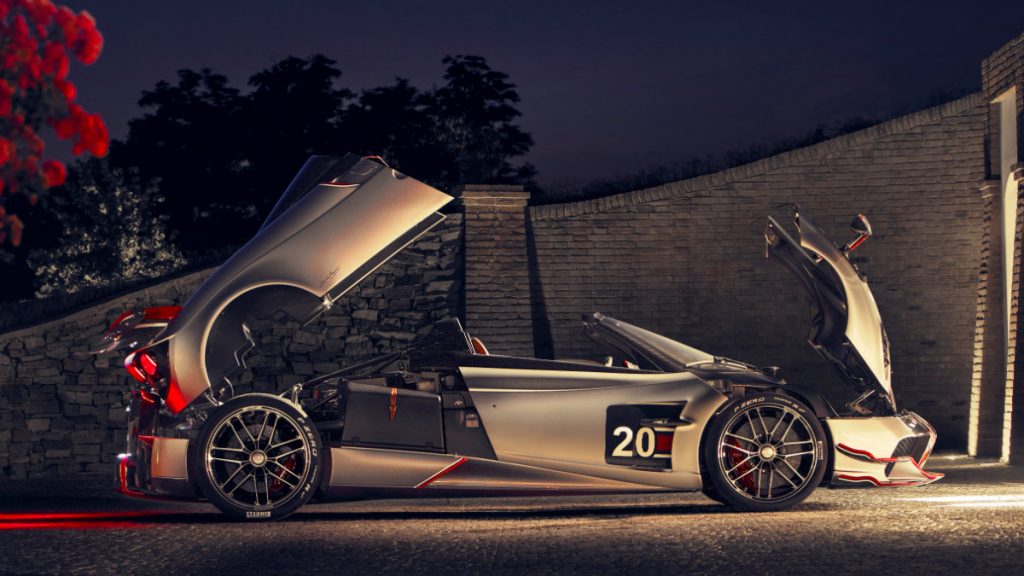
Pirelli supplied tyres tailored specifically to the Roadster BC demands: the PZero Trofeo R, developed within Pirelli Modular Integrated Robotized System. Horacio Pagani’s brief to his tyre partner was straightforward—deliver grip levels high enough for extreme lateral forces while maintaining enough communication that even an inexperienced driver understands exactly when adhesion limits approach. Testing at major circuits confirmed the outcome: consistent lateral acceleration of 1.9 g peaking at 2.2 g in transient moments, with longitudinal deceleration matching at 2.2 g. That’s serious stopping and cornering capability from a car designed to look almost elegant standing still.
Braking hardware came from Brembo, another partner with deep Pagani history. The carbon-ceramic setup measures 398 mm by 36 mm up front clamped by six-piston monoblock calipers, 380 mm by 34 mm at the rear with four-piston units. Matte finishes and specific colour treatments tie the brakes visually into the overall aesthetic—a detail many manufacturers skip, but Pagani consistently pays attention to. APP forged Avional alloy rims finished manually in a distinctive 14-spoke pattern wrap the Trofeo R compounds and contribute to the lightness budget.
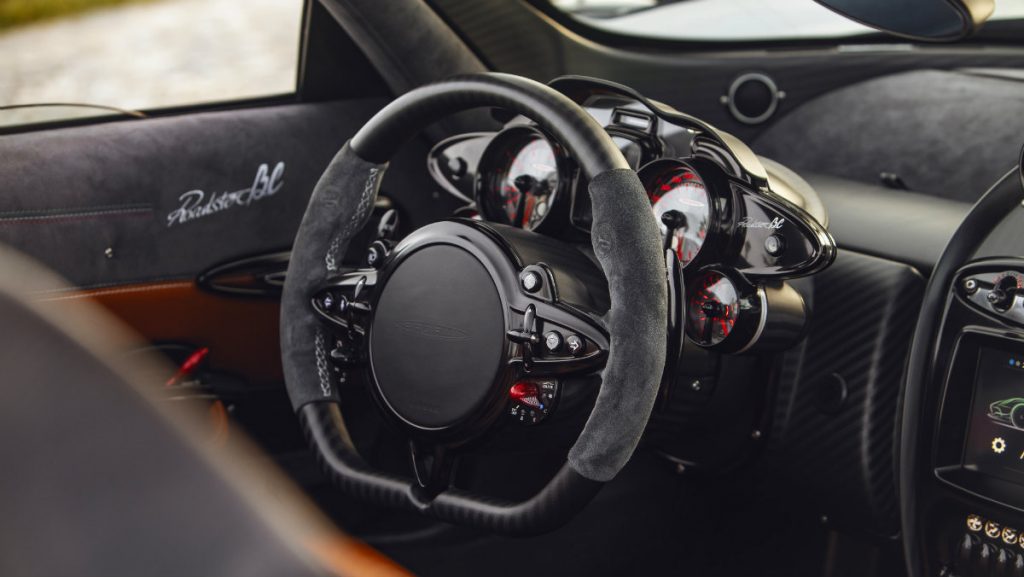
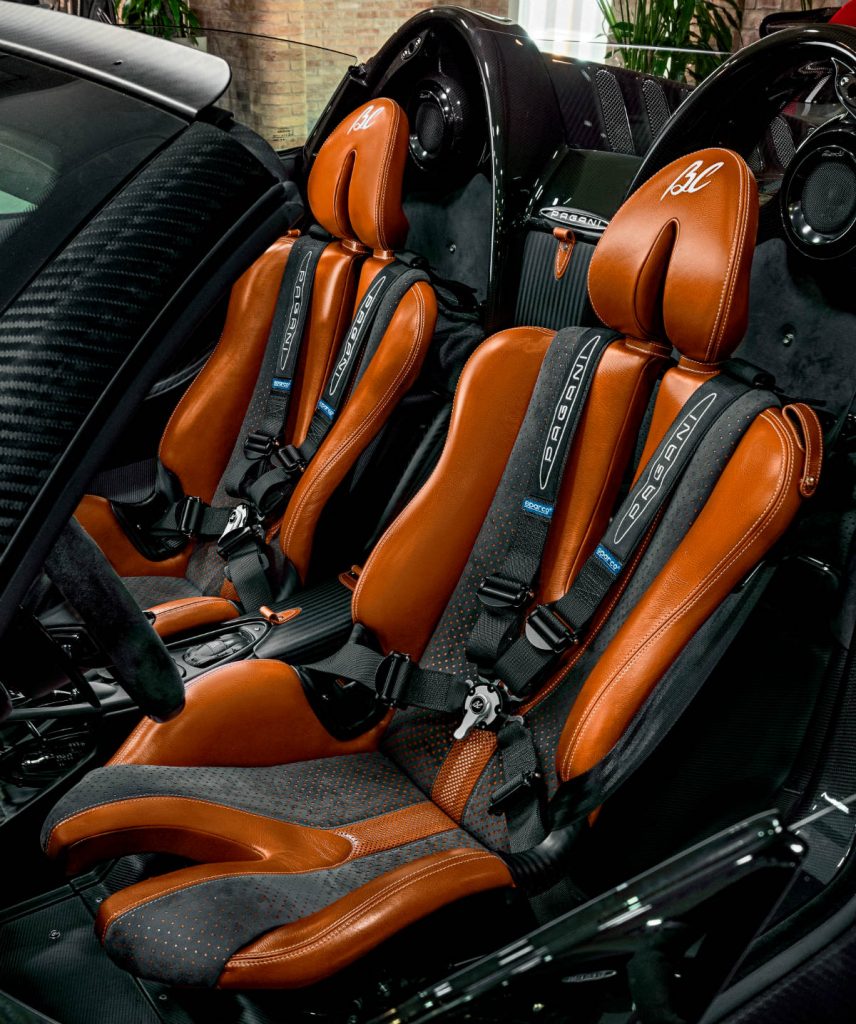
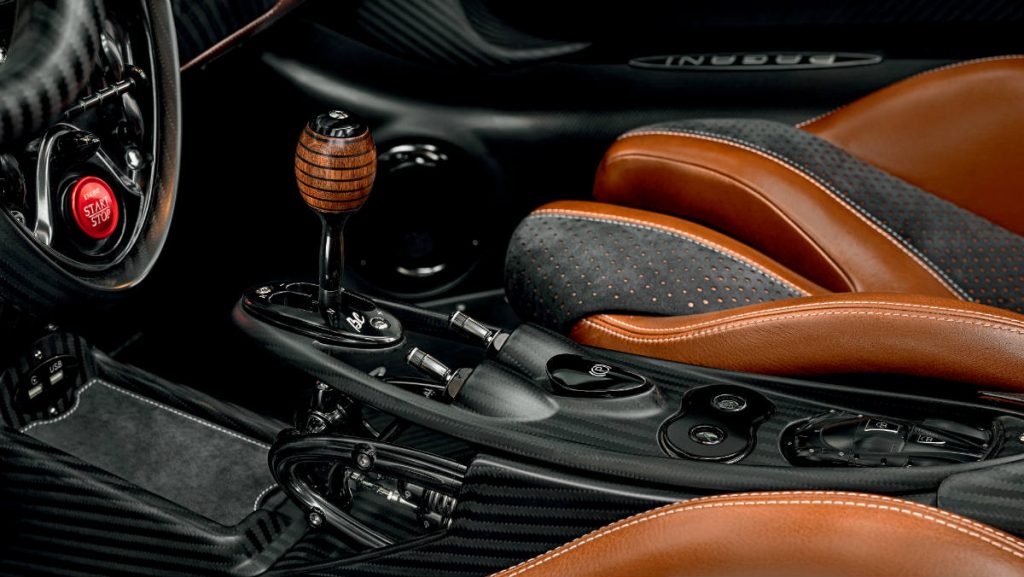
Inside, the Roadster BC blends motorsport seriousness with grand touring comfort. Carbo-wood veneers, finely embossed leather, racing-style four-point seatbelts, and a nine-channel audio system create an environment that rewards sitting inside as much as driving out of it. Everything speaks to craftsmanship: stitching, machining, finishing that wouldn’t look out of place in a high-end watch showroom. Which isn’t accidental. Pagani’s design language borrows heavily from horology—layers of mechanism revealed beneath clean surfaces, each part justified by function yet valued for form.
The Huayra Roadster BC arrives in a hypercar market crowded with seriously capable machines. The McLaren Senna had already made its mark earlier in 2019, Bugatti’s Chiron continued establishing itself as the benchmark for outright speed, and numerous smaller outfits promised variants of existing models with marginal improvements. What separates the Roadster BC from that context is its singular focus on open-air performance. Remove the roof from any supercar and the experience changes fundamentally: sound, wind, temperature, visibility, sense of speed—all intensify. Pagani understood that removing solidity introduced new challenges in structural rigidity and aero balance, and addressed those problems with proprietary composite technology rather than accepting compromises.
Forty units exist. Each will receive the same obsessive treatment regardless of customer preference. The Roadster BC doesn’t try to appeal to everyone: it cannot, and shouldn’t. It exists for buyers who value mechanical honesty, hand-built construction, and the kind of detailed engineering that becomes visible only when you know where to look. For those people, Horacio Pagani’s latest creation represents not just another step forward in hypercar evolution, but a coherent statement about what happens when luxury, performance and artisan manufacturing converge without compromise.
Vehicle data
| Make | Pagani |
| Model | Huayra Roadster BC |
| Generation / chassis code | Huayra line (BC variant) |
| Model year(s) covered | 2019 |
| Body style | 2-door roadster |
| Powertrain / engine | Mercedes-AMG M158 6.0L twin-turbo V12 |
| Power / torque | 800 hp / 1,050 Nm @ 2,000 rpm |
| Transmission | Xtrac seven-speed sequential |
| Drivetrain | Rear-wheel drive (mid-engine) |
| Key performance figures | 1.9 g lateral acceleration (2.2 g peak), 500 kg downforce at 280 km/h |
| Price (as stated) | Not stated in sources |
| On-sale / announcement period | Unveiled November 2019 |
| Market | Global (limited to 40 units) |