

Bold, Sporty, Visually Striking
When BMW first repositioned the X1 from its E84 roots into the front-wheel-drive-based UKL2 architecture with the F48 generation, sceptics questioned whether the compact Sports Activity Vehicle could retain the driving DNA Munich was known for. The market answered firmly: the second-generation X1 shifted strong volumes from launch, convincing buyers that a premium compact SUV could deliver genuine engagement alongside everyday practicality. This mid-cycle update sharpens the formula considerably.
The latest refresh brings revised styling, updated powertrains meeting the latest emissions standards, new connectivity options, and a broadened model range. Under the bonnet, BMW TwinPower Turbo three- and four-cylinder engines pair with either the front-wheel-drive sDrive layout or xDrive intelligent all-wheel drive. The result is a lineup of sixteen engine-and-transmission combinations that covers everything from a thrifty daily commuter to a genuinely rapid compact SUV. The BMW X1 M Sport sits at the athletic end of the spectrum, courtesy of lowered M Sport suspension, BMW Individual High-gloss Shadow Line trim and the M Aerodynamics package.
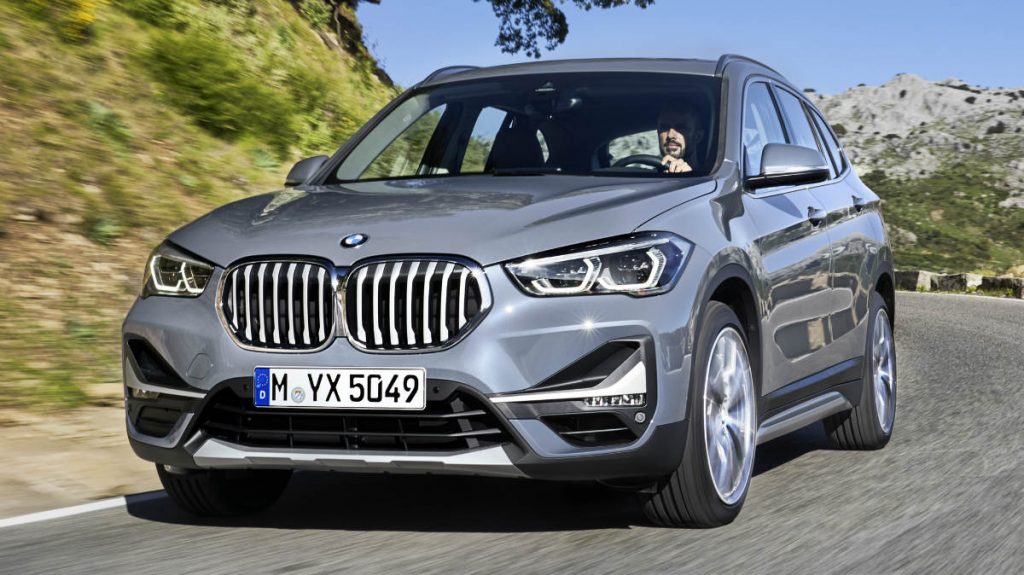
Exterior: A Sharper Face for the Compact SAV
The most visible changes concentrate on the nose. A larger, more upright BMW kidney grille now links directly with new Adaptive LED headlights that feature redesigned light signatures. The front bumper integrates LED fog lamps and bigger air intakes, giving the X1 a wider, more planted stance than the pre-facelift model. The overall effect pushes the X1 closer in visual weight to its larger X3 and X5 siblings, a deliberate move by the design team in Munich to tighten the family resemblance across the X range.
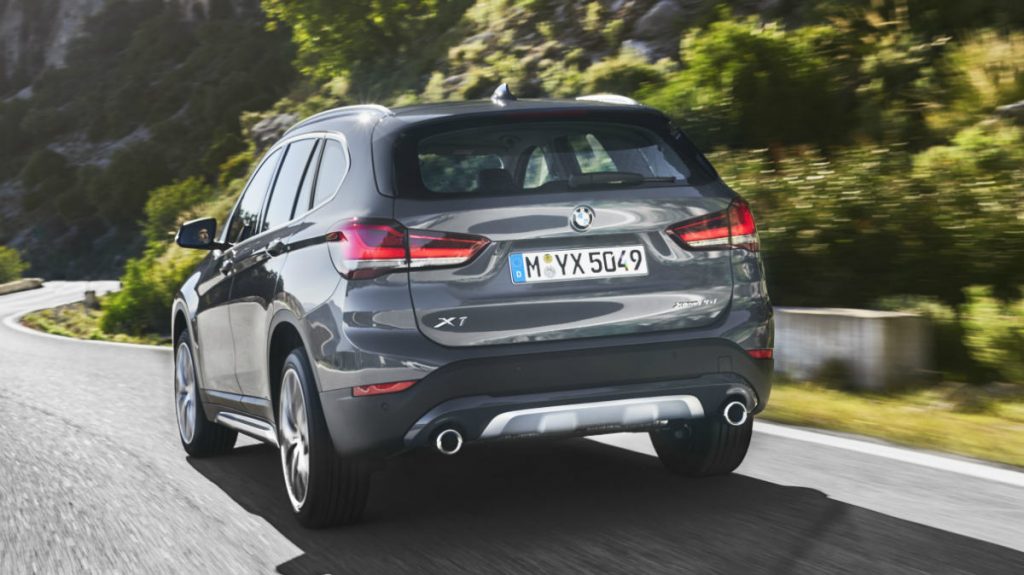
At the rear, a new body-colour inlay in the apron replaces the previous contrasting black element, lending the tail a cleaner, more cohesive look. A subtle but clever detail lives on the driver-side exterior mirror: a two-tone LED projection of the “X1” badge illuminates the ground when the car is unlocked, serving both as a visual signature and a practical aid in dimly lit car parks. The exhaust tailpipes, now larger and more prominently finished, round out a rear end that looks substantially more resolved than the outgoing model.
Three new exterior colours join the palette – Jucaro Beige metallic, Misano Blue metallic and BMW Individual Storm Bay metallic – alongside four new alloy wheel designs. The expanded colour and wheel menu gives buyers more scope to personalise their X1, something rivals like the Audi Q3 and Mercedes-Benz GLA already offer through extensive configurator options.

Design Lines: xLine, Sport Line and M Sport
BMW continues to offer three distinct design lines beyond the base model, each with its own visual character. The xLine dresses the X1 in satin aluminium exterior accents – roof rails, mirror caps, window surrounds and underbody protection elements – giving the SUV a rugged, adventure-ready appearance. Inside, xLine models feature specific upholstery and trim combinations that emphasise warmth and material richness.
The Sport Line takes a different tack. Gloss black replaces the satin aluminium on the exterior mirrors, window surrounds and kidney grille bars, while specific alloy wheel designs and interior trim in high-gloss black create a sharper, more urban aesthetic. It is the line for buyers who prefer their SUV to look like it belongs in a city centre rather than on a gravel track.
At the top of the range, the M Sport drops the ride height by ten millimetres, adds the M Aerodynamics package with model-specific front and rear bumpers, side skirts and a rear diffuser insert. The M leather steering wheel, M driver’s footrest and specific M Sport seats complete the package. High-gloss Shadow Line trim from BMW Individual frames the windows, and the overall effect is the most aggressive, driver-focused X1 in the catalogue. For buyers who value the M brand’s sporting associations without stepping into a full M Performance model, this variant hits the mark.
Engines and Efficiency: Sixteen Combinations, Two Emissions Standards
The powertrain lineup spans three- and four-cylinder petrol and diesel units, all equipped with BMW TwinPower Turbo technology. Every engine in the refreshed range meets the EU6d-Temp emissions standard, while the BMW X1 sDrive16d and BMW X1 xDrive25d already comply with the stricter EU6d norm – a meaningful distinction as European cities tighten access rules based on tailpipe output.
At the efficiency-focused end, the sDrive16d pairs its 85 kW (116 hp) three-cylinder diesel with either a six-speed manual or the seven-speed dual-clutch transmission. Manual versions return a combined 4.4–4.1 litres per 100 km (64.2–68.9 mpg imperial), while the dual-clutch variant posts 4.4–4.2 l/100 km (64.2–67.3 mpg imp). For a compact SUV of this size, those figures put the base diesel X1 squarely in company-car-tax-friendly territory across most European markets.

Majoring on performance, the BMW X1 xDrive25d extracts 170 kW (231 hp) and 450 Nm (332 lb-ft) from its 2.0-litre four-cylinder diesel. The seven-speed dual-clutch gearbox handles the torque, dispatching 0–100 km/h (62 mph) in 6.6 seconds. It is brisk, purposeful acceleration – the kind that makes motorway merges effortless even when the boot is loaded for a family holiday.
On the petrol side, the BMW X1 xDrive25i matches the diesel’s 170 kW output but routes it through an eight-speed Steptronic automatic. It sprints to 100 km/h in 6.5 seconds, with combined consumption rated at 6.8–6.3 l/100 km (41.5–44.8 mpg imp). Across the full range, sixteen distinct engine-and-transmission pairings ensure buyers can spec an X1 tailored to their priorities, whether that means minimising running costs or chasing the sharpest possible 0–100 time in the segment.

Chassis and xDrive: Dynamics in the BMW Tradition
The X1’s suspension combines single-joint spring struts at the front with a multi-link rear axle, tuned to deliver the communicative steering feel and controlled body motions that separate premium offerings from mainstream rivals. M Sport suspension lowers the ride height by ten millimetres and firms up the damping, rewarding drivers who prioritise cornering composure over plush ride quality. The standard setup offers a well-judged compromise, absorbing motorway expansion joints and city potholes without sacrificing directional precision.
The xDrive intelligent all-wheel-drive system, available across multiple variants, splits drive torque between front and rear axles as conditions demand. Under normal cruising, the system favours the front axle for efficiency, but can redirect torque rearward within milliseconds when slip is detected or when the driver pushes into a corner with intent. The result is secure traction in rain and light snow, combined with the sort of adjustable cornering balance that makes the X1 genuinely enjoyable on a winding B-road. BMW’s Dynamic Stability Control and Performance Control further sharpen the handling by applying targeted brake intervention at individual wheels, reducing understeer and improving turn-in response.
Plug-in Hybrid: The X1 xDrive25e on the Horizon
The most intriguing addition to the lineup is still approaching: the BMW X1 xDrive25e, scheduled to enter production in March 2020. This plug-in hybrid pairs a three-cylinder petrol engine with an electric motor and BMW’s fourth-generation battery technology, offering a gross energy capacity of 9.7 kWh. BMW projects an electric-only range exceeding 50 km (31 miles), enough for most urban commutes without engaging the combustion engine at all. For company-car drivers in markets with favourable benefit-in-kind tax treatment for plug-in hybrids, the xDrive25e could prove the most compelling X1 of all.
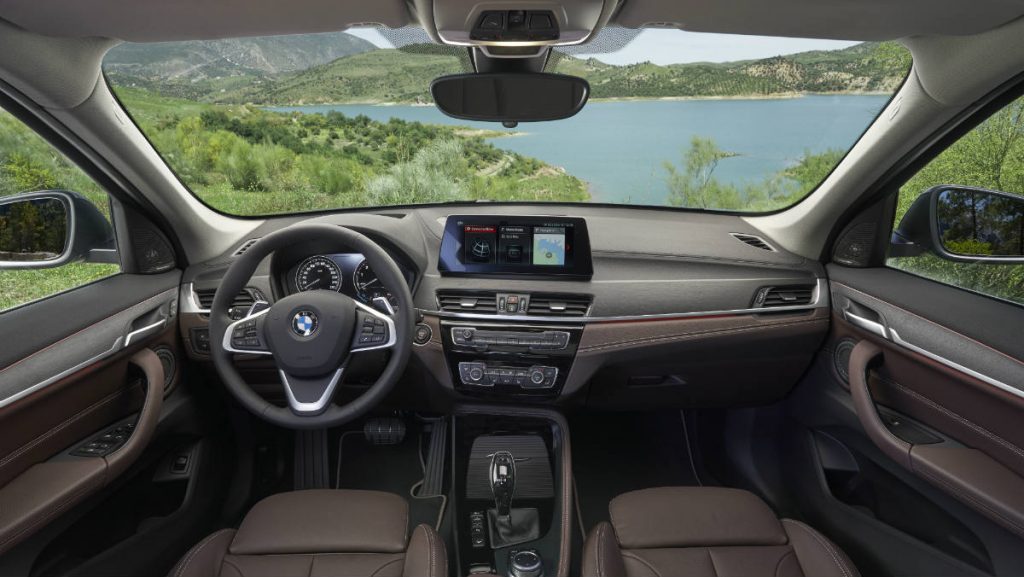
Interior and Connectivity: Larger Screens, Sharper Details
Inside, new contrast stitching on the instrument panel – black on the upper section, colour-matched to the upholstery below – lifts the cabin ambience across xLine, Sport Line and M Sport variants. Floor mats gain coloured edging with contrast stitching in these models, and three new upholstery options broaden the personalisation menu. The material quality throughout the cabin reflects BMW’s determination to keep the X1 a cut above mainstream compact SUVs, with soft-touch surfaces on the dashboard and door panels and well-damped switchgear.
The headline change sits in the centre of the dashboard. A 6.5-inch display comes as standard. Specify a navigation system and the screen grows to 8.8 inches, with a new 10.25-inch Touch Control Display available as an option. The larger screen supports touchscreen input, voice commands and the familiar rotary iDrive Controller, giving drivers multiple ways to reach the same functions without taking their eyes off the road for long. The iDrive 6.0 interface is proven and intuitive, with tile-based menus and a customisable home screen.
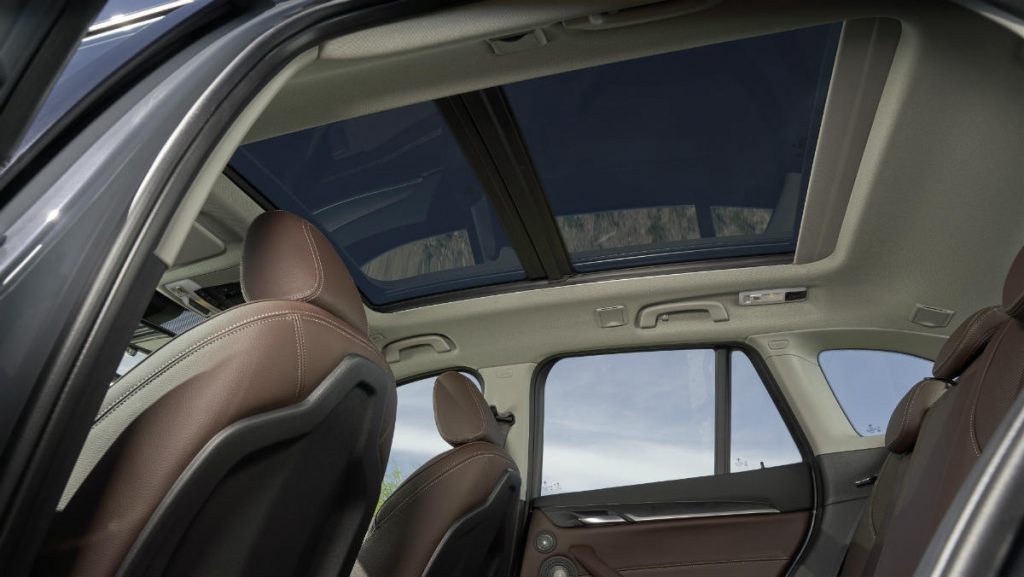
BMW ConnectedDrive services – real-time traffic information, remote services, concierge functions – integrate through the same display. The latest ConnectedDrive packages are available as options for the first time in the X1, bringing features like Apple CarPlay preparation and enhanced navigation with real-time traffic data.
Practicality: A Versatile Interior That Punches Above Its Weight
Versatility remains a core X1 strength. The rear bench splits 40:20:40 for folding and can optionally slide fore and aft by up to 13 centimetres, letting the owner trade rear legroom for boot capacity as needed. With all rear seats upright, the luggage compartment swallows 505 litres; fold everything flat and the figure grows to 1,550 litres, competitive with estate cars a class above.
Automatic tailgate operation is standard, and specifying Comfort Access adds hands-free opening and closing – a genuine help when returning from the supermarket with arms full. The loading sill sits low for the segment, and the square aperture makes swallowing bulky items straightforward. Headroom is generous front and rear thanks to the relatively upright roofline, and rear-seat passengers get adequate knee room even with tall occupants up front. For young families, weekend adventurers and urban professionals alike, the X1’s interior flexibility is one of the strongest arguments in its favour against segment rivals that sacrifice boot space for sleeker rooflines.
Vehicle data
| Make | BMW |
| Model | X1 (F48 LCI) |
| Generation / chassis code | F48 (mid-cycle facelift) |
| Body style | 5-door compact SUV (Sports Activity Vehicle) |
| Powertrain / engine | Three- and four-cylinder BMW TwinPower Turbo petrol and diesel |
| Power / torque | 85 kW (116 hp) on sDrive16d; 170 kW (231 hp) / 450 Nm (332 lb-ft) on xDrive25d and xDrive25i |
| Transmission | 6-speed manual, 7-speed dual-clutch, or 8-speed Steptronic automatic (model-dependent) |
| Drivetrain | Front-wheel drive (sDrive) or xDrive intelligent all-wheel drive |
| Key performance figures | 0–100 km/h: 6.5 s (xDrive25i), 6.6 s (xDrive25d); combined fuel consumption: 4.1–6.8 l/100 km |
| Price (as stated) | Not stated in sources |
| On-sale / announcement period | May 2019 (announcement); xDrive25e PHEV production from March 2020 |
| Market | Global (European emissions standards referenced) |