
Inside the All-Electric Aston Martin Rapide E: Gaydon’s 800-Volt Grand Tourer
Aston Martin is preparing to enter series electric production with a project that takes direct aim at high-performance engineering hurdles. Known as the Rapide E, the luxury British marque’s first battery-electric vehicle (BEV) is taking shape as a strictly limited 155-unit special edition. Developed in close technical collaboration with Williams Advanced Engineering (WAE), the car represents far more than an experimental test bed. It is engineered to carry Aston Martin’s grand touring pedigree straight into the high-voltage era while packaging an advanced electric powertrain neatly into an existing four-door architecture.
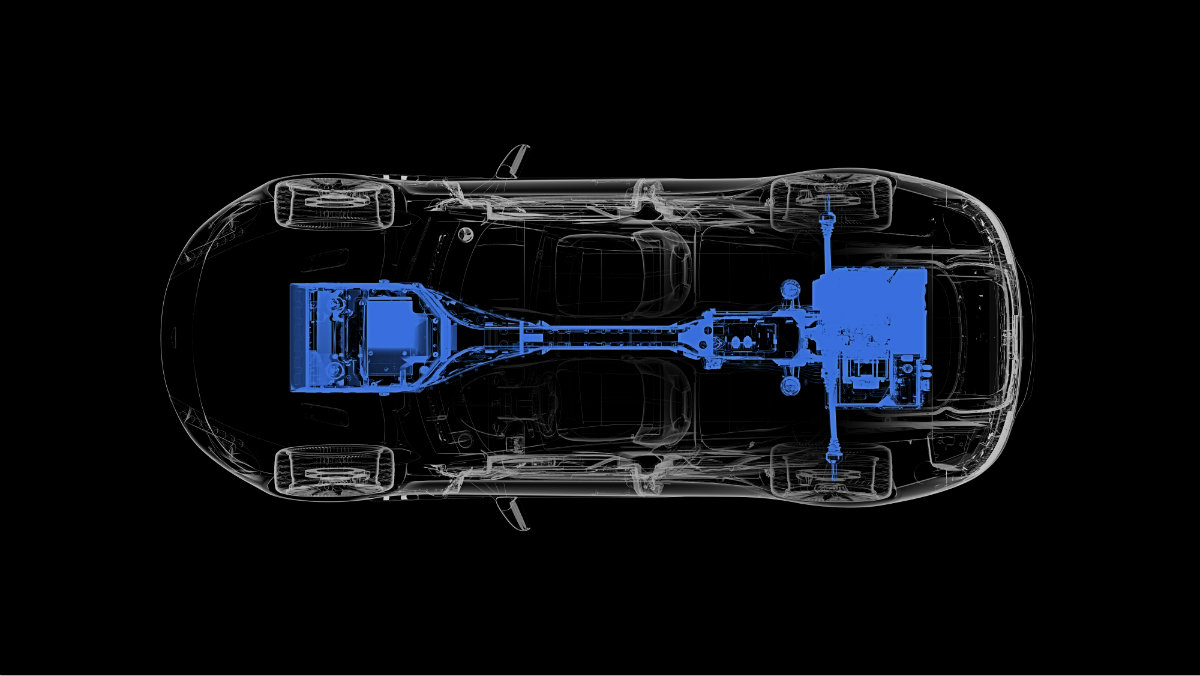
When engineers set out to convert the low-slung four-door saloon into a high-voltage grand tourer, their most immediate challenge was space. The standard Rapide S architecture was never conceived from the ground up for a flat skateboard battery. Instead of compromising structural integrity or interior space, Aston Martin and Williams Advanced Engineering devised an intricate bespoke packaging solution. The massive battery assembly is slotted directly into the cavities vacated by the internal combustion powertrain. Where the hand-built 6.0-litre V12 engine, its torque-tube transmission, and the rear fuel tank once resided, technicians have installed a tailored enclosure holding over 5,600 lithium-ion cylindrical cells in the 18650 format.
Engineering an 800-Volt Architecture
Throughout development, the engineering team zeroed in on thermal management for both the battery cells and electric motors. Consistent performance under severe loads requires heat dissipation far beyond standard commuter electric vehicles. Strict weight targets guided every component choice, with extensive use of lightweight alloys and carbon composite materials to counterbalance the mass of the battery system.
Central to the technical specification is an 800-volt electrical architecture. When it enters customer hands, the Aston Martin Rapide E will be among the very first production BEVs to utilise an operating voltage this high. Compared to the conventional 400-volt systems typical across first-generation production EVs, the 800-volt setup enables reduced thermal loading and allows for thinner, lighter copper wiring looms throughout the chassis. Electrical energy is held in a 64kWh battery pack encased in custom carbon fibre and Kevlar casings. The pack supplies high current directly to two rear-mounted electric drive units, eliminating long and heavy high-current cable runs across the vehicle floor.
Charging capabilities take direct advantage of this 800-volt operating threshold. When connected to high-power DC fast-charging stations delivering 800 volts at 100kW or more, the Rapide E can replenish its battery pack at an equivalent rate of up to 350 miles of range per hour of charging. Even on standard 400-volt rapid infrastructure, an onboard high-capacity DC/DC converter adjusts incoming power, permitting the car to charge at around 185 miles of range per hour. Using an 800-volt 95kW charger, taking the battery pack from empty to an 80 percent charge requires just 31 minutes. For domestic overnight replenishment, the saloon incorporates a high-power AC onboard charger capable of a full recharge in roughly four hours.
Twin Rear Motors, Differential Tuning, and Chassis Balance
Supplying drive to the rear wheels are two permanent-magnet synchronous electric motors developed in partnership with Integral Powertrain Technologies. Mounted together at the rear axle and paired with an integrated transmission unit engineered by specialist Xtrac, the twin motors generate a target output exceeding 610PS (602 bhp) alongside an enormous 950Nm (701 lb-ft) of instant torque. Rather than deploying front motors for an all-wheel-drive configuration, Gaydon opted to keep the Rapide E purely rear-wheel drive, preserving the authentic balance and dynamic characteristics that long defined the petrol-powered Rapide S.
Managing that immense twist is a mechanical limited-slip differential. Software calibration works closely alongside the differential to parcel out torque precisely between the rear tires. By avoiding all-wheel drive, engineers prevented unnecessary weight over the front wheels, allowing the steering assembly to retain pure mechanical communication. To accommodate the revised weight distribution resulting from the central and rearward battery placement, the suspension hardware underwent a meticulous recalibration. Williams Advanced Engineering and Aston Martin dynamics specialists developed bespoke spring rates, retuned adaptive dampers, and revised the anti-roll bar geometry to provide composed high-speed stability without turning brittle over coarse British tarmac.
Repeatable High-Speed Performance Without Thermal Degradation
Outright straight-line acceleration numbers tell only part of the story. Aston Martin quotes a 0-60mph sprint in less than 4.0 seconds, with the sprint from 50 to 70mph executed in a mere 1.5 seconds. Top speed is electronically governed at 155mph. While headline sprint times match elite combustion sports saloons, the crucial engineering objective behind the Rapide E lies in repeatability. Many contemporary electric cars suffer rapid performance degradation when driven aggressively, as battery and inverter temperatures climb and software pulls back power to protect hardware.
In contrast, the Rapide E has been engineered to deliver its full performance window across the majority of the battery’s state of charge. The cooling architecture was developed specifically to handle sustained flat-out running on derestricted German autobahns without derating, as well as consecutive hot laps around demanding race tracks. Aston Martin’s target was explicit: the car must be capable of running a flat-out lap of the Nürburgring Nordschleife without suffering thermal throttling or sudden performance drop-off.
Target driving range is rated at more than 200 miles under the stringent Worldwide Harmonised Light Vehicle Test Procedure (WLTP). Meeting that figure required meticulous fine-tuning of aerodynamics. Because electric powertrains do not demand the same enormous frontal airflow volumes as a naturally aspirated 6.0-litre V12, the front fascia features a blanked-off honeycomb radiator opening that routes air cleanly over and around the body. Beneath the floor, flat carbon panels channel underbody airflow back toward a massive rear diffuser, eliminating the aerodynamic drag caused by former exhaust piping and mufflers. Unique aerodynamic alloy wheels, shod with Pirelli P-Zero low rolling-resistance tyres containing interior noise-cancelling foam, further trim drag and isolate road roar from the four-seat passenger cabin.
Craftsmanship and Digital Cabin Integration
Inside the cabin, the Rapide E blends classic Gaydon leathercraft with modern digital interfaces. The traditional analogue instrument cluster and jewel-like mechanical gauges of the standard Rapide give way to a dedicated 10-inch digital driver display. This high-resolution screen delivers real-time information detailing battery state of charge, instantaneous motor output and regeneration levels, real-time power consumption, and thermal data.
Extensive carbon fibre trim adorns the centre console and dashboard fascia, echoing the lightweight composites used throughout the structural battery housing. Hand-stitched leather upholstery remains central to the interior atmosphere, tailored with bespoke contrast stitch patterns unique to the electric edition. Rear occupants sit in individual sculpted sports seats, retaining the cockpit-style grand touring ambiance that distinguishes the Rapide four-door silhouette from generic three-box executive sedans.
Collaborative British Engineering and the Road to Lagonda
Development of the Rapide E draws upon deep expertise across the British specialist motorsport and high-technology sectors. In addition to Williams Advanced Engineering leading battery packaging and electrical architecture, the powertrain benefits from Integral Powertrain Technologies for electric traction motors, Xtrac for high-performance transmission gearing, and the H1PERBAT consortium supported by the UK government’s Advanced Propulsion Centre (APC). This consortium brings together leading manufacturing and engineering firms to establish a world-class battery manufacturing supply chain on British soil.
Production is set to take place at Aston Martin’s new dedicated manufacturing site in St Athan, Wales, which will serve as the home of electrification for the marque. The 155 customers who secure a build allocation will participate actively in an extended customer feedback program, sharing detailed driving telemetry and real-world impressions with engineers to inform future road car development. Commenting on the strategic role of the vehicle, Aston Martin CEO Andy Palmer highlighted the project’s broader significance:
“Environmental responsibility and sustainability is a global challenge faced by us all. As a career automotive engineer, I’m proud that the car industry is leading the way in finding long-term solutions and reducing harmful emissions. As Aston Martin’s CEO, I take particular satisfaction working with Williams Advanced Engineering and our other associated technology partners to bring Rapide E to reality. As our first all-electric production model, Rapide E will fast-track our knowledge and help us ensure the character and high-performance capabilities of our future EV models and enhance the unique qualities found in all Aston Martins as we know them today. Rapide E will also serve as a critical step on our path to re-launching Lagonda as the world’s first zero-emission luxury marque.”
By blending traditional rear-wheel-drive dynamics with cutting-edge 800-volt high-rate discharge capabilities, the Aston Martin Rapide E establishes a clear technical benchmark for Gaydon’s electrification journey, setting high expectations for the future of British luxury performance.
Vehicle data
| Field | Value |
|---|---|
| Make | Aston Martin |
| Model | Rapide E |
| Generation / chassis code | VH generation (BEV special edition) |
| Model year(s) covered | 2019 |
| Body style | 4-door luxury sports saloon |
| Powertrain / engine | Dual rear-mounted permanent magnet electric motors, 64kWh 800V battery pack (5,600+ 18650 cylindrical cells) |
| Power / torque | 610 PS (602 bhp) / 950 Nm (701 lb-ft) |
| Transmission | Integrated single-speed transmission (developed with Xtrac) |
| Drivetrain | Rear-wheel drive with mechanical limited-slip differential |
| Key performance figures | 0-60 mph < 4.0 sec; 50-70 mph in 1.5 sec; top speed 155 mph; target range > 200 miles (WLTP) |
| Price (as stated) | Not stated in sources |
| On-sale / announcement period | Announced 2018; customer deliveries scheduled for 2019; strictly limited to 155 units |
| Market | Global / UK |