
Volkswagen and Microsoft Partner to Build the Automotive Cloud
In October 2018, Volkswagen AG and Microsoft Corporation entered into an extensive strategic partnership designed to accelerate the German automotive group’s digital transformation. Under the agreement, which received formal approval from the Supervisory Board of Volkswagen AG, the two tech and automotive heavyweights are co-developing the Volkswagen Automotive Cloud. This dedicated industrial cloud solution will serve as the technical bedrock for all upcoming digital mobility services, connected car operations, and in-vehicle applications across the core Volkswagen brand passenger fleet, before expanding wider across the group.
The industrial logic connecting Wolfsburg and Redmond runs deeper than standard IT supplier relationships. By harnessing Microsoft Azure alongside Azure IoT Edge services, Volkswagen aims to overhaul and unify an in-car software architecture that previously relied on disparate, fragmented backends. With vehicle development accelerating toward connected digital ecosystems and software-driven cockpits, establishing a single global cloud platform is seen by leadership as an essential prerequisite for large-scale connected mobility.
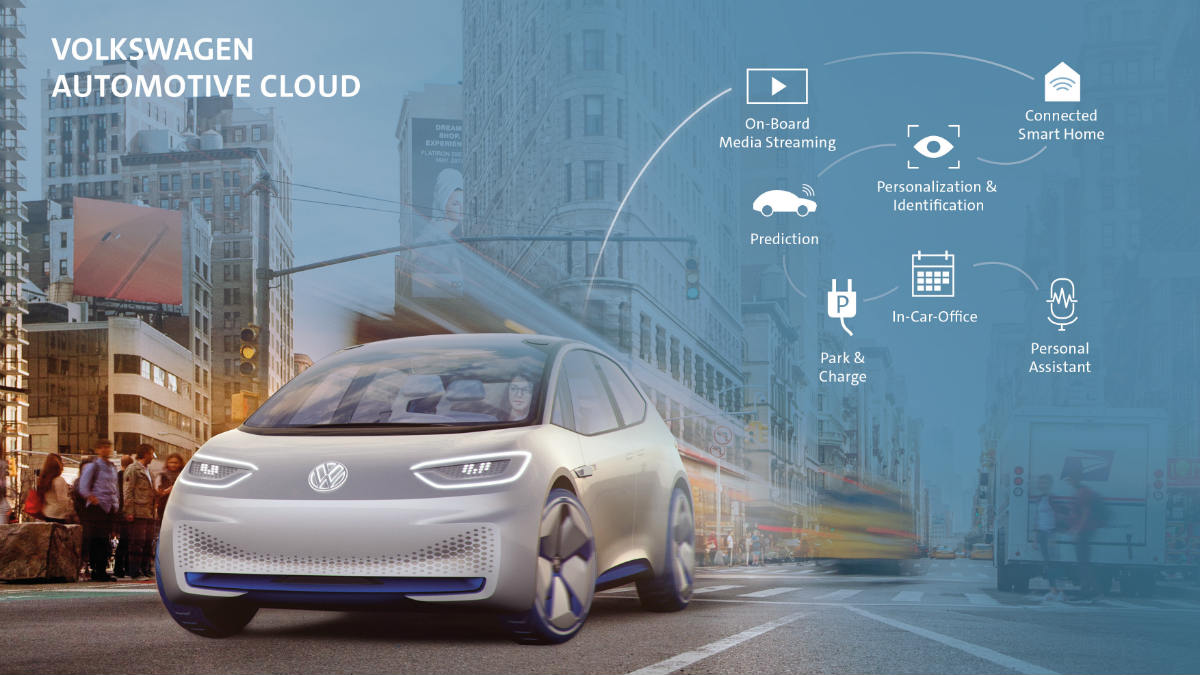
A Centralized Foundation: Azure and One Digital Platform
Modern vehicles generate and consume immense volumes of information, from route guidance and streaming media to powertrain diagnostics and sensor telemetry. Historically, vehicle systems ran on isolated controllers, each communicating with separate vendor servers through proprietary gateways. The Volkswagen Automotive Cloud consolidates these divergent pathways under Microsoft Azure. By utilizing Azure cloud computing services and Azure IoT Edge processing capabilities, the vehicle itself becomes an intelligent node on the network, running edge computing routines that process critical tasks on board while offloading intensive processing tasks to the central cloud.
This technical foundation underpins Volkswagen’s Group-wide cloud framework, known internally as the One Digital Platform (ODP). Rather than designing bespoke server backends for individual vehicle models or localized regional markets, ODP establishes a standardized architecture across engineering teams. Software applications built on ODP can deploy uniformly, whether running in a compact hatchback sold in Western Europe or an SUV navigating North American highways. By creating a unified backbone, Volkswagen eliminates technical redundancies and drastically reduces the engineering overhead needed to develop, validate, and roll out connected software features.
Through this centralized framework, Volkswagen plans to optimize the interaction between three essential pillars: the physical vehicle, the cloud-based server infrastructure, and the customer-facing digital services ecosystem. For drivers, this architecture will power the upcoming “Volkswagen We” ecosystem, a digital platform that brings on-demand parking services, smart delivery options, remote car access, and personalized vehicle settings into a single digital profile.

Scaling Connected Mobility: Connecting 5 Million Cars Annually
The scale of the project represents one of the most ambitious connected fleet initiatives ever attempted in the automotive sector. Starting in 2020, Volkswagen projects that more than 5 million newly built passenger vehicles per year will roll off assembly lines fully connected to the cloud via the Microsoft Azure architecture. These cars will join the global Internet of Things (IoT) from the moment they are assembled, maintaining an active digital tether throughout their operating lives.
“The strategic partnership with Microsoft will turbocharge our digital transformation,” said Dr. Herbert Diess, CEO of Volkswagen AG, during the announcement in October 2018. “Volkswagen, as one of the world’s largest automakers, and Microsoft, with its unique technological expertise, are outstandingly well-matched. Together, we will play a key role in shaping the future of auto-mobility.”
Satya Nadella, CEO of Microsoft, echoed that perspective: “Volkswagen is harnessing technology to digitally transform and deliver innovative new connected car services to its customers. The world’s leading companies run on Azure, and we are thrilled that Volkswagen has chosen Microsoft. Together we will reimagine the driving experience for people everywhere.”
Deploying at this volume requires robust infrastructure able to withstand millions of continuous data connections without latency degradation. Microsoft Azure’s distributed data centers provide the geographic distribution required to manage real-time vehicle telemetry across European, North American, and Asian markets, ensuring that local regulatory requirements and data privacy standards are strictly observed.

Engineering Footprint: North American Cloud Development Office
Software development in automotive enterprises has traditionally suffered from rigid corporate structures and lengthy product cycles. To sidestep these historical bottlenecks, Volkswagen is establishing a dedicated automotive cloud development office in North America, positioned near Microsoft headquarters in Redmond, Washington. This new entity operates alongside Microsoft’s software architects and engineering talent, creating direct daily collaboration between the carmaker and the tech titan.
Microsoft is extending direct, hands-on operational assistance to help Volkswagen ramp up the facility. This support includes resources to assist with recruiting, organizational onboarding, and software consulting practices. The workforce at this North American cloud office is slated to grow to approximately 300 software engineers and system developers. Beyond software coding, the co-located setup is deliberately intended to inject agile development practices into Volkswagen’s broader corporate culture, helping traditional mechanical engineering teams adopt the rapid release cycles standard in cloud computing.
Engineers at the Redmond facility will concentrate on several high-priority capabilities: over-the-air software updating mechanisms, fleet telemetry analytics, predictive maintenance algorithms, and in-car infotainment integration. Moving forward, these cloud systems will allow vehicles to receive performance optimizations and feature upgrades over cellular connections, significantly extending the life cycle relevance of the hardware.
Fleetwide Rollout: From Volkswagen ID. to Group Brands
While the initial deployment focuses on the passenger cars of the core Volkswagen brand, the long-term roadmap expands across the wider group. The cloud architecture is engineered to serve as the unified software baseline across both conventionally powered internal combustion models and Volkswagen’s upcoming dedicated ID. family of electric vehicles. As electric powertrains demand precise charging management, pre-conditioning routines, and real-time battery diagnostics, the cloud tether becomes an indispensable piece of the electric driving experience.
Eventually, the cloud solutions forged through this strategic partnership will be extended to other Volkswagen Group brands globally. By establishing a shared software foundation, Volkswagen positions itself to scale digital services across tens of millions of vehicles, creating an interconnected ecosystem capable of delivering seamless infotainment, navigation, and telematics services worldwide.