
The Digital Luxury Gran Turismo
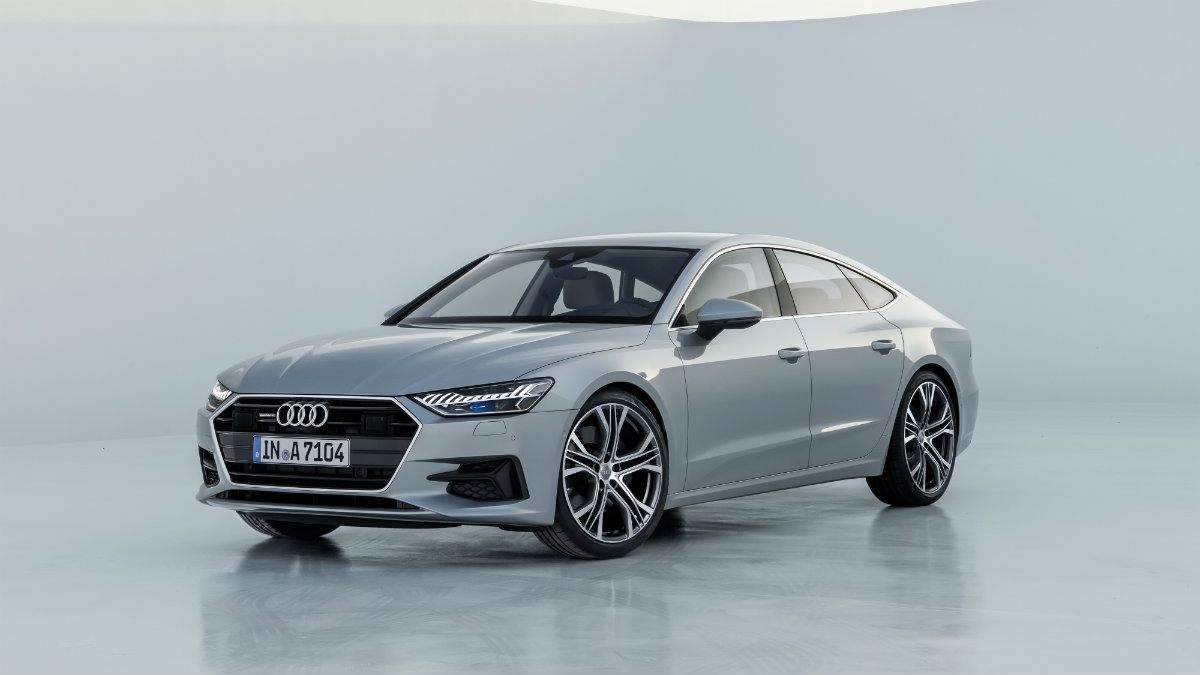
When Audi lifted the silk on the second-generation Audi A7 Sportback, the Ingolstadt design team delivered a clear statement on how the modern luxury grand tourer ought to look, drive, and interact with its occupants. Building directly upon the design principles established by Marc Lichte’s Prologue show car and sharing core technical DNA with the flagship A8 saloon, the A7 Sportback refines the four-door coupe concept into an athletic, low-slung sculpture. It blends three automotive archetypes in one flowing silhouette: the sleek poise of an executive cocoupéthe long-distance cruising ability of a luxury saloon, and the everyday versatility of an Avant estate.

The road presence of the A7 Sportback leaves little ambiguity about its sporting intent. Up front, the Singleframe grille sits noticeably wider and lower than on the Audi A8, pulling the visual center of gravity closer to the asphalt. Slender light units flank the expansive grille, framed by sculpted air intakes set into the front apron. Audi engineered three distinct lighting setups for the model. On the mid-range and top-tier specifications, the daytime running light signatures echo digital logic: 12 vertical light segments separated by narrow gaps deliberately evoke the binary digits 0 and 1. At the absolute top of the range sit the HD Matrix LED headlights with Audi laser light, identifiable by their subtle blue optical accents inside the housing.
In profile, the A7 Sportback is defined by taut proportions: a long engine bonnet, a stretched 2,926-millimeter (9.6 ft) wheelbase, and remarkably compact overhangs. Prominent wheel arches draw visual focus to wheels measuring up to 21 inches, directly referencing Audi’s quattro motorsport heritage. The body measures 4,969 millimeters (16.3 ft) from nose to tail and 1,908 millimeters (6.3 ft) in width, yet stands just 1,422 millimeters (4.7 ft) off the deck. That roofline sweeps downward in an uninterrupted arc toward a tapered, yacht-inspired rear deck. An active rear spoiler sits neatly integrated into the tailgate lip, deploying automatically at 120 km/h (74.6 mph) to supply high-speed stability.

A continuous light bar spans the full width of the tail, linking light clusters composed of 13 vertical LED segments. Whenever the vehicle is unlocked or locked, fast-moving animated light sequences dance across the front and rear luminaires, lending a theatrical element to the car even before the engine fires. In contrast to chrome-heavy executive saloons, the exterior of the A7 Sportback is clean of excessive brightwork. Buyers can choose from 15 exterior paint shades, eight of which are newly formulated for this generation. An optional S line exterior package sharpens the stance further with distinct sculpted treatments for the radiator grille, air inlets, side sills, and rear diffuser finished in gloss black.
Inside the Cockpit: Digital Architecture and Lounge Comfort
Step inside, and the cabin of the Audi A7 Sportback presents a calm, futuristic lounge aesthetic centered entirely around the driver. Clean horizontal lines run across the dashboard, creating an expansive, airy feel that belies the low exterior roofline. The center console angles deliberately toward the driver’s seat, establishing an intimate cockpit environment without cramping front-seat occupants. Audi structured the interior execution around four guiding qualities: progressiveness, sportiness, intuitive operation, and fine craftsmanship.

The interior material choices reflect this modern brief. From the entry specification to the tailored design selection, the S line interior package, and supple Valcona leather appointments, every surface is carefully finished. An optional contour ambient lighting package traces the architecture of the dashboard and door panels, casting soft indirect illumination across the cabin at night. High-spec models feature multi-adjustable customized contour front seats equipped with heating, ventilation, and pneumatic massage programs.
The headline technical change in the cockpit is Audi’s dual-screen MMI touch response operating system. Audi retired the traditional rotary pushbutton, console dials, and rows of mechanical switches seen in the first-generation car. Instead, two high-resolution touch displays govern vehicle controls. The upper 10.1-inch screen handles navigation, media, and primary vehicle settings. Framed in a sleek graphite-gray aluminum surround, the upper display blends cleanly into a black-panel fascia when switched off, practically vanishing into the dashboard sculpture.

Beneath it on the central tunnel sits an 8.6-inch touchscreen dedicated to climate management, comfort features, and text input. The driver can rest a wrist comfortably on the wide, ergonomic automatic selector lever while typing navigation entries or dialing adjustments. Both screens utilize electro-acoustic haptic feedback: when a finger activates a tile or button, a small mechanical pulse and an audible click confirm the command, offering tactile reassurance comparable to physical switchgear. The menu structure remains flat and customizable, allowing drivers to pin favorite shortcuts and radio stations across the main display.
Directly in front of the driver, the Audi virtual cockpit projects driving instruments across a crisp 12.3-inch digital cluster, complemented by an optional full-color head-up display projected onto the windscreen. Natural-language voice control processes spoken queries via onboard vehicle data and cloud-based processing. The car’s connectivity suite mirrors that of the A8, supporting up to seven individualized driver profiles that store as many as 400 vehicle parameters. Audi connect services also integrate Car-to-X hazard alerts and traffic sign recognition, drawing on crowd-sourced intelligence from connected Audi vehicles on the road.
Driver Assistance and the Central Intelligence of zFAS
Behind the digital instrument displays sits one of the most comprehensive sensor networks fitted to a production automobile. The heart of the A7 Sportback’s driver assistance ecosystem is the central driver assistance controller, known as zFAS. About the size of a small tablet, this computer continuously receives and synthesizes information from a comprehensive sensor array: up to five radar sensors, five optical cameras, 12 ultrasonic sensors, and a front-mounted laser scanner. By constantly merging these data streams, zFAS generates a real-time model of the vehicle’s surrounding environment.
This computational backbone underpins 39 individual driver assistance systems grouped into three focused option packages. The Tour assist package includes the adaptive driving assistant (ADA), which builds upon adaptive cruise control by supplying gentle steering interventions to keep the car centered in its lane, along with an efficiency assistant that advises the driver on lifting off the throttle ahead of speed drops and corners. The City assist package introduces crossing assist, watching for blind cross-traffic at junctions. Meanwhile, the Audi AI parking package introduces autonomous maneuvering into tight bays and garages without the driver needing to sit inside, operated remotely through a smartphone via the myAudi app.

Chassis Dynamics: All-Wheel Steering and Air Suspension
Audi’s chassis engineers redesigned the front and rear five-link axle architecture from scratch to sharpen the handling of the five-door gran turismo. Central to the chassis network is the electronic chassis platform (ECP). As the master control unit for all dynamic chassis functions, the ECP synchronizes the adaptive dampers, air suspension, sport differential, and steering systems to adapt vehicle behavior instantaneously to road camber, surface grip, and cornering speed.
Buyers can choose from four separate suspension configurations: a standard steel-spring setup, a sport suspension lowered by 10 millimeters (0.4 in), an electronically controlled adaptive damper system, and a self-leveling adaptive air suspension. The air suspension provides a broad spread between soft, absorbent highway cruising and taught body control during aggressive directional transitions.
The most transformative chassis innovation on the A7 Sportback is the optional dynamic-all-wheel steering. At the front axle, a strain wave gear alters the steering ratio according to road speed, ranging dynamically from 9.5:1 to 16.5:1. At the rear axle, a spindle drive turns the rear wheels by up to 5 degrees. At slow speeds up to 60 km/h (37.3 mph), the rear wheels turn in the opposite direction to the fronts. This reduces the car’s turning circle by 1.1 meters (3.6 ft), making a nearly five-meter luxury cruiser maneuver through tight parking garages like a compact hatchback. Above 60 km/h, the rear wheels steer in phase with the front wheels, creating rock-solid stability during high-speed motorway lane changes.
For drivers seeking sharper cornering balance, an optional quattro sport differential actively splits torque between the rear wheels. When accelerating out of a bend, the sport differential directs extra force to the outside wheel, eliminating understeer and tucking the front end cleanly into the apex.

48-Volt Mild-Hybrid Powertrain and Launch Performance
Under the sculpted aluminium bonnet, every combustion engine in the Audi A7 Sportback line-up comes paired with mild-hybrid electric vehicle (MHEV) technology. In the V6 models, this electrification is anchored by a 48-volt primary electrical architecture. A belt alternator starter (BAS) links directly to the engine crankshaft, working alongside a compact lithium-ion battery housed beneath the luggage compartment floor.
Under braking, the BAS system can recover up to 12 kW of electrical energy, recharging the battery. Between 55 and 160 km/h (34.2 to 99.4 mph), the A7 can coast with its petrol engine completely shut down for up to 40 seconds. As soon as the driver presses the throttle, the belt alternator starter restarts the V6 smoothly and virtually instantaneously. The engine start-stop threshold has also been broadened, allowing the engine to cut out while rolling to a halt from 22 km/h (13.7 mph). Operating with the forward camera, the powertrain starts predictively before the driver even releases the brake pedal if the car ahead pulls away in traffic. Audi estimates this 48-volt system shaves up to 0.7 liters of fuel per 100 kilometers in real-world commuting.
The car arrives at market launch wearing the Audi A7 55 TFSI quattro badge. Power comes from a 3.0-liter turbocharged V6 petrol engine producing 250 kW (340 metric horsepower) and 500 Nm (368.8 lb-ft) of torque, the latter available across a broad torque band from 1,370 to 4,500 rpm. Channeling drive through a rapid-shifting seven-speed S tronic dual-clutch transmission, the 55 TFSI accelerates from zero to 100 km/h (62 mph) in 5.3 seconds, reaching an electronically governed top speed of 250 km/h (155.3 mph).
The 55 TFSI utilizes Audi’s quattro with ultra technology. Under steady cruising and low load, the transmission disengages the propshaft and rear differential entirely to reduce mechanical drag, driving only the front wheels. When the predictive control module detects wheel slip or aggressive steering inputs, clutches re-engage all-wheel drive within fractions of a second without any perceptible shift in driveline feel. In the NEDC test cycle, the base A7 55 TFSI achieves a combined fuel consumption figure of 6.8 liters per 100 kilometers (34.6 US mpg), emitting 154 grams of CO2 per kilometer.

Packaging, Structure, and Daily Practicality
Despite its low, fastback silhouette, practical usability remains one of the core strengths of the A7 Sportback. Audi’s interior designers gained 21 millimeters (0.8 in) of usable cabin length over the first-generation car. That gain translates directly into improved rear knee room and extra headroom for back-seat passengers. Customers can specify the rear passenger compartment with two individual bucket seats or a 2+1 seating arrangement with a folding central armrest.
Cabin refinement benefits from a rigid multi-material body shell constructed from hot-formed steel and structural aluminium components. Large structural castings, including the suspension strut mounts and body panels like the doors, bonnet, and tailgate, are aluminium. This hybrid material mix lowers mass while strengthening torsional stiffness, resulting in exceptional crash safety and whisper-quiet aeroacoustics at sustained motorway speeds.
Luggage space is equally practical. Beneath the wide-opening electric rear tailgate, the boot offers 535 liters (18.9 cu ft) of cargo capacity with the rear seats in place. Folding down the 40/20/40 split rear bench expands total cargo volume to 1,390 liters (49.1 cu ft). Audi widened the loading aperture between the wheel arches to 1,050 millimeters (3.4 ft), meaning two golf bags can stow horizontally across the floor even when an optional spare wheel sits beneath. An optional foot-kick gesture sensor allows hands-free opening and closing when carrying bags.
Optional luxury equipment rounds out the gran turismo experience. An air quality package diffuses subtle fragrances through the air conditioning ducts, cleans air via an electrostatic ionizer, and filters fine particulates. An expansive panoramic glass roof floods the interior with natural light, while an optional 1,920-watt Bang & Olufsen Advanced Sound System brings 3D immersive acoustic soundstaging to both front and rear seats through 19 active speakers.
Vehicle data
| Field | Value |
|---|---|
| Make | Audi |
| Model | A7 Sportback (55 TFSI quattro) |
| Generation / chassis code | Second generation (Type 4K8 / C8) |
| Model year(s) covered | 2018–2019 |
| Body style | Five-door luxury liftback / four-door coupe |
| Powertrain / engine | 3.0-liter turbocharged V6 petrol (TFSI) with 48-volt mild-hybrid system (MHEV) and belt alternator starter (BAS) |
| Power / torque | 250 kW (340 hp) @ 5,000–6,400 rpm / 500 Nm (368.8 lb-ft) @ 1,370–4,500 rpm |
| Transmission | 7-speed S tronic dual-clutch transmission |
| Drivetrain | quattro all-wheel drive with ultra technology |
| Key performance figures | 0–100 km/h in 5.3 seconds; Top speed 250 km/h (155.3 mph); Fuel consumption: 6.8 l/100 km (NEDC); CO2: 154 g/km |
| Price (as stated) | Not stated in sources |
| On-sale / announcement period | Unveiled October 2017; European market launch early 2018 |
| Market | Europe / Global |