

The S-Class of SUVs
The Mercedes-Benz GLS has always occupied a particular place in Stuttgart’s lineup. Where the GLE serves as the volume seller and the GLC handles the daily commute, the GLS exists for those moments when three rows of passengers need to travel in genuine comfort. The second-generation model, unveiled in spring 2019 ahead of its New York Auto Show debut, pushes that mandate considerably further than its predecessor.
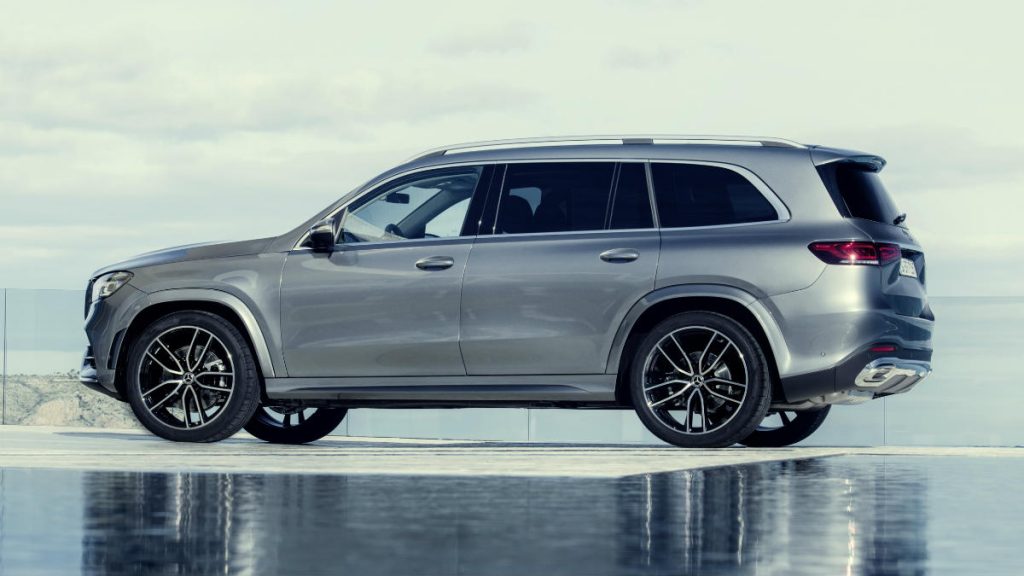
Physically, the new GLS is larger in every meaningful dimension. The wheelbase stretches to 3135 mm—a 60 mm increase over the previous generation—and that extra length translates directly into cabin space. The third row now accommodates adults up to 1.94 meters tall without the usual compromises, while the second row gains 87 mm of additional legroom when the seats are positioned rearward. All three rows adjust electrically, and the rearmost seats fold flush into the load floor at the press of a button.
Mercedes-Benz has been building luxury SUVs for more than two decades now. The original GL-Class arrived in 2006 as the GL, and when the company reorganized its nomenclature a few years back, it became the GLS—positioning it as the S-Class equivalent in the SUV range. That heritage matters here. The GLS competes in a segment where buyers expect uncompromised comfort, and this new generation delivers on that expectation through a combination of engineering refinement and technological integration.
SUVs have grown to account for a significant share of the Mercedes-Benz product portfolio and contribute directly to the brand’s global growth strategy. The GLS sits at the top of that pyramid, tasked with demonstrating what Stuttgart can achieve when size, luxury and capability converge without compromise.
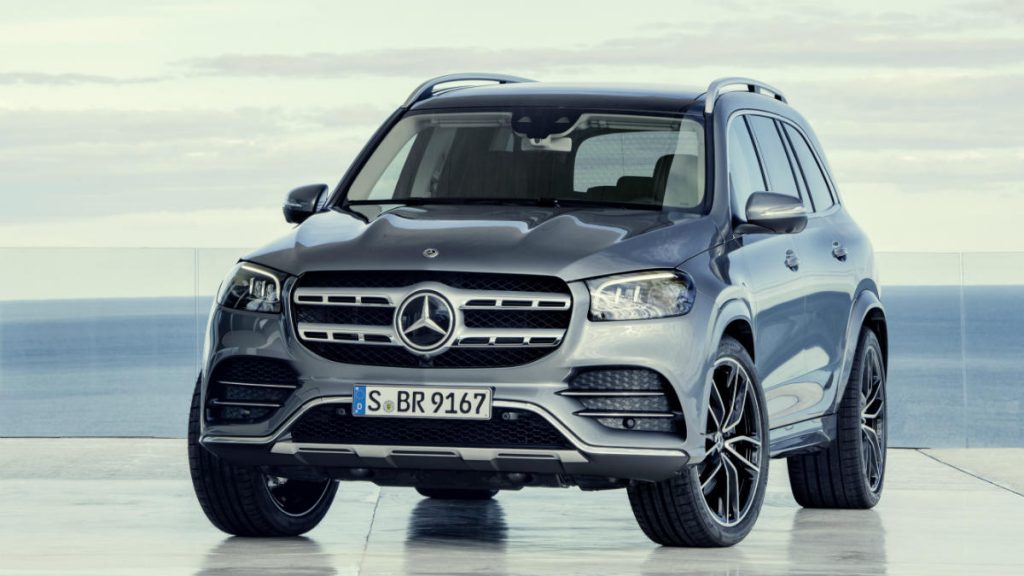
The exterior design manages to look both substantial and proportionally balanced. An octagonal radiator grille dominates the front end, flanked by MULTIBEAM LED headlamps that provide adaptive illumination across various driving conditions. Chrome-plated underguards and bone-shaped air inlets reinforce the SUV’s presence without veering into aggression. From the rear, powerful haunches extend from the rear doors toward the taillamps, giving the GLS a planted stance that suggests capability rather than mere ornamentation.

Aerodynamic efficiency received particular attention during development. Engineers spent considerable time in the wind tunnel at Sindelfingen, optimizing underbody panels and managing airflow through the engine compartment—areas that tend to generate the low-frequency wind noise that plagues large SUVs at highway speeds. The result is one of the best drag coefficients in the full-size luxury SUV segment, contributing measurably to both fuel economy and cabin quietness.
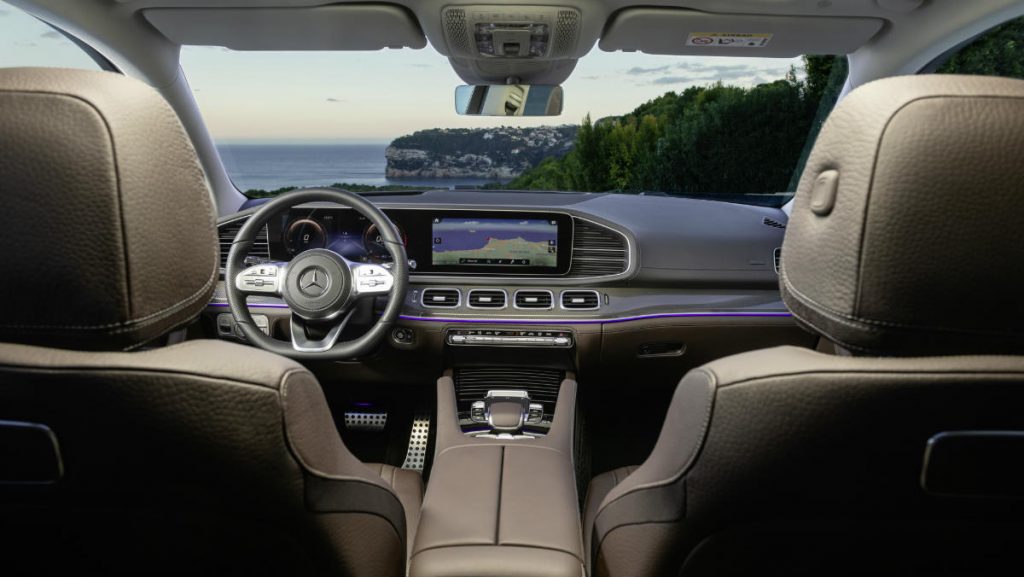
Inside, the GLS blends Mercedes-Benz saloon refinement with SUV practicality. The dashboard centers on a large screen unit embedded into the dashboard support structure, while a broad, prominently raised centre console creates a robust contrast with the free-floating appearance of the upper dash. Two grab handles flank the console—a nod to the vehicle’s off-road heritage and capability. Leather surfaces flow continuously across the dashboard and door panels, interrupted only by flush-fitting sunblinds and precisely chiseled trim elements with pyramid structures that catch the light subtly.
The controls provide haptic and audible feedback that suggests they were machined from a solid metal block rather than molded. A new multifunction sports steering wheel features a striking spoke design that complements the interior’s architectural feel. Throughout the cabin, very fine chiselling and meticulous attention to trim surfaces show the desire for perfection and craftsmanship that distinguishes this tier of Mercedes-Benz product.
Seating configurations vary by market. European buyers receive a 60:40-split second-row bench with 40:20:40-split adjustable backrests as standard. The American market configuration offers two individual luxury rear seats with armrests in the second row, with a pass-through to the third row—particularly useful when child seats occupy the middle row. The EASY-ENTRY function moves second-row seats forward electrically to facilitate third-row access.

Third-row passengers receive heated seats—a first for the GLS—along with dedicated USB charging ports. When equipped with the available five-zone automatic climate control, the third row gets its own climate zone with roof-mounted vents, supplied by a separate electrically powered heater and air conditioning unit. The third row isn’t an afterthought; it’s a legitimate seating position for adults on longer journeys.
Cargo flexibility matches the passenger accommodations. The second and third rows fold flat via switches in the load compartment or on the front wheel arches, revealing up to 2400 litres of cargo volume. A button-operated lowering function drops the boot sill approximately 50 mm to simplify loading heavy items. The Rear Comfort package Plus adds a tablet in its own docking station, allowing rear passengers to control all MBUX comfort and entertainment functions—radio, TV, media, phone, and web browser—along with the five-zone automatic climate control. The driver can assume control of all features from the front seat at any time.

Optional luxury seats in the second row add lumbar massage and individual climate control. The MBUX Rear Seat Entertainment System includes two 11.6-inch touchscreens for movies, music, web browsing, and trip planning. Each passenger controls their own content independently on the high-resolution displays. The system also accepts media from personal devices—phones, tablets, laptops—via Bluetooth or USB. The centre console provides wireless smartphone charging and additional USB ports. Rear passengers are further indulged through luxury head restraints with additional cushions and a rearward-extended console between the front seats with cup holders.

The optional MBUX Interior Assistant introduces gesture control through a camera mounted in the overhead console. It registers hand and arm movements, highlighting relevant screen elements as hands approach the touchscreen or the touchpad on the centre console. Simple gestures control specific functions—extending a hand toward the interior mirror toggles the reading lamp on and off. Users can program personal shortcuts for frequent actions like navigating home or calling specific contacts.
A unique feature of MBUX is its learning capability through artificial intelligence. With predictive functions, MBUX anticipates what the user would like next: anyone who regularly telephones a particular contact on a given day of the week will see that number suggested in the display. Anyone who switches to a news station at a certain time receives that station as a suggestion. A next-generation full-colour Head-up Display projects information at 720 × 240 pixel resolution with an extended projection distance, keeping critical data in the driver’s line of sight without requiring focus shifts.
The engine lineup reflects the GLS’s dual character as both luxury cruiser and capable tow vehicle. Powerful six- and eight-cylinder engines deliver the motoring comfort and effortlessly superior pulling power that suits the characteristics of this large SUV. Shortly after launch, the GLS 580 4MATIC marks the world premiere of a new, electrified V8 petrol engine with a 48-volt electrical system and integrated starter-generator. This setup enables brief electric-only operation under light loads, provides additional torque boost during acceleration, and contributes to overall efficiency gains. The 48-volt architecture also powers the E-ACTIVE BODY CONTROL suspension system, which can individually control damping and spring forces at each wheel to virtually eliminate body roll, pitch, and squat.
The active suspension combines ride comfort, handling precision, and genuine off-road capability in a single system. It can raise the body for ground clearance on rough terrain or lower it at speed for improved aerodynamics and stability. The new 4MATIC all-wheel-drive system distributes torque between axles to maintain traction on pavement and loose surfaces alike, and the GLS offers dedicated off-road driving modes that adjust throttle response, shift points, traction control, and ride height for gravel, sand, and rock conditions.
The GLS is fitted with the latest generation of Mercedes-Benz driving assistance systems, providing continuous support to the driver across highway cruising, urban traffic, and parking maneuvers. Active Distance Assist DISTRONIC handles adaptive cruise control with stop-and-go capability in congestion, while Active Steering Assist provides lane centering support. The suite also includes Active Brake Assist, Active Blind Spot Assist, and Active Lane Keeping Assist. For those who tow, the available trailer maneuvering system assists with steering when reversing a trailer into position.
The second-generation GLS represents Mercedes-Benz’s interpretation of what a full-size luxury SUV should deliver: space for seven adults in genuine comfort, technology that anticipates needs rather than demanding attention, and capability that doesn’t compromise the luxury mandate. Where competitors in this segment tend to emphasize either passenger accommodation or premium refinement, the GLS makes a credible case for delivering both without apology. It’s the kind of vehicle that makes a three-row family hauler feel like a private jet on wheels.
Vehicle data
| Make | Mercedes-Benz |
| Model | GLS |
| Generation / chassis code | X167 (second generation) |
| Model year(s) covered | Not stated in sources |
| Body style | Full-size luxury SUV, five-door |
| Powertrain / engine | Six- and eight-cylinder petrol and diesel options; GLS 580 4MATIC features electrified V8 with 48-volt system and integrated starter-generator |
| Power / torque | Not stated in sources |
| Transmission | Not stated in sources |
| Drivetrain | 4MATIC all-wheel drive |
| Key performance figures | Not stated in sources |
| Wheelbase | 3135 mm (60 mm increase over predecessor) |
| Cargo volume | Up to 2400 litres (rear seats folded) |
| Seating capacity | Seven (three rows) or six (optional second-row individual seats) |
| On-sale / announcement period | Unveiled spring 2019 |
| Market | Global (European and North American configurations) |