
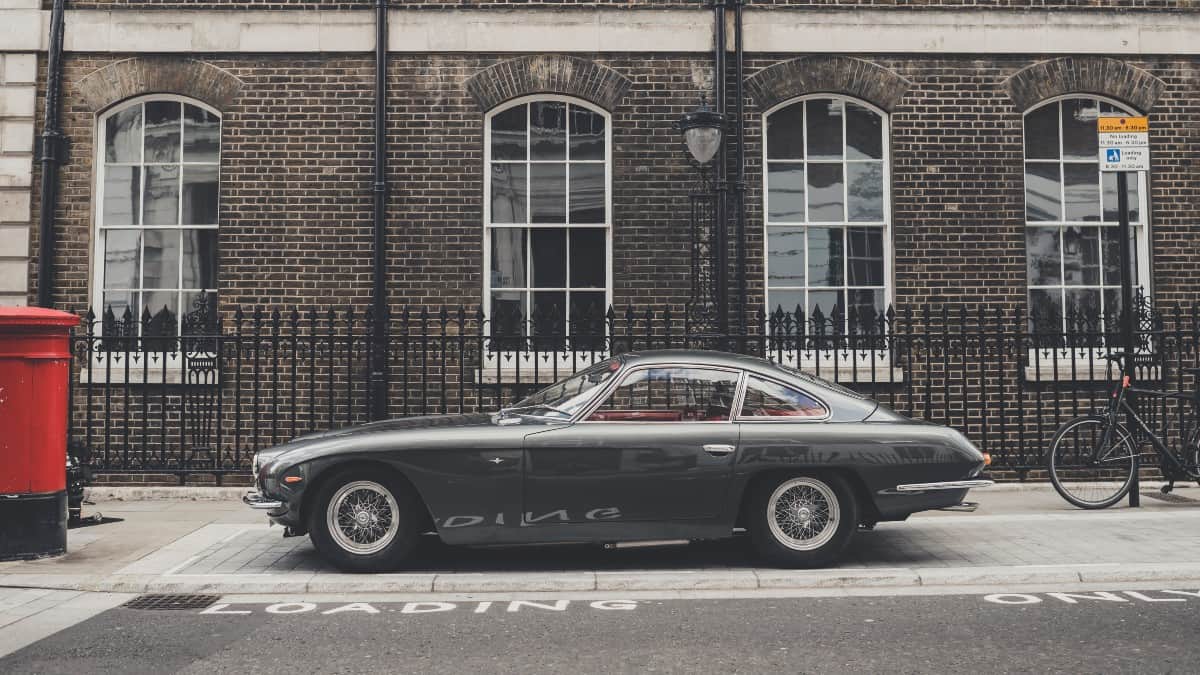
Tribute to The Beatles on the 60th Anniversary of their debut by Lamborghini 400 GT 2+2.
The romance of “Swinging London” found its perfect mechanical counterpart in the form of the Lamborghini 400 GT 2+2—a grand touring machine capable of crossing continents in silence, yet sharp enough to navigate the chaotic streets of a musical revolution. For the 60th anniversary of The Beatles’ debut single, “Love Me Do”—released on October 5, 1962—Italian automotive brand Automobili Lamborghini orchestrated a cinematic homage to that golden era. Driving a meticulously preserved Classic Lamborghini 400 GT 2+2 finished in Rosso Alfa, journalist and author Dylan Jones OBE retraced the iconic geography of the Fab Four’s rise.

The journey took the vibrant red V12 from Abbey Road Studios through the heart of Britain to Savile Row. It was a route that charts the biography of the world’s most influential band, tracing their movement from the recording studios where they captured their early magic to the very streets where they once lived and performed live. This tour represents more than a drive; it serves as a moving tribute to an era defined by youth culture, fashion, and a distinct blend of classical elegance and rebellious energy.
All four members of The Beatles had an affinity for automobiles, but Sir Paul McCartney remained consistently captivated by the allure of Italian exotica. During the late 1960s, McCartney cultivated a reputation as a discerning collector, frequently swapping mundane family transports for high-performance machinery. Numerous sources indicate that around the time The Beatles recorded their double album, “The White Album,” in 1968—including sessions for tracks like “Let It Be” which effectively capped off their recording career—McCartney owned a Lamborghini 400 GT 2+2. While official documentation of his exact vehicle registrations has been lost to the mists of time, the connection between the Bassist and Ferruccio Lamborghini’s flagship cruiser remains a well-documented fixture of automotive trivia.

There is a particularly striking image frozen in pop history regarding this convergence of music and motor: on January 30, 1969, when The Beatles stepped onto the roof of their Apple Corps headquarters at 3 Savile Row for their legendary final public performance, a Lamborghini 400 GT 2+2 sat parked on the street below. Finished in Rosso Alfa with a contrasting Nero (black) leather interior, the car overlooked the ungarbled chaos of the crowd gathering beneath them. It stood there as an emblem of continental luxury amid a distinctly British protest against the music industry.
The origins of this specific grand tourer trace back to 1966, merely three years after Ferruccio Lamborghini founded Automobili Lamborghini. By then, the initial 350 GT had established the brand’s DNA, but the market demanded something more refined, faster, and capable of carrying passengers in true comfort. Thus arrived the 400 GT. It quickly earned its reputation not only as one of the fastest cars in production but also as one of the most comfortable GT vehicles available. The architecture of the 4.0-liter DOHC V12 engine laid down by the 350 GT was retained, but bored out to deliver greater power and torque, satisfying the need for effortless highway cruising speeds that could exceed 150 mph—a feat few cars could claim at the time.

Styling responsibilities fell to Carrozzeria Touring, then widely recognized as one of the preeminent design firms in Europe due to its pioneering “Superleggera” construction method. The resulting silhouette blended aggressive aerodynamic intent with a stately, elegant proportion. The front end retained the sweeping character lines of the earlier 350 GT but featured revised air intakes and a more integrated bumper design suited to higher speeds. Inside, the cabin offered leather upholstery, wood veneer accents, and the plush seating required of a vehicle intended for long-distance travel across European highways.
Crucially, the “2+2” suffix denoted the inclusion of two auxiliary rear seats. While cramped by modern standards, these jump seats allowed the 400 GT to accommodate a small family or additional luggage—an essential feature for a daily driver aimed at affluent industrialists. Furthermore, the chassis received upgraded suspension components to improve ride quality over its predecessor, turning what was initially somewhat of a rough sports coupe into a true gran turismo meant for crossing borders and continents in silence.
In recent retrospective projects, such as the one led by Dylan Jones—who has interviewed Paul McCartney numerous times over the decades—the spirit of the ’60s is brought to life through the roar of that naturally aspirated V12. As the engine bay bled sound across the quiet roads of England, the nostalgia surrounding the era’s greatest band was reignited through a very tactile medium. The journey underscored just how intrinsic the aesthetic of the classic supercar became to the identity of Swinging London, permanently linking brands like Lamborghini to a period of unprecedented creativity.
Today, the Lamborghini 400 GT 2+2 stands as a testament to the transition phase of the manufacturer—a bridge between Ferruccio Lamborghini’s early ambitions and the exotic fury that would follow with the Miura a few years later. Preserved examples command immense respect in concours circles, representing some of the earliest hours of the company’s storied history.
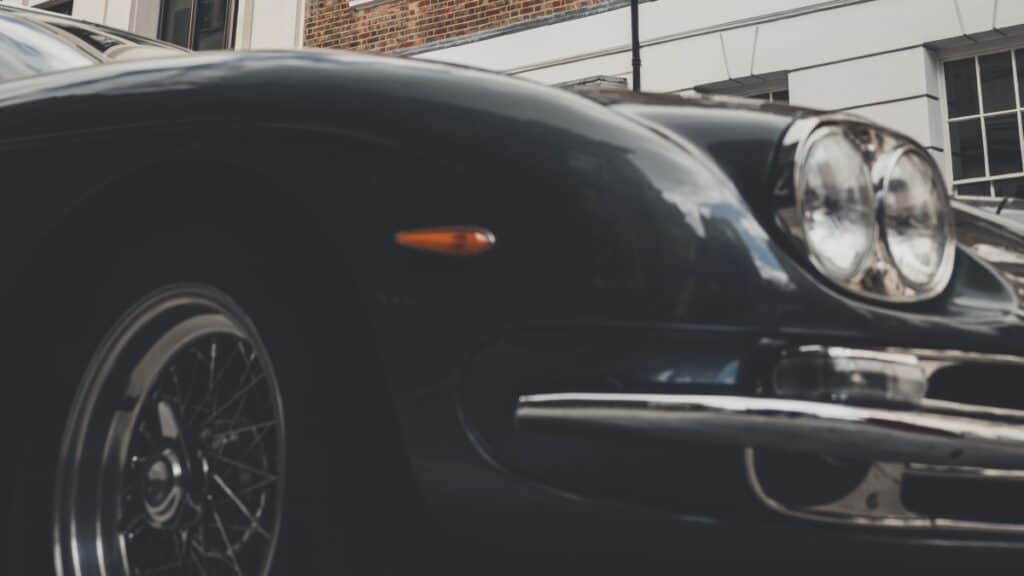

Vehicle data
| Make | Lamborghini |
| Model | 400 GT 2+2 |
| Generation / chassis code | 364 (based on 350 GT platform) |
| Model year(s) covered | 1966–1969 |
| Body style | 2-door GT Coupé |
| Powertrain / enginCoupé> | 4.0 L (3929 cc) DOHC 60° V12 |
| Power / torque | 300–330 hp (depending on spec); Not stated |
| Transmission | 5-speed manual |
| Drivetrain | Rear-wheel drive |
| Key performance figures | Top speed approx. 155 mph (250 km/h) |
| Price (as stated) | Not stated in sources |
| On-sale / announcement period | Launched 1966 |
| Market | Grand Tourer / Luxury Sports Car |