

Hypercar Engineering Built For the Next Century
In a world where hypercars are increasingly becoming exercises in aerodynamic theatre and computational excess, the brand Czinger arrived in London on April 7th, 2020 with something quietly revolutionary: not just another exotic machine, but an entirely new approach to how a car should be designed, engineered and manufactured. The 21C — the first model from an as-yet-unveiled lineage of performance vehicles — was presented not merely as a hypercar, but as a declaration of intent from a company that views automobiles through the lens of data science and advanced computing.

Not Just Another Hypercar, But a New Paradigm
The global hypercar arena has long been dominated by established Italian houses and British bespoke coachbuilders — companies whose heritage runs deep into motorsport tradition. But entering this space in 2020, when Rimac had already demonstrated what Croatian electrical engineering could achieve with the Concept One and the then-upcoming C_Two, when McLaren was pushing track-focused limits with the Senna, and when Bugatti was still untouchable with the Chiron — required something genuinely different. Czinger offered not pedigree, but proprietary technology.
CEO and founder Kevin Czinger addressed attendees both in person and via live stream during the London event, framing the company’s ambition clearly: Czinger positions itself not simply as a hypercar manufacturer but as a comprehensive performance vehicle company with the objective of building “one of the great, enduring brands of the 21st century.” That ambition extends far beyond the limited-run 21C itself, which Czinger confirmed will serve as the founding chapter of a broader portfolio of exclusive high-performance machines.
Computational Design From Ground Zero
What separates the 21C from its contemporaries begins before any metal is cut or composite laid down. Every single component of the vehicle — from structural elements to fluid routing channels — undergoes computational engineering and optimisation before it ever exists in physical form. The company applies algorithms traditionally reserved for aerospace and materials science to produce parts that are simultaneously lighter, stronger and more functionally integrated than conventional approaches allow.
The result is visible in components such as the front upper control arm, which is machined hollow with a complex three-dimensional internal lattice structure. Rather than casting or forging a solid臂 that must be subsequently drilled out and lightened, the geometry was designed around its specific load-bearing requirements from the outset. The outcome is a part whose mass represents only a fraction of what a traditional variant would weigh, yet delivers superior stiffness — a critical advantage for un-sprung mass reduction and overall handling dynamics. This philosophy cascades throughout every sub-assembly on the car.

The Drivetrain: 1250 HP Of Hybrid Intelligence
At the heart of the 21C sits Czinger’s own in-house developed powertrain — a mid-mounted 2.88-litre V8 configured with an 80-degree bank angle and flat-plane crankshaft design, paired with twin 73-millimetre turbochargers. The engine specification alone reads like a textbook example of forced-induction engineering pushed toward extreme parameters:
Bore and stroke measure 84 × 65 mm, yielding a relatively short-stroke architecture that supports the engine’s astonishing 11,000 rpm redline. The compression ratio sits at a modest 9.5:1, appropriate given the twin-turbo setup and the engine’s capability for flex-fuel operation — a feature that speaks to engineering flexibility and future-proofing rather than any current market mandate. Four valves per cylinder keep breathing capacity high at rev-limit.
But the V8 doesn’t operate alone. Mounted alongside it are two advanced axial-flux electric motors — one dedicated to each front wheel — producing up to 150 kW (approximately 201 hp) and 370 Nm of peak torque apiece. Through sophisticated torque vectoring across all four wheels, these motors add their output seamlessly to the combustion engine’s contribution, yielding a combined system total of 1,250 horsepower (1,233 bhp). The hybrid system thus serves not merely as a torque-filling supplement but as a fundamental element of the 21C’s all-wheel-drive traction strategy.

The Transmission: Race Dog or Street Synchromesh?
Power delivery routes through a seven-speed automated sequential gearbox designed and built entirely to Czinger’s specifications. Unusually for a customer-facing product, buyers will choose between two configurations at order time: a full race-specification dog-ring mechanism tuned for the fastest possible shift times on track, or a street-optimised synchromesh version intended for smoother, more civilised everyday driving. Both share the same ultra-light, compact architecture, but the gearing feel and shift character diverge markedly depending on the selected option.
In the context of 2020’s hypercar landscape, where dual-clutch automatics dominate even among the most extreme examples, Czinger’s decision to offer a true sequential box with customer-selectable behavior stands out. It signals a commitment to driver engagement that few manufacturers in this segment maintain.
Weight, Ratio and the Pursuit of 1:1
The 21C achieves a dry weight figure below 1,200 kilograms — and perhaps the most striking statistic from the spec sheet is the mass of the chassis itself: just 120 kg. This lightweight envelope contributes directly to what Czinger calls a “true 1:1 power-to-weight ratio” — meaning roughly one brake horsepower per kilogram of vehicle mass. Few量产 production cars have ever achieved this kind of number, and doing so with a hardtop, street-legal chassis incorporating crash structures, safety systems and thermal management infrastructure makes the achievement remarkable.
The performance figures bear this out: 0 to 62 mph (0–100 km/h) in 1.9 seconds, a quarter-mile time of 8.1 seconds, and the ability to accelerate from 0 to 186 mph (0–300 km/h) then brake back to zero in 15 seconds — a test that challenges braking, aero and tire technologies simultaneously. The 0–248 mph (0–400 km/h) deceleration completes in 29 seconds. Power density reaches 329 hp per litre of displacement, a figure rarely seen outside Formula 1 power units.
Thermal Management and Structural Integration
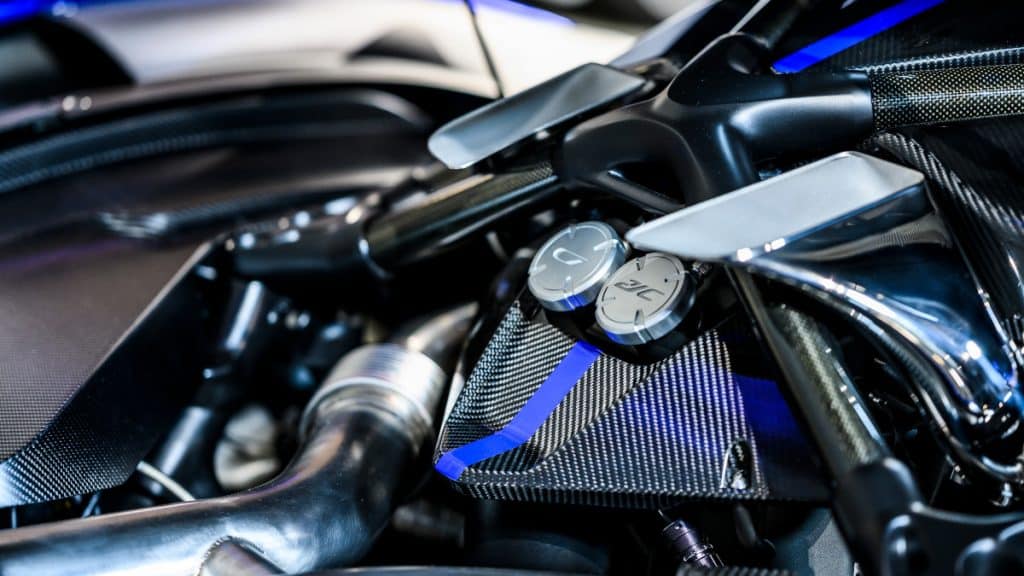
Managing heat within the 21C’s tightly packaged engine compartment required innovative solutions. Czinger developed proprietary Thermal Syphons ™ technology — enclosed systems that capture and direct airflow around the turbos and exhaust headers. Cool air is drawn from beneath the engine bay while hot exhaust gases are actively siphoned upward and expelled through the decklid, creating a purposeful thermal management loop that reduces under-bay temperatures and improves consistency of performance during repeated acceleration events.
This integration philosophy extends even further. The chassis structure doesn’t merely carry mechanical loads; it also houses cooling circuits, fluid routing paths and exhaust sound management channels — functions typically distributed across separate subsystems in conventional vehicles. Consolidating these responsibilities into the structural backbone enables the extraordinary 120 kg chassis mass while eliminating the penalties associated with multiple discrete modules and their associated mounting hardware.
Cockpit Architecture and Spec Variants
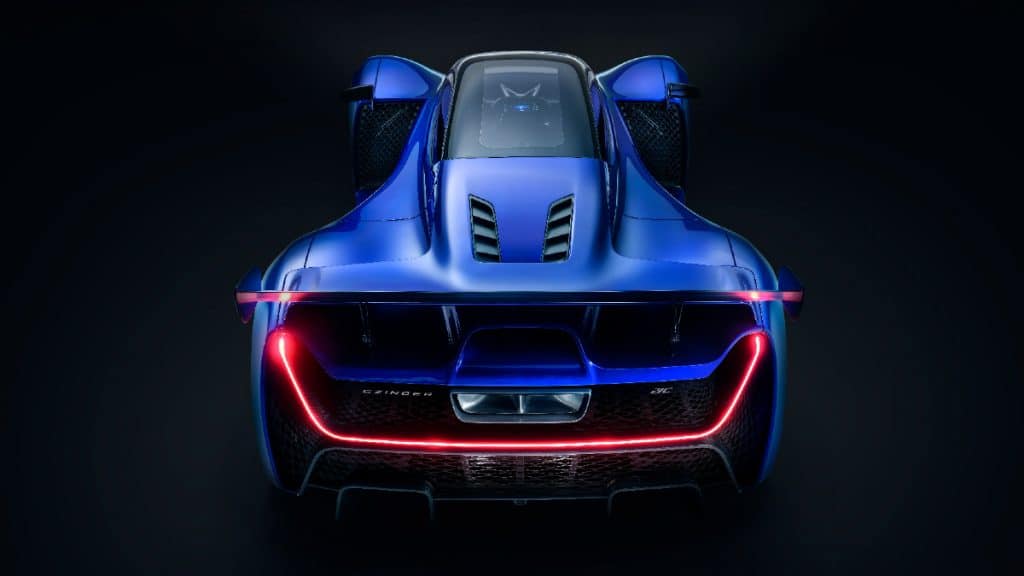
Inside the cabin, the 21C adopts Czinger’s signature in-line seating arrangement — sometimes described as “jet-fighter style” — with the driver positioned centrally and the passenger seated directly behind along the vehicle’s longitudinal axis. This layout offers several functional advantages: it concentrates mass near the centre of gravity for improved rotational dynamics, creates naturally optimal weight distribution fore and aft, and provides an immersive driving perspective that separates occupants from the side glass and emphasizes forward focus.
Two distinct specifications were unveiled at the London event: the standard roadgoing 21C and a stripped-back, lightweight track variant optimised for circuit use. Both share the identical drivetrain platform and in-line seating architecture, but the track-focused version removes comfort features, sound deadening and some body panels to shed additional mass. Customers will be able to customise the 21C extensively across both specification levels, selecting from a broad range of personalisation options covering everything from material finishes and colour schemes to performance-oriented upgrades.
Manufacturing and Exclusivity
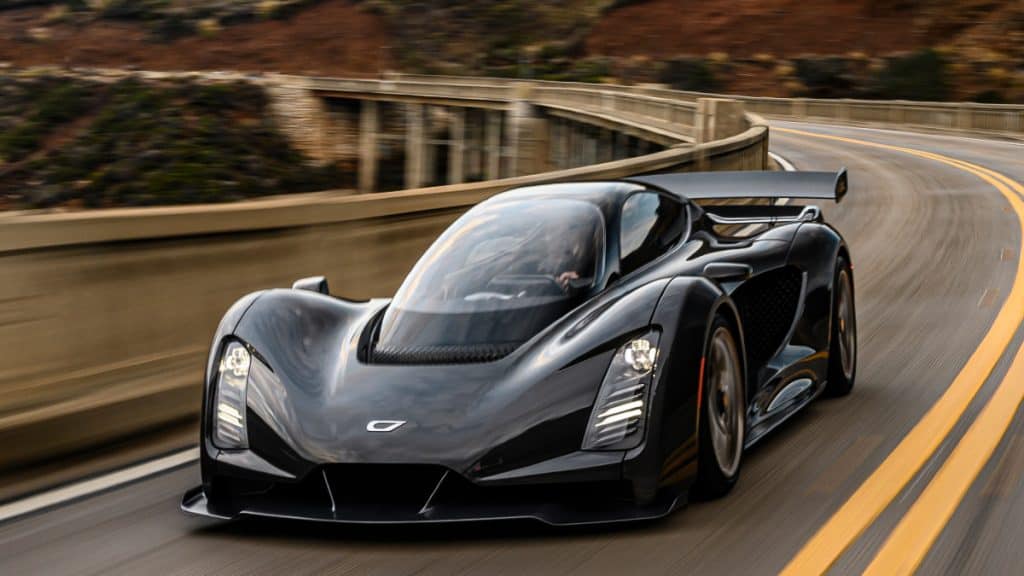
Production of the 21C is deliberately constrained: only 80 examples will be built, each one individually specified and hand-finished at Czinger’s facility in Los Angeles, California. The low-volume approach ensures that no two cars are identical and allows the company to maintain rigorous quality standards across every unit. For the 2020 hypercar buyer, scarcity remains a primary value driver — the 21C’s allocation of 80 copies places it squarely among the most exclusive machines available, comparable in exclusivity to限量 production runs from Pagani, Koenigsegg and similar ateliers.
Pricing details were not disclosed at the London reveal, but with the level of bespoke engineering, proprietary materials and manual construction involved, the 21C will undoubtedly command a price that reflects its position at the absolute apex of the hypercar hierarchy. The investment extends beyond mere ownership of a rare vehicle; it represents access to Czinger’s broader engineering ecosystem and, potentially, future models in the developing lineup.
A Brand Born From a Different Angle
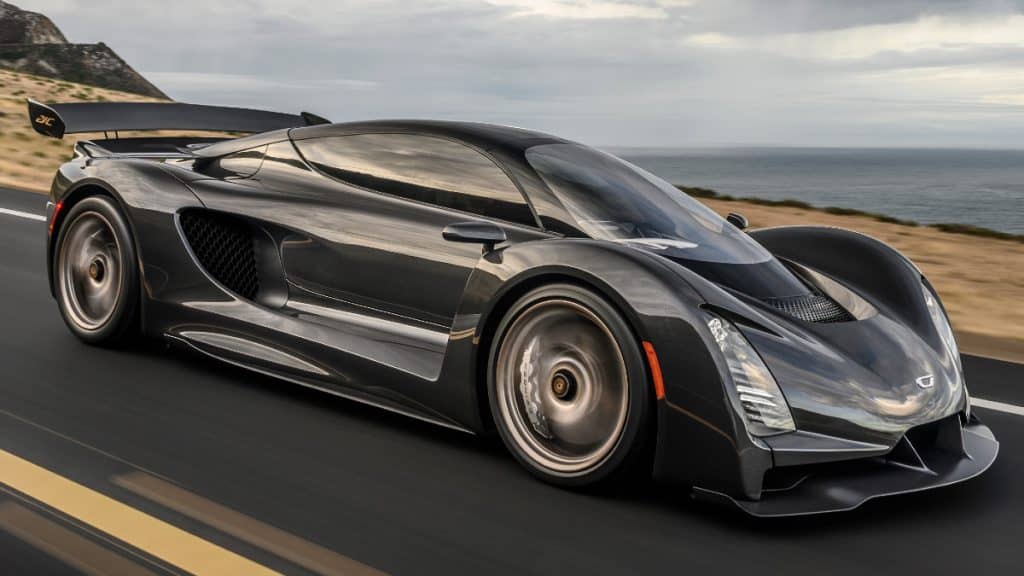
Naming the 21C after the century it was built for is deliberate. Czinger intends the vehicle to embody the engineering capabilities, materials science and computational methods that define the present era — technologies unavailable even five years prior to its announcement. Where traditional hypercar builders rely on decades of accumulated craftsmanship and evolutionary design refinement, Czinger takes a clean-sheet approach rooted in simulation, generative design algorithms and additive-aware manufacturing thinking.
This fundamentally alters the development trajectory. Rather than iterating upon existing architectures, Czinger engineers every component from first principles, optimising for function, form and weight simultaneously. The consequence is a vehicle that feels less like a supercar derived from racing precedent and more like a machine that emerged from a different paradigm entirely — one where the boundary between chassis, bodywork and systems integration has dissolved.

The Numbers at a Glance
Power output: 1,250 hp (1,233 bhp) combined system output
Engine: 2.88L V8 twin-turbo, 80° bank angle, flat-plane crank, 11,000 rpm redline
Electric motors: Dual axial-flux, 150 kW / 370 Nm each, front axle
Transmission: 7-speed automated sequential (dog-ring or synchromesh configurable)
Drivetrain: All-wheel drive with torque vectoring
Dry weight: Under 1,200 kg (chassis alone: 120 kg)
Power-to-weight ratio: Approximately 1:1
0–62 mph / 0–100 km/h: 1.9 seconds
Quarter mile: 8.1 seconds
0–186 mph to 0: 15 seconds
0–248 mph to 0: 29 seconds
Power density: 329 hp per litre
Production: Limited to 80 units
Build location: Los Angeles, California
Specimens presented: Standard road 21C and lightweight track variant
Announced: London, UK, April 2020
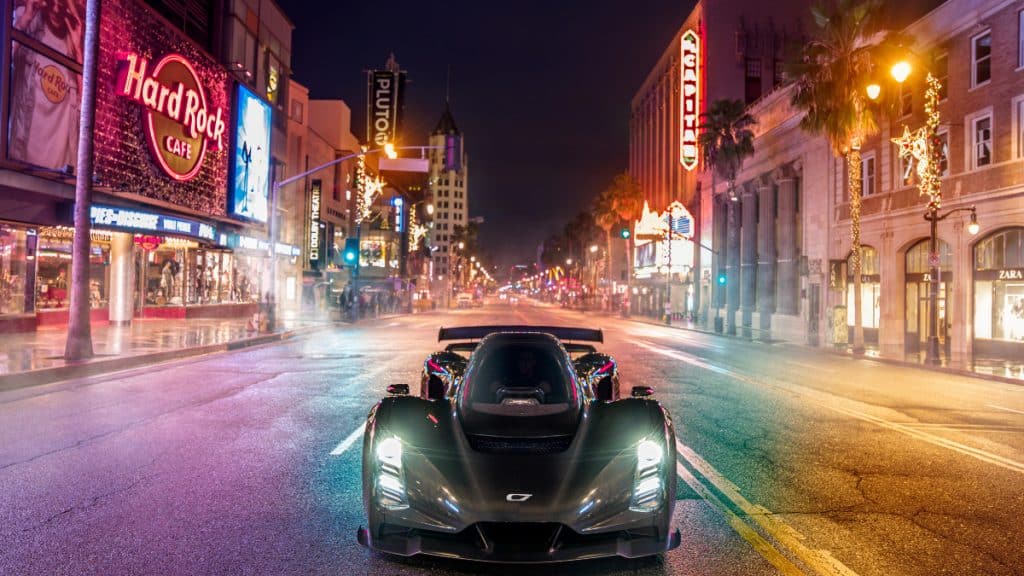
The Czinger 21C may well turn out to be a one-off phenomenon — a singular introduction from a new name that never quite transitions into a lasting marque. Or it could be the opening chapter of exactly what Kevin Czinger envisions: a performance brand built for a new century of automotive engineering. Either way, as a statement of what computational design, hybrid propulsion and structural integration can achieve when pursued without compromise, the 21C earned its place among the most consequential hypercar announcements of 2020.
Vehicle data
| Make | Czinger |
| Model | 21C |
| Generation / chassis code | Not stated in sources |
| Model year(s) covered | 2020 |
| Body style | Mid-engine two-seat grand tourer / hypercar |
| Powertrain / engine | 2.88L V8 twin-turbo + dual axial-flux electric motors |
| Power / torque | 1250 hp (1233 bhp) combined; 370 Nm per motor |
| Transmission | 7-speed automated sequential (race dog or street synchromesh) |
| Drivetrain | All-wheel drive with torque vectoring |
| Key performance figures | 0-62 mph in 1.9s; quarter mile 8.1s; 0-186 mph to 0 in 15s |
| Price (as stated) | Not stated in sources |
| On-sale / announcement period | Announced April 2020 (London); limited production in progress |
| Market | Global, hand-built in Los Angeles, California |