
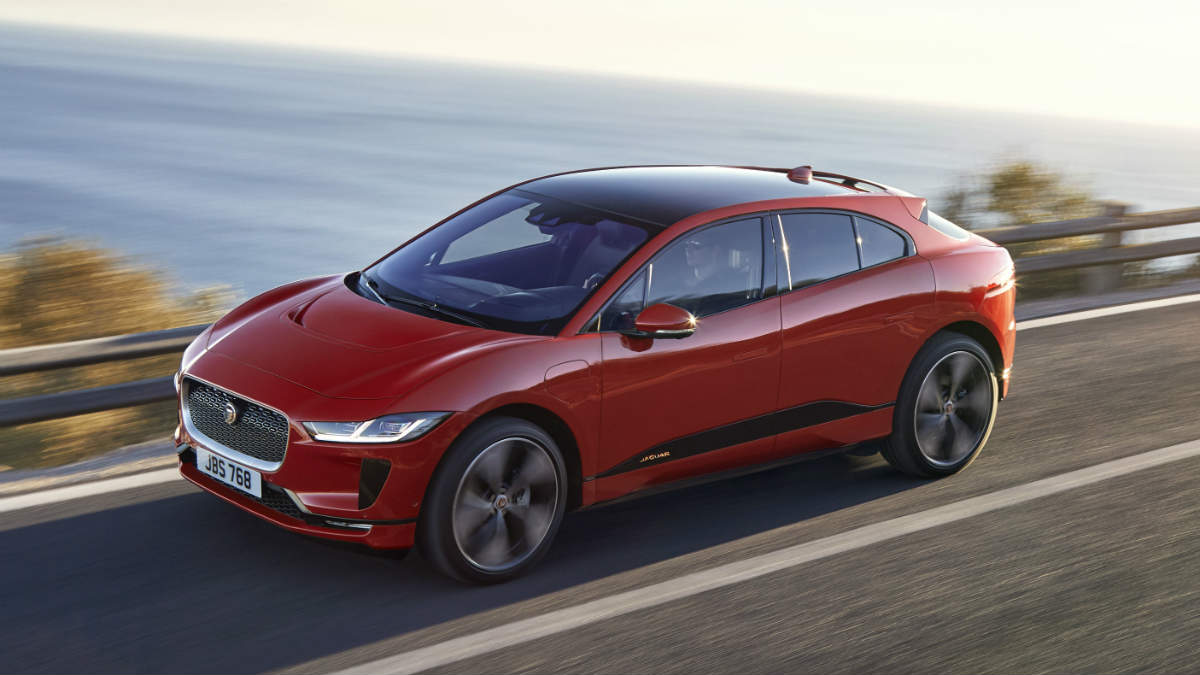
The arrival of the production Jaguar I-PACE marks a decisive turning point in Coventry’s modern narrative. Unveiled to the world ahead of its public debut at the 2018 Geneva Motor Show, this all-electric crossover represents Jaguar’s first purpose-built battery-electric vehicle. Rather than taking an existing internal combustion architecture and retrofitting cells beneath the transmission tunnel, Jaguar engineers drew a fresh line on clean paper. The resulting machine delivers sports car pace, contemporary artificial intelligence systems, and generous cabin utility wrapped in a striking cab-forward profile that immediately separates it from conventional luxury crossovers.
Underneath the aluminum skin sits a state-of-the-art 90kWh lithium-ion battery pack engineered for rigorous thermal discipline and extended real-world range. Constructed using 432 pouch cells distributed across 36 modules, the pack delivers an official rating of up to 298 miles on the European WLTP testing cycle. Energy replenishment has been developed to handle multiple charging tiers with equal competence. Connected to a 50kW DC rapid charger, owners can lift the pack from zero to an 80 percent charge in 85 minutes. For drivers accessing emerging 100kW DC fast-charging hubs as infrastructure expands across the UK and Europe, that same 80 percent benchmark drops to just 40 minutes. At home, a 7kW AC wall box requires just over ten hours to replenish the cells, allowing the battery to replenish completely overnight during off-peak domestic tariffs.

Dual-Motor Powertrain and Instant Performance
Propulsion comes courtesy of two synchronous permanent-magnet electric motors developed in-house by Jaguar. Rather than using conventional off-the-shelf units, Jaguar’s powertrain specialists designed the driveshafts to pass directly through the motors themselves. This concentric layout cuts mass and reduces packaging volume dramatically, allowing engineers to tuck the motors low and tight within each axle assembly.
Together, the twin electric motors generate a robust combined output of 400PS (395 horsepower) and a muscular 696Nm (513 lb-ft) of instant torque. Because an electric motor generates maximum twisting force from zero rpm, the I-PACE gathers pace with immediate, unrelenting thrust. From a standing start, the crossover punches through to 60mph in 4.5 seconds (0-100 km/h in 4.8 seconds), pulling cleanly onward to an electronically governed top speed of 124mph.
Power delivery is managed through a single-speed epicyclic transmission at each axle. Instead of hunting through gears, the driveline metes out torque with seamless precision. Jaguar’s permanent all-wheel-drive programming continuously monitors grip levels at all four wheels, adjusting torque distribution between the front and rear axles within milliseconds. Working alongside Jaguar’s All Surface Progress Control (ASPC) and Adaptive Surface Response (AdSR), the driveline guarantees poised, surefooted progress across rain-slick asphalt, gravel lanes, and snow-covered mountain passes.
Thermal management plays a fundamental role in maintaining that continuous pace. A sophisticated thermal system incorporates a heat pump that scavenges ambient heat and electrical subsystem heat to warm the cabin without placing an excessive drain on high-voltage battery reserves. Furthermore, an integrated battery pre-conditioning system activates automatically when the vehicle is plugged into a charger. By heating or cooling the pouch cells to their ideal operating temperature before departure, the I-PACE guarantees maximum available driving range and optimal power output from the first turn of the wheels.

Bespoke Aluminum Architecture and Dynamic Chassis Engineering
Rather than borrowing components from the existing F-PACE or XE platforms, Jaguar created a bespoke electric vehicle architecture for the I-PACE. Fabricated primarily from lightweight aluminum, the body structure relies on advanced riveting and structural bonding methods developed over decades of Coventry engineering. The structural aluminum battery casing forms an integral structural element of the floorpan, contributing to an astonishing torsional rigidity of 36 kNm per degree—surpassing every previous production vehicle Jaguar has ever built.
Housing the heavy 90kWh battery pack low down between the axles gives the crossover an exceptionally low center of gravity—approximately 130mm lower than an F-PACE—alongside a flawless 50:50 front-to-rear weight balance. This mass centralization forms the ideal foundation for sports-car-like dynamics, minimizing body roll and pitch during spirited driving without demanding punishingly stiff springs.
Underneath, the front suspension employs double wishbones with lightweight aluminum components, mirroring the precise geometry found on the F-TYPE sports car. At the rear, Jaguar fitted an Integral Link suspension arrangement that separates lateral and longitudinal stiffness. This decoupled configuration allows supple bump absorption over uneven tarmac while maintaining iron-fisted camber control when cornering hard.
Buyers can specify an optional four-corner air suspension system paired with Jaguar’s configurable Adaptive Dynamics. This electronic setup continuously reads road inputs up to 500 times per second, adjusting damper valving to harmonize comfort and body control. At cruising speeds above 65mph, the active air suspension lowers ride height by 10mm, smoothing airflow beneath the car and trimming high-speed aerodynamic drag.
Supercar Styling Influences and Aerodynamic Efficiency
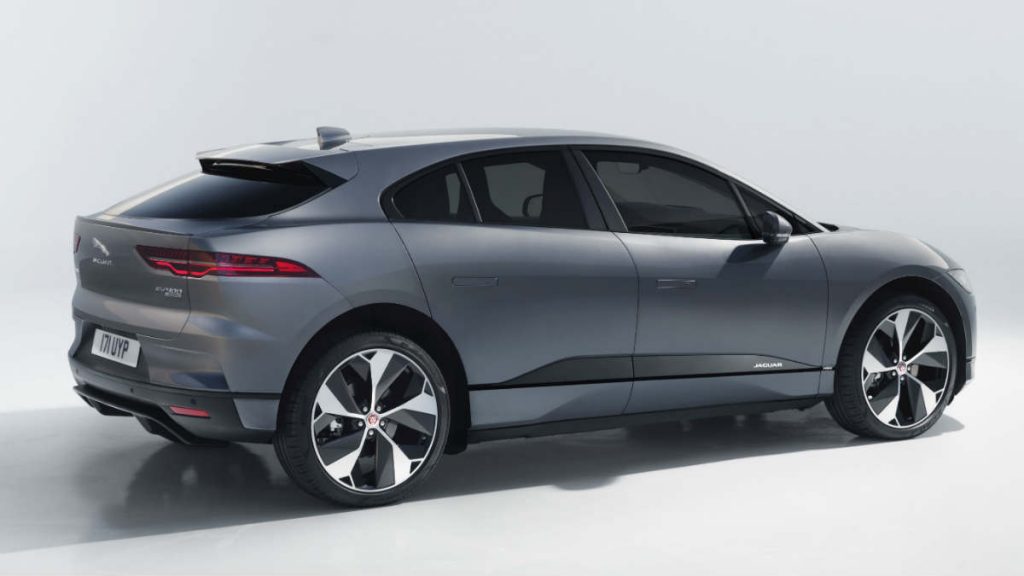
The styling of the Jaguar I-PACE reflects a total liberation from the mechanical packaging constraints of internal combustion engines. Guided by Jaguar Director of Design Ian Callum, the design team drew direct visual inspiration from the mid-engined Jaguar C-X75 supercar concept. Without a long engine block sitting upfront, the cabin could be pushed forward significantly, creating dramatic cab-forward proportions with an ultra-short bonnet and taut, muscular wheel arches.
Every crease, curve, and surface contour serves an aerodynamic function. The front grille incorporates Active Vanes that remain closed when cooling airflow is unnecessary. When closed, air channels cleanly into the integral bonnet scoop, flowing out across the low hood and over the steeply raked windscreen. This directed stream reduces turbulence and helps smooth air across the curved roofline.
At the rear, the roof curves gently downward toward an integrated spoiler that manages airflow separation across the sharply raked rear window. The abrupt, squared-off Kamm tail cleanly detaches the trailing wake, minimizing parasitic turbulence. Flush door handles remain tucked into the bodyshell while driving and only deploy outward when unlocked. Together with a fully enclosed flat underfloor, these aero measures yield an impressively slippery drag coefficient of just 0.29 Cd—a remarkable achievement for a practical, high-riding vehicle.
Interior Space, Craftsmanship and Packaging Utility
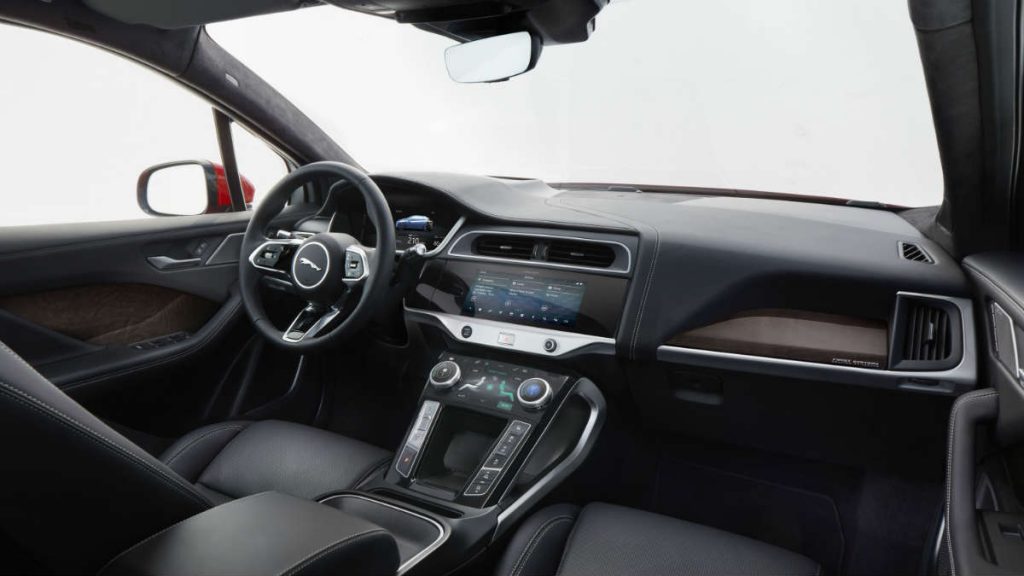
Step inside, and the packaging advantages of the bespoke EV platform become immediately apparent. While the I-PACE occupies a mid-size exterior footprint—measuring 4,682mm in length with a 2,990mm wheelbase—its interior accommodation matches that of substantially larger luxury SUVs. Because there is no mechanical propshaft running down the spine of the passenger compartment, Jaguar designers eliminated the traditional transmission tunnel, freeing up valuable space between the front seats.
The central console features an open floating architecture with a capacious 10.5-liter storage tray positioned beneath the switchgear, ideal for phones, wallets, and daily paraphernalia. Rear-seat passengers enjoy generous dimensions, boasting 890mm of legroom alongside ample knee and shoulder clearance. Discreet stowage trays designed specifically for laptops and tablets are thoughtfully tucked beneath the rear seat cushions.
Luggage capacity remains equally uncompromising. Behind the rear seats, the boot provides 656 liters of cargo volume. Fold the rear seatbacks flat in a 60:40 split, and total luggage capacity expands to 1,453 liters. Up front, beneath the composite hood, a compact front luggage compartment (frunk) provides an additional 27 liters of covered storage—the perfect dedicated space for keeping charging cables clean and readily accessible.
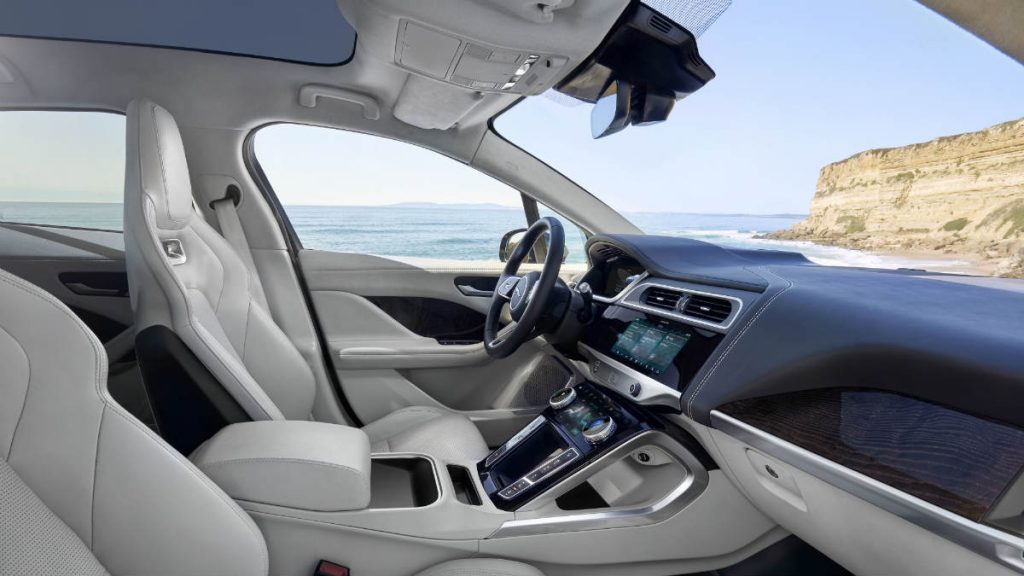
Cabin trim choices emphasize modern luxury with a distinct environmental conscience. In addition to traditional soft-grain Windsor leather options, Jaguar partnered with Danish textile experts Kvadrat to offer an innovative premium wool-blend fabric interior. Paired with recycled technical suedecloth, the Kvadrat upholstery provides an elegant, tactile, and non-leather alternative that aligns naturally with modern automotive sustainability.
Next-Generation Technology: Touch Pro Duo and AI Smart Settings
The I-PACE serves as the technology vanguard for the Jaguar marque, debuting the Touch Pro Duo infotainment architecture. Centralized on the dash are twin high-definition touchscreens: an upper 10-inch screen handling primary navigation, media, and phone functions, and a lower 5.5-inch screen dedicated to climate control and auxiliary vehicular tasks. Tactile rotary dials with integrated digital displays allow drivers to adjust cabin temperatures and seat heating without glancing away from the roadway.
Ahead of the driver sits a customizable 12.3-inch Interactive Driver Display, capable of projecting full-screen 3D satellite navigation maps, EV instrumentation, and dynamic safety alerts. A new specialized EV navigation system eliminates range anxiety by evaluating route topography, anticipated traffic patterns, and the driver’s historic throttle habits. By factoring in these real-world driving variables, the system calculates remaining range and locates available charging points along the route with exacting accuracy.
Complementing the hardware is Jaguar’s intelligent “Smart Settings” technology. Driven by advanced artificial intelligence algorithms, the car identifies approaching drivers via their key fob and smartphone Bluetooth signals. Once identified, the system automatically tailors driving position, climate preferences, media queues, and infotainment layouts before anyone even fastens a seatbelt. Over time, the algorithms learn daily routines—predicting heating preferences on chilly morning commutes or automatically queuing frequently called contacts at specific hours.
Integration extends beyond the cabin via an Amazon Alexa Skill tied into the Jaguar InControl Remote app. From the comfort of their home living room or office, owners can simply query their smart speaker to check battery status, verify whether the doors are locked, or precondition the cabin climate prior to heading out. Importantly, the I-PACE is the first vehicle in Jaguar history to offer over-the-air (OTA) software updates. This wireless capability ensures that motor control algorithms, infotainment features, and battery management parameters can receive continuous factory enhancements throughout the lifespan of the car.
Vehicle data
| Make | Jaguar |
| Model | I-PACE |
| Generation / chassis code | First generation (X590) |
| Model year(s) covered | 2019 |
| Body style | 5-door crossover SUV |
| Powertrain / engine | Dual permanent-magnet synchronous electric motors, 90kWh lithium-ion battery |
| Power / torque | 400 PS (395 hp / 294 kW) / 696 Nm (513 lb-ft) |
| Transmission | Single-speed epicyclic (front and rear) |
| Drivetrain | All-wheel drive (AWD) |
| Key performance figures | 0-60 mph in 4.5 sec (0-100 km/h in 4.8 sec); top speed 124 mph (200 km/h); up to 298 miles WLTP range |
| Price (as stated) | From £63,495 (UK, before government incentives) |
| On-sale / announcement period | Revealed March 1, 2018 (Geneva Motor Show); on sale from March 2018 |
| Market | Global (UK, Europe, North America) |